Last updated November 2, 2026
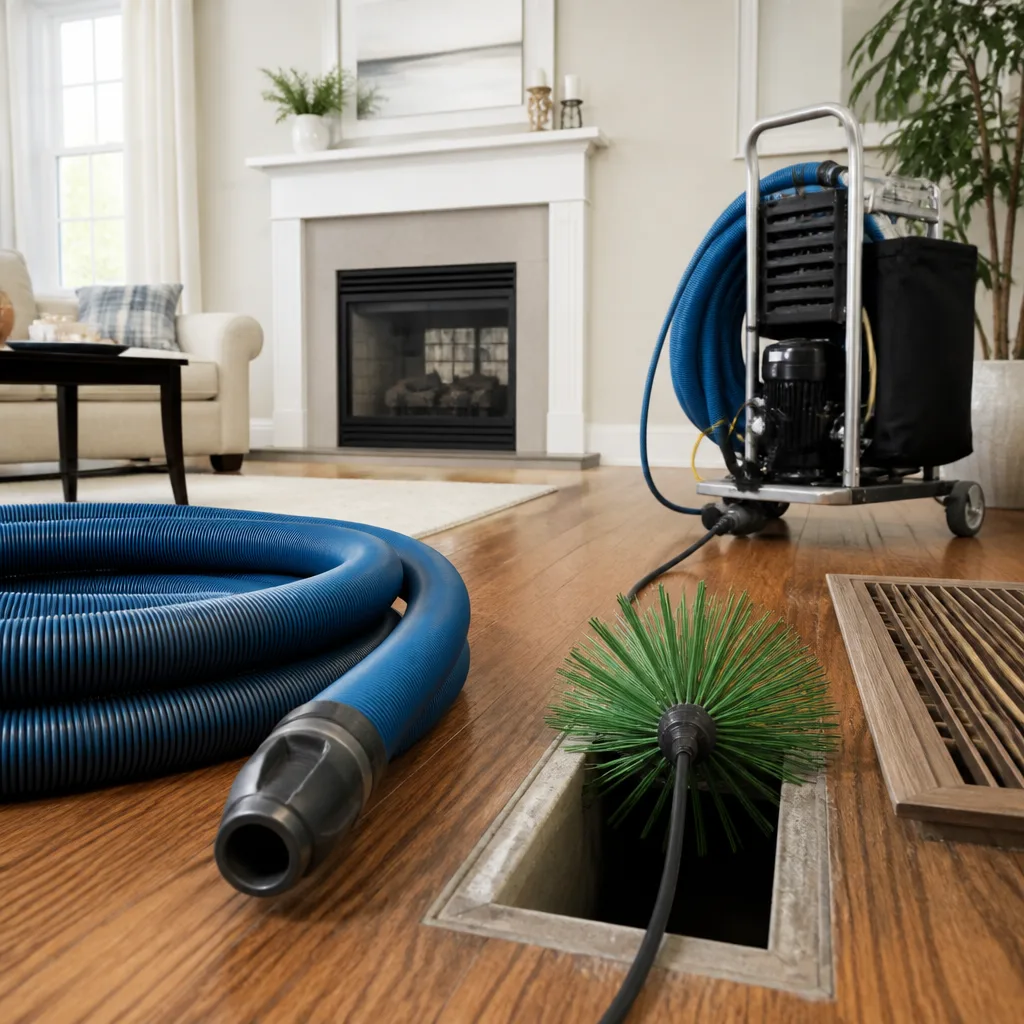 Whole-home duct cleaning
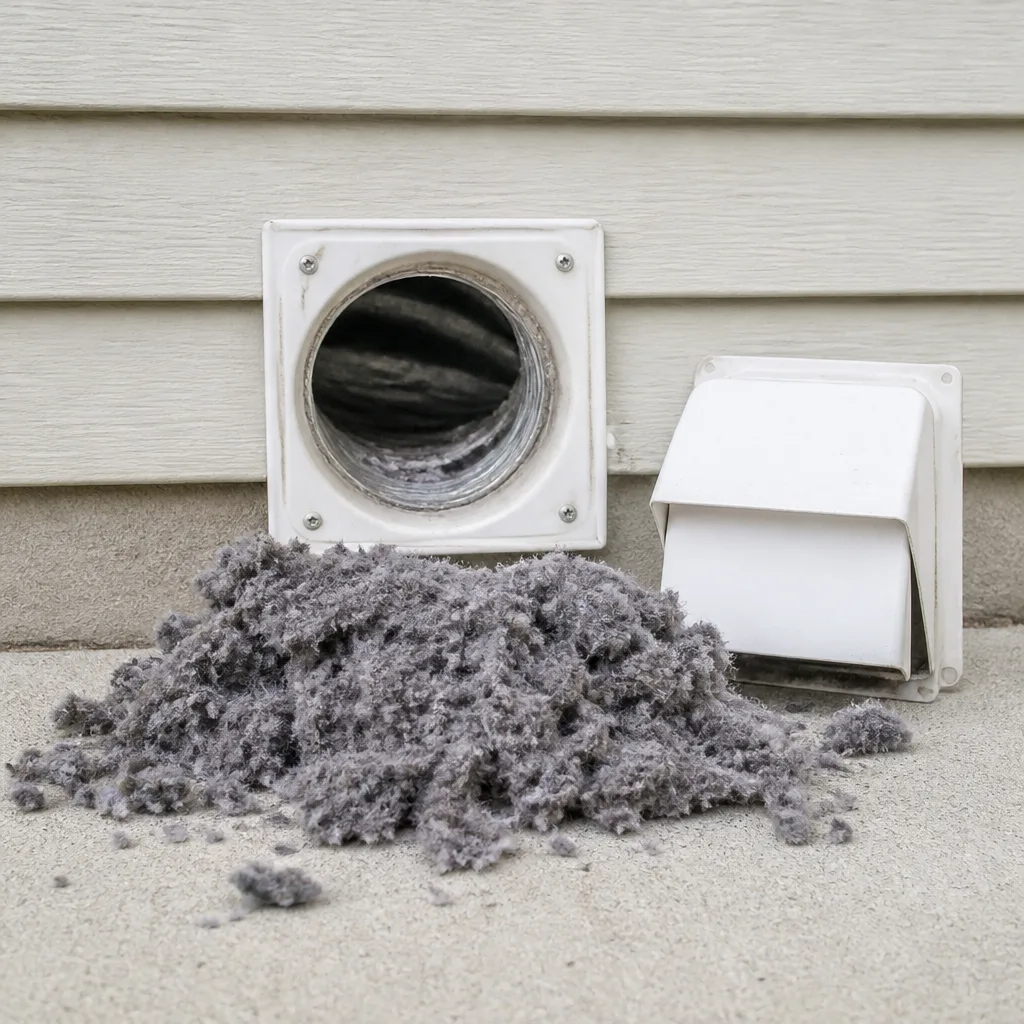 Dryer vent cleaning
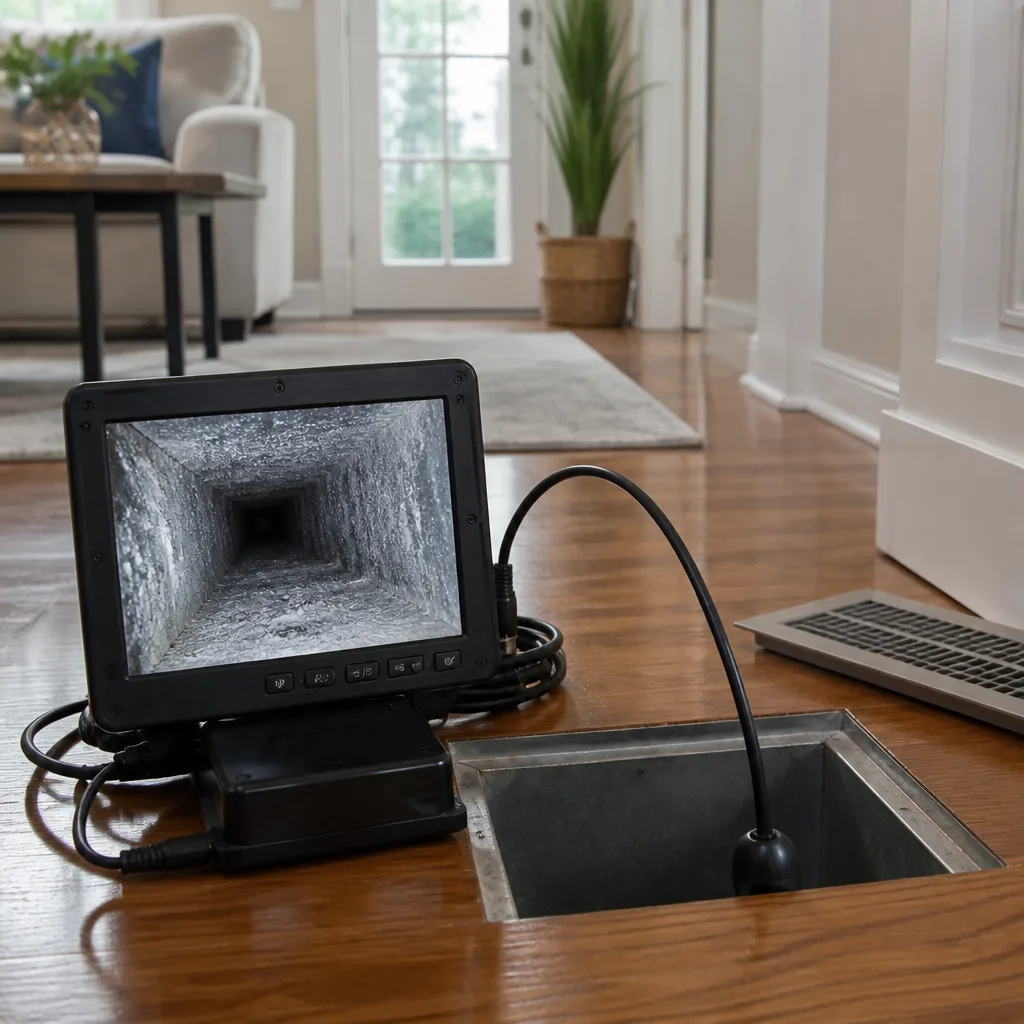 Camera inspection
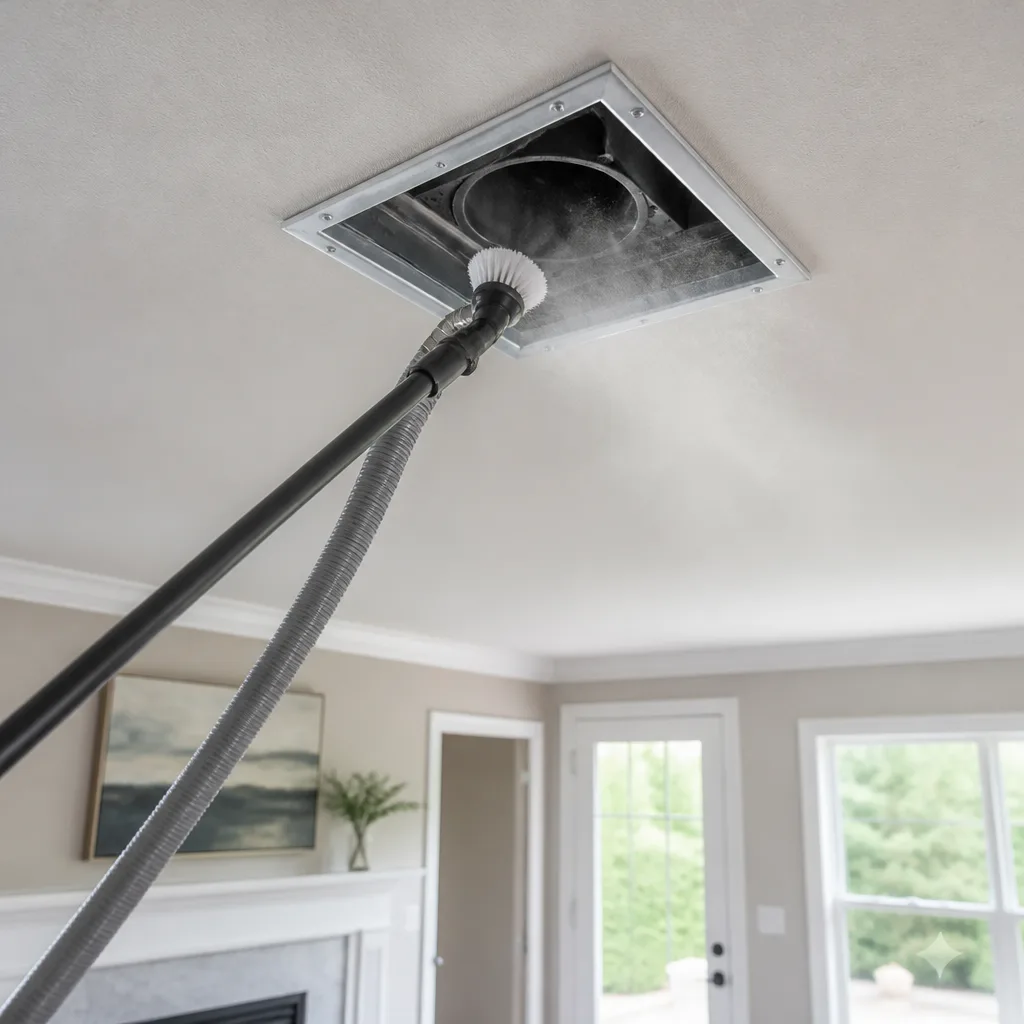 Sanitizing & deodorizing
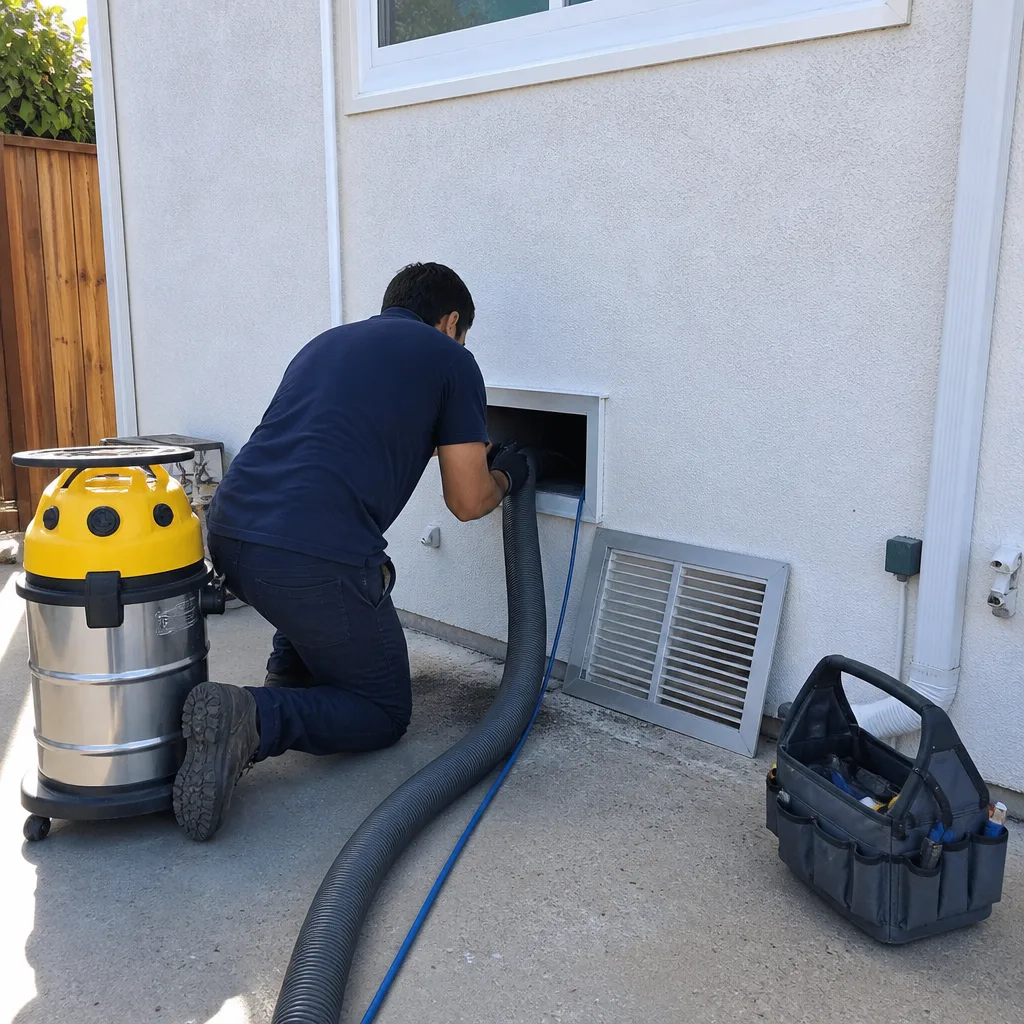
Whole-system duct and dryer vent check with before-and-after photos - you see exactly what came out of your vents
That "$99 whole-house special" is a bait ad - the real number appears once they are in your hallway, or the "clean" is a shop-vac at the register. We photograph the inside of your ducts before and after instead.
How to Hire an Air Duct Cleaning Contractor in Glendora: A Step-by-Step Guide
Here’s a number that should make every Glendora homeowner pause: California has no state licensing requirement specific to air duct cleaning. Anyone with a van and a rented vacuum can print business cards and start knocking on doors in the San Gabriel Valley tomorrow. That’s not an exaggeration. It means the entire hiring decision falls on you, the homeowner, to verify what actually matters: the equipment, the method, and the documentation. This guide gives you the exact questions to ask, the red flags to spot, and the benchmarks that separate a legitimate source-removal operation from a surface-level suction pass. By the time you finish reading, you’ll know more about evaluating duct cleaners than most of the contractors who’ll bid your job.
Styles & brands we work with
- Whole-home duct cleaning
- Dryer vent cleaning
- Camera inspection
- Sanitizing & deodorizing
Quick Answer
To hire the right air duct cleaning contractor in Glendora, skip the credential theatre and ask five equipment-specific questions: what is the CFM rating of the negative-air machine, what agitation method is used, whether the work follows the NADCA ACR standard, what the written scope of work includes, and what documentation you’ll receive when the job is done. A legitimate contractor answers these directly, shows spec sheets, and puts everything in writing before work begins. Anyone who deflects, quotes a suspiciously low flat rate, or won’t document the process should be crossed off your list.
Table of Contents
- Why California’s Licensing Gap Makes Your Questions the Real Filter
- The Five Equipment Questions That Expose a Fraud in Two Minutes
- NADCA Membership vs. ACR Standard Compliance: What the Difference Actually Means
- What a Proper Written Scope of Work Must Include
- Red Flags Specific to Low-Cost Duct Cleaning in the San Gabriel Valley
- On-Site Verification: How to Confirm the Job Is Done Right While It’s Happening
- The Step-by-Step Hiring Process for Glendora Homeowners
- Common Mistakes to Avoid
- When to Call a Professional
- Frequently Asked Questions
- The Bottom Line
Why California’s Licensing Gap Makes Your Questions the Real Filter
Ask a duct cleaner if they’re “licensed and insured” and nearly everyone will say yes. It’s a nearly meaningless question in this state. California’s Contractors State License Board does not issue a specific air duct cleaning license. Some companies operate under a general C-61 classification or a related HVAC category, but many do not. The point is not that every unlicensed operator is fraudulent; the point is that licensing status alone tells you almost nothing about whether the person at your door can actually clean a duct system properly.
This is why we lead with equipment questions, not credential questions. A Rotobrush rotary brush system has a manufacturer’s spec sheet. A Nikro HEPA negative-air unit has a rated CFM (cubic feet per minute) that determines whether it can actually establish negative pressure across your full duct system. These are objective, verifiable facts. Either the machine exists and the number is real, or the contractor stumbles. The stumble is your signal.
In Glendora specifically, we see homes built across five decades, from mid-century ranch houses near Foothill Boulevard to newer construction up in the hillside neighborhoods above Sierra Madre Avenue. Duct systems vary enormously by era. A 1960s home may have sheet-metal ducts with decades of accumulated debris; a 2000s build might have flex duct that requires gentler agitation. The contractor you hire should be able to talk about your specific system without having seen it yet, based on the age and layout of your home. That’s a knowledge signal, not a licensing signal.
Our Duct Cleaning Glendora home page walks through our full service scope, but the hiring criteria in this guide apply to any contractor you’re evaluating, including us.
The Five Equipment Questions That Expose a Fraud in Two Minutes
Here’s a pre-hire phone script you can use verbatim. Call three contractors, ask all five questions, and compare how directly each one answers. You’re not looking for a memorized spec sheet; you’re looking for comfort with the material and a willingness to go deeper. Evasion sounds like a pause followed by “we use professional equipment.” Directness sounds like a number and a brand name.
Question 1: “What is the rated CFM of your negative-pressure unit?”
What you want to hear: A specific number between roughly 2,000 and 5,000 CFM, along with the brand name of the unit. Negative-air machines in the 2,000-4,000 CFM range are standard for residential work. A contractor who names a number unprompted knows their equipment.
What evasion sounds like: “Oh, it’s a big commercial vacuum” or “We use a truck-mounted system, it’s very powerful.” These are non-answers. A truck-mount does not by itself create proper negative pressure in the duct system. Ask for the CFM rating. If they can’t produce it, they don’t know their own equipment.
Question 2: “What agitation method do you use to dislodge debris from the duct walls?”
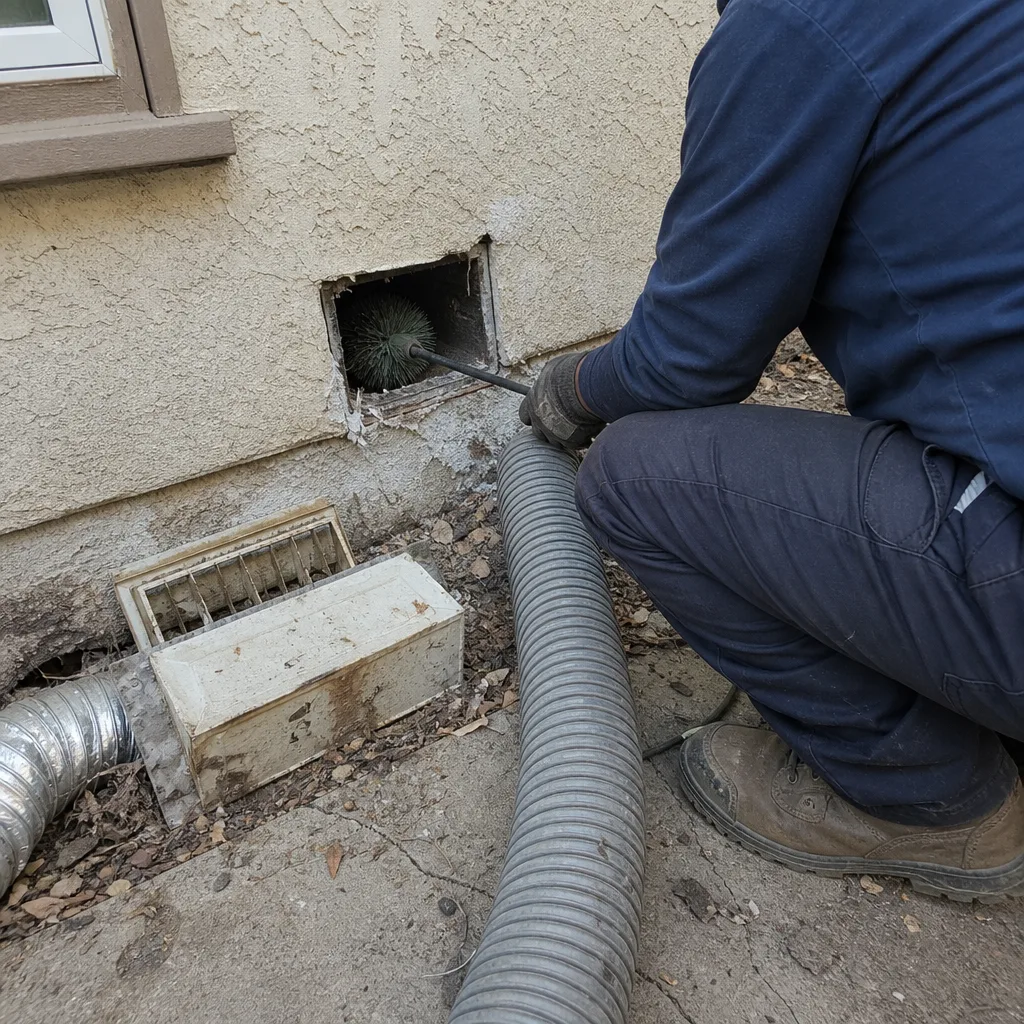
What you want to hear: A named mechanical agitation method. Rotary brush systems (like the Rotobrush units we run) physically scrub the duct interior. Some contractors use compressed-air whips or skipper balls. All are legitimate. The key word is mechanical. Suction alone does not clean ducts; it just pulls loose particulate from wherever it happens to be sitting.
What evasion sounds like: “Our vacuum pulls everything out.” A vacuum, no matter how strong, cannot remove debris that has adhered to duct walls. Ask directly: “Do you use a rotary brush or air whip inside the ducts?” If the answer is no, or if they change the subject, end the call.
Question 3: “Do you follow the NADCA ACR standard, and can you walk me through what that requires on the job?”
What you want to hear: An explanation of the NADCA ACR (Assessment, Cleaning, and Restoration) standard: source-removal methodology, negative pressure containment during cleaning, and post-job documentation showing what was removed. The contractor should be able to describe this in their own words.
What evasion sounds like: “Yes, we’re NADCA certified.” That’s not the question you asked. Membership is a logo. ACR compliance is a process standard. More on this in the next section.
Question 4: “What will my written scope of work include before I sign anything?”
What you want to hear: Register count, linear footage of the duct system, equipment model numbers, sanitizer disclosure (if any sanitizer is being proposed), access hole confirmation, and the total flat price. A contractor who writes all this out before starting is protecting both of you.
What evasion sounds like: “We’ll put together a quote after we see the job.” A quote is not a scope. A scope describes exactly what work is being done. Insist on it before signing.
Question 5: “What documentation do I receive when the job is finished?”
What you want to hear: Before-and-after photos, ideally of your own duct interiors, plus a written summary of what was found and what was done. We show customers exactly what their ducts looked like before and after on every air duct cleaning in Glendora job. If the contractor doesn’t document the work, there’s no way to verify it happened.
What evasion sounds like: “You’ll see the difference in your air quality.” That’s a promise, not documentation. Ask for photos of your ducts. Every legitimate source-removal company can provide them.
NADCA Membership vs. ACR Standard Compliance: What the Difference Actually Means
Here’s a distinction almost nobody makes, and it matters more than most of the advice you’ll find online. NADCA, the National Air Duct Cleaners Association, offers membership to companies that pay dues and agree to a code of ethics. Membership is not certification and requires no proof of equipment or method. The ACR standard, on the other hand, is a technical document: it defines what source-removal cleaning actually is, requires negative-pressure containment during agitation, and mandates that the contractor document the work performed.
ACR compliance is a process standard. NADCA membership is a marketing credential. A company can be a NADCA member and still do hack work. A company can comply with ACR methodology and not be a member at all. When you’re hiring, ask about the standard, not the membership.
What does ACR compliance look like on a real job in a Glendora home? The contractor establishes negative pressure in the duct system before agitation begins. This means the vacuum unit stays running the entire time the rotary brush or air whip is working, pulling loosened debris out of the system and into HEPA-filtered containment. If agitation happens without negative pressure, loose particulate simply circulates into your living space. That’s not cleaning; that’s redistribution.
ACR also requires the contractor to document the work. That documentation should include what was found (debris level, any damage, any evidence of moisture or pest activity), what was done, and what the customer should know going forward. If your contractor doesn’t offer this documentation unprompted, they’re not following ACR, regardless of what their website says.
We use Nikro HEPA negative-air vacuums specifically because they’re rated to maintain the negative pressure ACR work demands. That’s not a branding flex; it’s the equipment that makes correct methodology possible.
What a Proper Written Scope of Work Must Include
You wouldn’t sign a contract for a roof replacement that said “fix roof.” Roofing contracts list square footage, materials, tear-off methods, and warranty terms. Duct cleaning should be no different. A proper written scope of work is your only legal protection if the job goes sideways, and it doubles as a competency filter. A contractor who can’t produce a detailed scope before starting is telling you something about how they run the job.
Here’s what belongs in the scope for a Glendora duct cleaning job:
- Register count. Every register (supply and return) in your home, listed individually. The scope should say “14 supply registers, 2 return registers” or whatever your specific count is. If they can’t count your registers before starting, they can’t clean all of them.
- Linear footage of the duct system. This is harder to estimate precisely before the job, but a competent contractor can give you a rough linear footage estimate based on your home’s square footage and layout. It matters because it affects the time the job takes and the thoroughness of the agitation pass.
- Equipment model numbers. Not “professional vacuum.” The actual make and model of the negative-air unit and agitation system. If they won’t write it down, ask why.
- Sanitizer disclosure. If any sanitizer, deodorizer, or antimicrobial product is being proposed, the scope must name the specific product and explain why it’s being used. Sanitizers are optional. If a contractor pushes one, ask what problem it solves. If the answer is vague, decline it.
- Access confirmation. The scope should note where access holes will be cut, if any, and confirm they’ll be sealed and finished after the job.
- Total flat price. One number that covers the entire job. Not per-vent pricing. Not an hourly estimate. A flat price agreed before work starts. If the price can change, the scope should explain exactly what triggers the change and by how much.
When someone asks us about air duct repair in Glendora, the same principle applies: a repair scope lists the specific damaged section, the repair method, and the materials. Anything less is a handshake with no accountability.
Red Flags Specific to Low-Cost Duct Cleaning in the San Gabriel Valley
The San Gabriel Valley has a particular type of low-cost duct cleaning operation, and once you’ve seen it, you’ll recognize it in every market. It works like this: a company runs Facebook or direct-mail ads offering whole-home duct cleaning for a price that seems too good to be true, usually between $89 and $149. A van shows up with one technician, a portable vacuum, and a sales script. The technician pokes around for 20 minutes, then delivers the pitch: your ducts have mold, you have a rodent problem, the system is “completely coated,” and the real price is now $1,800. The low offer was never a real service; it was a ticket in the door.
Here are the specific red flags to watch for in Glendora and the broader San Gabriel Valley market:
- Van-only operations with no truck-mount or portable negative-air machine. A single technician with a shop-style vacuum cannot source-remove debris from a full duct system. The math doesn’t work. A proper job requires either a truck-mounted vacuum rated at 2,000+ CFM or a portable negative-air machine like the Nikro units we use, plus mechanical agitation.
- Teaser pricing under $150. No legitimate source-removal company can clean a full home’s ducts for $149 and stay in business. That price covers the ride out, not the work. Expect honest whole-system pricing to start higher, and respect contractors who give you an honest range up front.
- Pressure-upsell scripts. Any contractor who “discovers” a serious problem in the first 20 minutes but can’t show you photo or video evidence of it is running a script, not a diagnosis. Ask to see what they’re seeing. A real contractor shows you the problem; a fraud describes it vaguely and emphasizes urgency.
- Refusal to provide references in Glendora or nearby San Gabriel Valley cities. A local company that’s been doing this work for any length of time has customers in Glendora, Azusa, Covina, San Dimas, or La Verne who’ll vouch for them. If they can’t produce a single local reference, they haven’t been doing local work.
- No documentation of what was removed. A contractor who finishes the job and leaves you with nothing but a receipt has not confirmed the work was done. You should receive photos of your duct interiors before and after. We show every customer their own ducts, on every job, and we mention it on our dryer vent cleaning in Glendora page too, because the same transparency standard applies.
On-Site Verification: How to Confirm the Job Is Done Right While It’s Happening
The best hiring decision in the world still deserves on-site verification. You don’t need to hover over the technician, but you should know enough to confirm the basics are happening. Here’s a numbered checklist of what to verify on the day of your duct cleaning:
- Negative pressure is established before agitation begins. When the technician arrives, the first thing they should do is connect the negative-air machine to the duct system and turn it on. You should hear the low, steady pull of the vacuum. This must happen before any brush or air whip goes into the ducts. If you see them agitating ducts while the vacuum is off, stop the job and ask why.
- All registers are sealed except the one being worked on. Proper source-removal technique seals registers to maintain negative pressure throughout the system. If the technician is agitating one vent while four others are wide open, they’re not doing it right.
- The agitation is mechanical, not just suction. You should see a rotary brush line or air whip being fed into the ducts. If the technician is simply holding a vacuum hose at each register for 30 seconds, that’s not source-removal. That’s the low-cost operation you were trying to avoid.
- HEPA filtration is in use. The negative-air machine should exhaust through HEPA filters. Ask to see the filter housing if it’s not obvious. Abatement Technologies air scrubbers, which we run on applicable jobs, make this visible because the filter banks are accessible. A legitimate setup will be happy to show you.
- Access holes, if needed, are cut cleanly and finished properly. Some systems require an access hole for the agitation equipment. Confirm with the technician where the hole will be cut before they cut it, and verify it’s sealed flush and finished when they’re done.
If all five of these checks pass, you’re watching a legitimate source-removal job. If any of them fail, you now have a very specific conversation to have with the contractor in real time, before the job is “done.”
The Step-by-Step Hiring Process for Glendora Homeowners
We’ve covered the questions, the red flags, and the verification. Here’s the full hiring process, condensed into a numbered sequence you can follow start to finish:
- Identify three local contractors. Look for companies that specifically serve Glendora and the San Gabriel Valley. Check for Google Business Profiles with real local reviews (not just a website). Local means they’re accountable to your community.
- Run the five-question phone script. Call each one and ask the equipment questions from earlier in this guide. Note how directly each answers. Cross off anyone who deflects.
- Request a written scope of work. Before you sign anything, ask for the full scope: register count, linear footage, equipment models, sanitizer disclosure, access plan, and flat price. Compare the scopes side by side.
- Check ACR compliance language. Ask each contractor: “Do you follow the NADCA ACR standard?” Listen for a process explanation, not a yes-or-no. The contractor who can explain what ACR requires is the one who actually follows it.
- Verify on the day of the job. Use the on-site verification checklist above. Confirm negative pressure before agitation, sealed registers, mechanical agitation, HEPA filtration, and proper access hole finishing.
- Collect documentation. Get your before-and-after photos, the written summary of what was found and done, and any warranty or guarantee in writing. File it with your home maintenance records.
This process takes a little more time than picking the cheapest flyer on your doorstep. It’s also the difference between a clean duct system and a lighter wallet with nothing to show for it.
Common Mistakes to Avoid
- Asking “are you licensed?” and accepting “yes” as verification. California’s licensing structure for duct cleaning is porous. Ask about equipment and method instead. A specific CFM rating tells you more than a generic license claim.
- Hiring based on the lowest price. Honest whole-system source-removal cleaning costs what it costs. If one quote is dramatically lower than the others, the low bidder is either planning an upsell or skipping steps. Neither is good.
- Confusing NADCA membership with ACR compliance. Membership is a logo. ACR is a documented process standard. Ask which one they follow, and ask them to describe what it requires.
- Signing a contract without a written scope of work. If the document you’re signing doesn’t list register count, equipment models, and a flat price, you don’t have a contract; you have a blank check.
- Skipping on-site verification. The technician has the equipment and the knowledge; you have the right to watch. You don’t need to hover, but checking that negative pressure is running before agitation starts takes 30 seconds and confirms the core of the work.
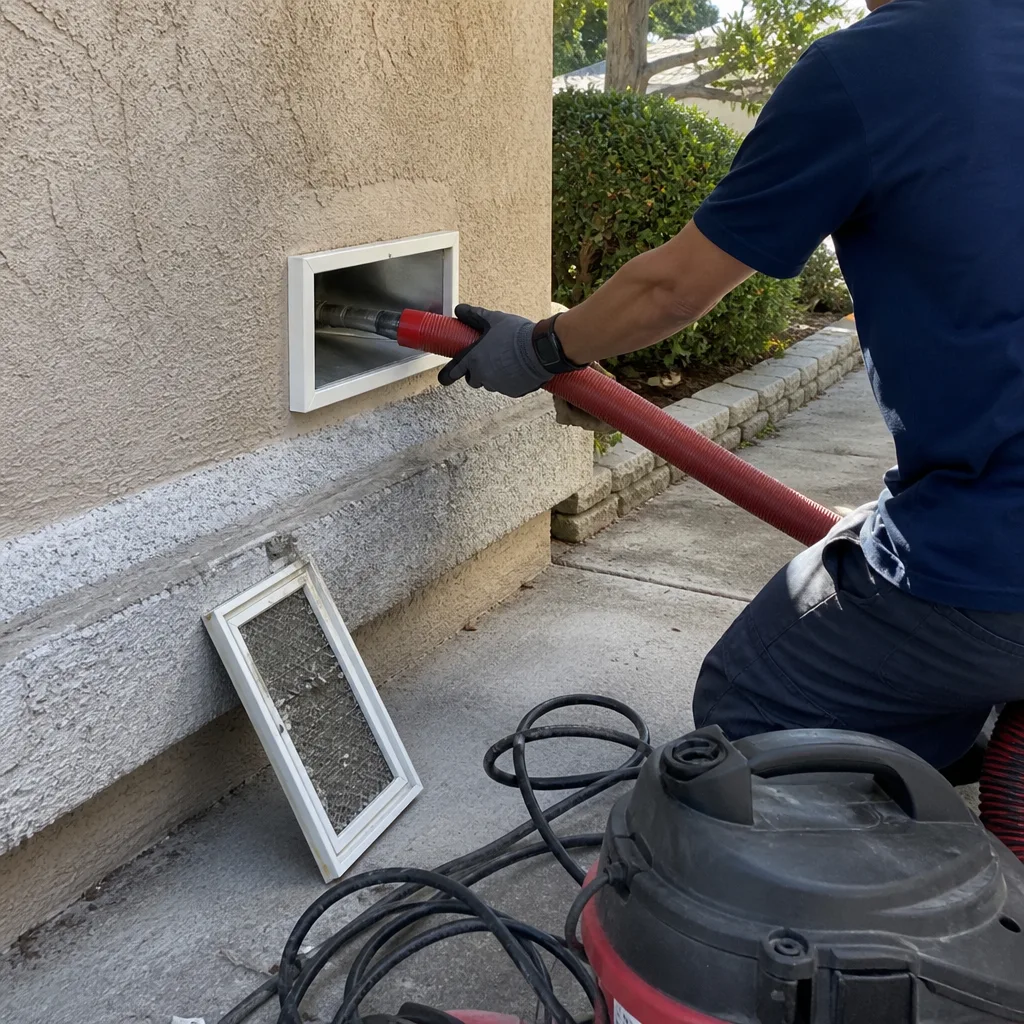
- Ignoring dryer vent cleaning as a separate service. Dryer vents are not part of a standard air duct cleaning. They require dedicated equipment and a separate pass. We offer dryer vent cleaning in Glendora as its own service, and the scope should always be listed separately because the fire-risk stakes are high enough to warrant their own attention.
- Believing a duct cleaning will fix an HVAC problem. Duct cleaning removes debris from the duct system. It does not repair a failing blower motor, a leaking coil, or a cracked duct. If the contractor finds damage during the cleaning, that’s air duct repair in Glendora territory, and it should be quoted and documented separately.
When to Call a Professional
You should have your ducts evaluated if you’ve lived in your Glendora home for more than five years and have never had them cleaned, or if you notice visible dust collecting around registers faster than you can wipe it away. Excessively dusty rooms, higher-than-normal utility bills without a weather explanation, or a musty smell that persists after cleaning are all signals that something is happening inside the duct system. If you have pets, the timeline shortens: dander and hair accumulate in ducts the same way they accumulate on your floors. New construction and renovation projects also warrant a cleaning, because drywall dust and debris from building work settle into duct interiors and recirculate for months afterward. Duct Cleaning Glendora offers free estimates in Glendora. Call (833) 620-4169 to schedule one.
Frequently Asked Questions
A legitimate whole-system source-removal cleaning for a typical Glendora home usually runs between $450 and $900, depending on the size of the home, the number of registers, the linear footage of the duct runs, and whether sanitizer or repair work is added. If you’re being quoted under $200 for a whole-home cleaning, you’re being sold a teaser, not a service. Call (833) 620-4169 for an exact quote; estimates are free.
Low quotes usually come from operations that run a single vacuum hose over each register without establishing negative pressure, skip mechanical agitation entirely, or use the low price as a door-opener for an aggressive upsell pitch. Source-removal work with HEPA negative-air equipment and rotary brush agitation takes longer and costs more because it actually cleans the ducts. The cheap quote is not the same service.
Ask for before-and-after photos of your duct interiors, taken by the contractor during the job. A legitimate source-removal company documents the work as a standard practice. You should also receive a written summary of what was found and what was done. If a contractor completes the job and has no photos to show you, treat the work as unverified.
Every 3 to 5 years is the standard range for most Glendora homes, assuming no major events in between. Pet owners may want to shorten that to every 2 to 3 years. After a renovation, a cleaning is warranted immediately, because construction dust settles into the duct system and keeps circulating. If you’ve never had your ducts cleaned and the home is more than 10 years old, schedule an evaluation now.
The industry has a scamming problem because low-barrier entry attracts low-quality operators, but the service itself is real and well-documented when done correctly. NADCA’s ACR standard exists precisely because source-removal cleaning is a legitimate, measurable process. The scam is not duct cleaning itself; the scam is the $99 van operation that does no real cleaning and then pressure-sells a fabricated problem.
They’re separate systems and should be treated as separate services, but scheduling them together is smart. Dryer vents accumulate lint, which is a leading cause of residential dryer fires. We clean dryer vents with the same professional negative-air approach we use on duct systems. Because we handle air duct cleaning in Glendora, dryer vent cleaning, and repair under one roof, one visit can address cleaning, blockage, and structural issues without coordinating multiple companies.
Look for three things: a negative-air machine with a rated CFM of 2,000 or higher, a mechanical agitation tool (rotary brush or air whip), and HEPA filtration on the exhaust side. Brand names like Rotobrush and Nikro are good signals because they’re industry-standard equipment that a serious operation invests in. If a contractor can’t name their equipment and its specs, walk away.
The Bottom Line
Hiring a duct cleaning contractor in Glendora comes down to verification, not trust. Verify the equipment: ask for the CFM rating and the brand name. Verify the method: insist on source-removal with mechanical agitation and negative-pressure containment. Verify the standard: ask about NADCA ACR compliance and what it requires, not NADCA membership and what it costs. Verify the scope: get everything in writing before work starts, from register count to flat price. Verify the work: confirm negative pressure on the day, and collect photos when it’s done. Duct Cleaning Glendora runs Rotobrush rotary brushes with Nikro HEPA negative-air vacuums, and we show every customer exactly what their ducts look like before and after. Call (833) 620-4169 for a free estimate, and ask us the five questions. We answer all of them.
Written by the team at Duct Cleaning Glendora, serving Glendora since 2014.
See the difference
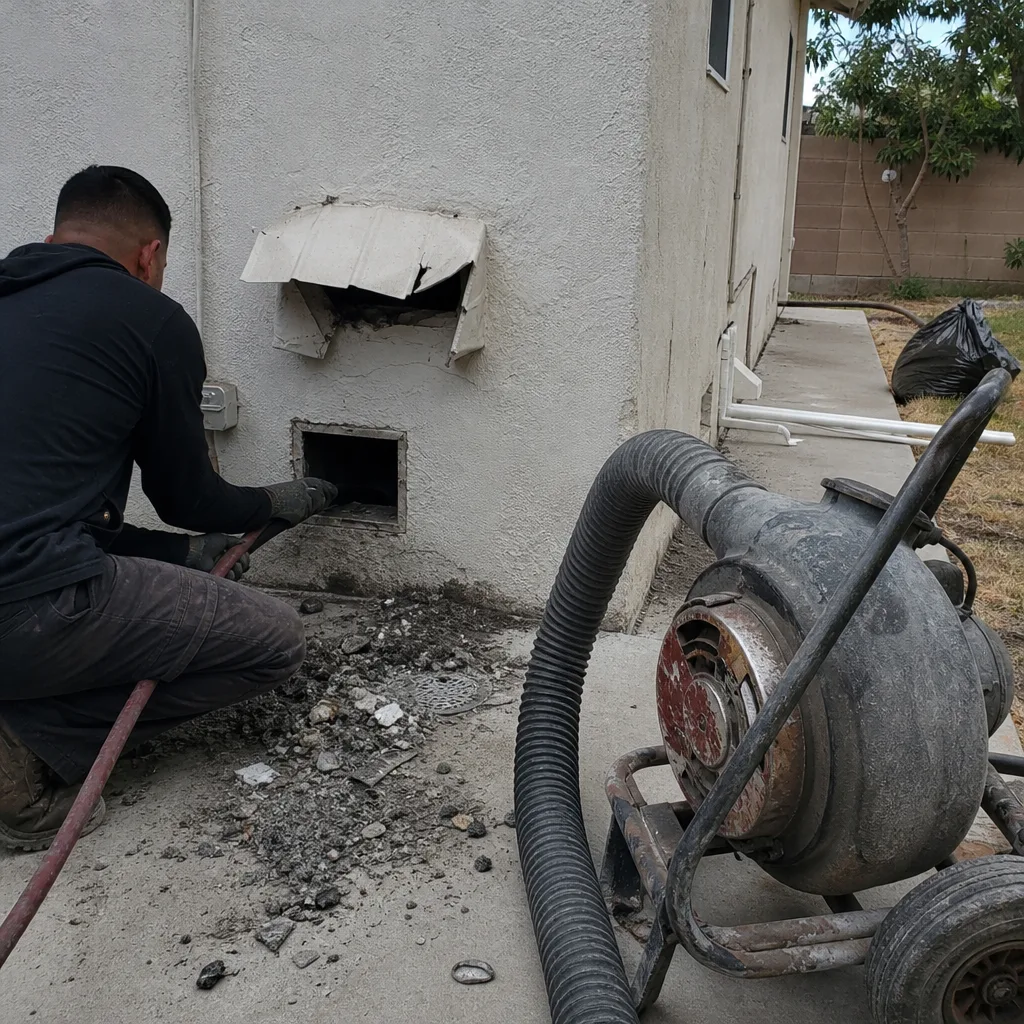 Before
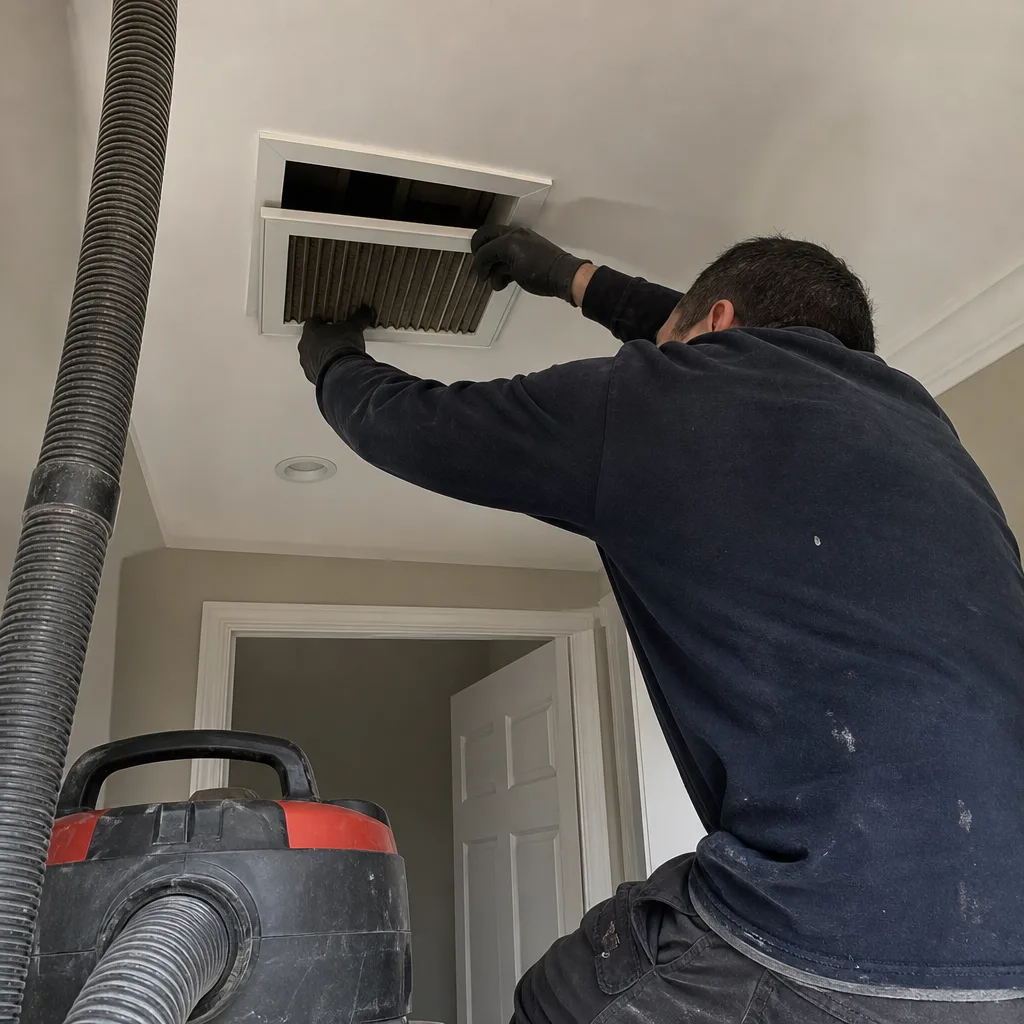 After
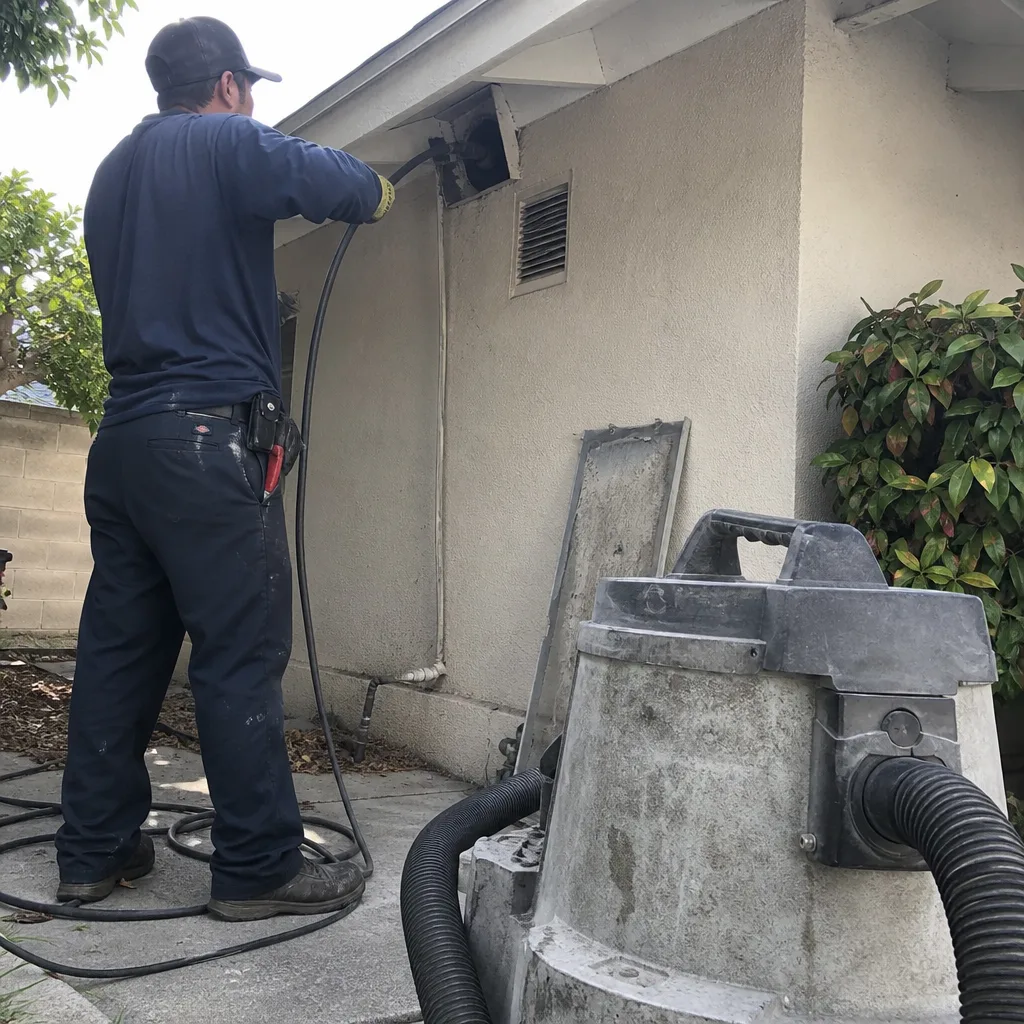 Before
 After
 Before
 After