
Last updated November 2, 2026
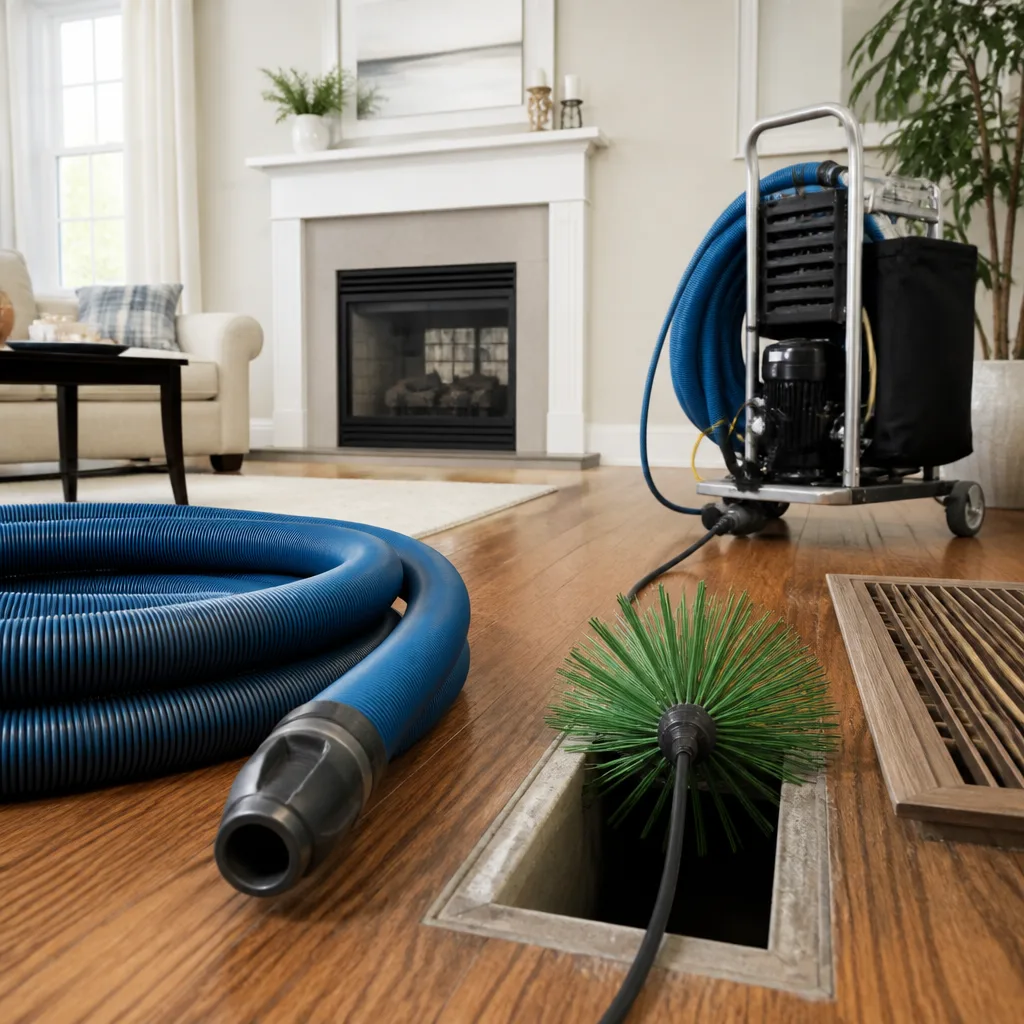 Whole-home duct cleaning
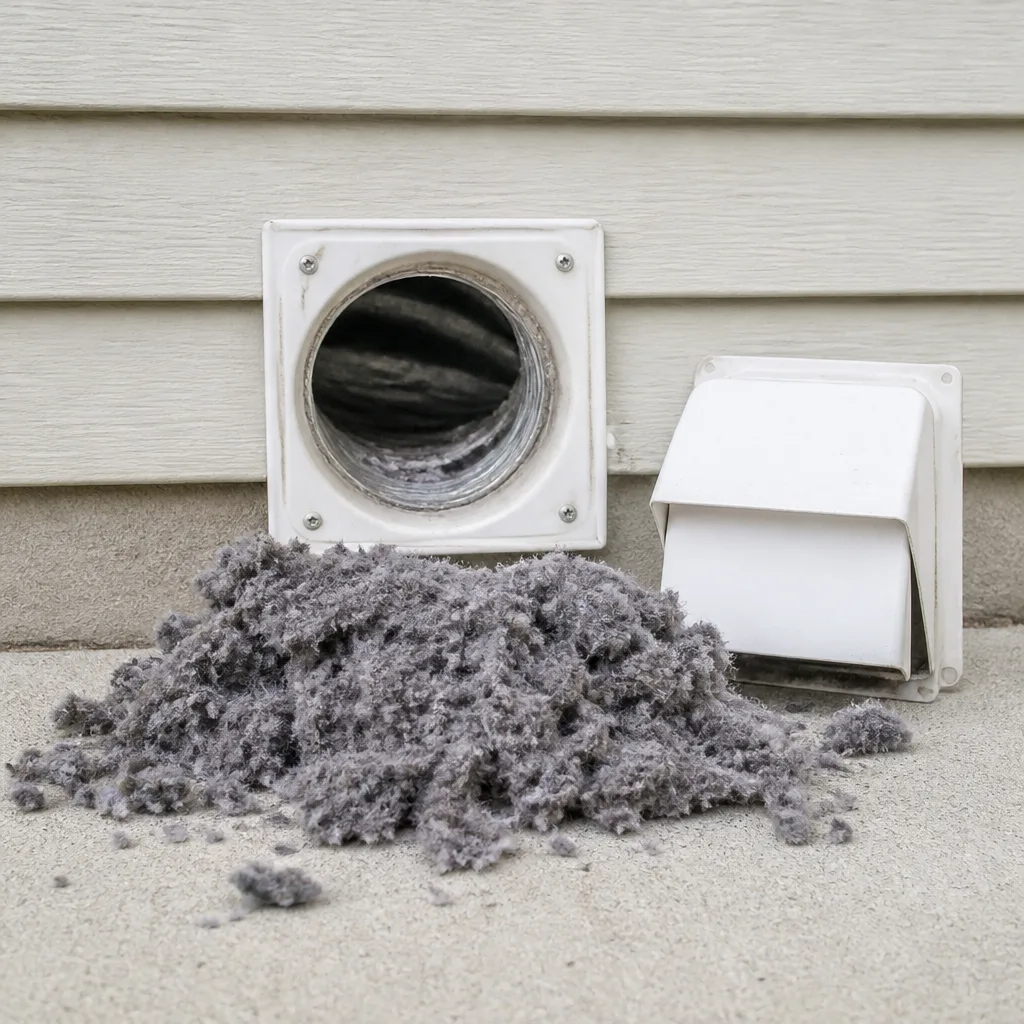 Dryer vent cleaning
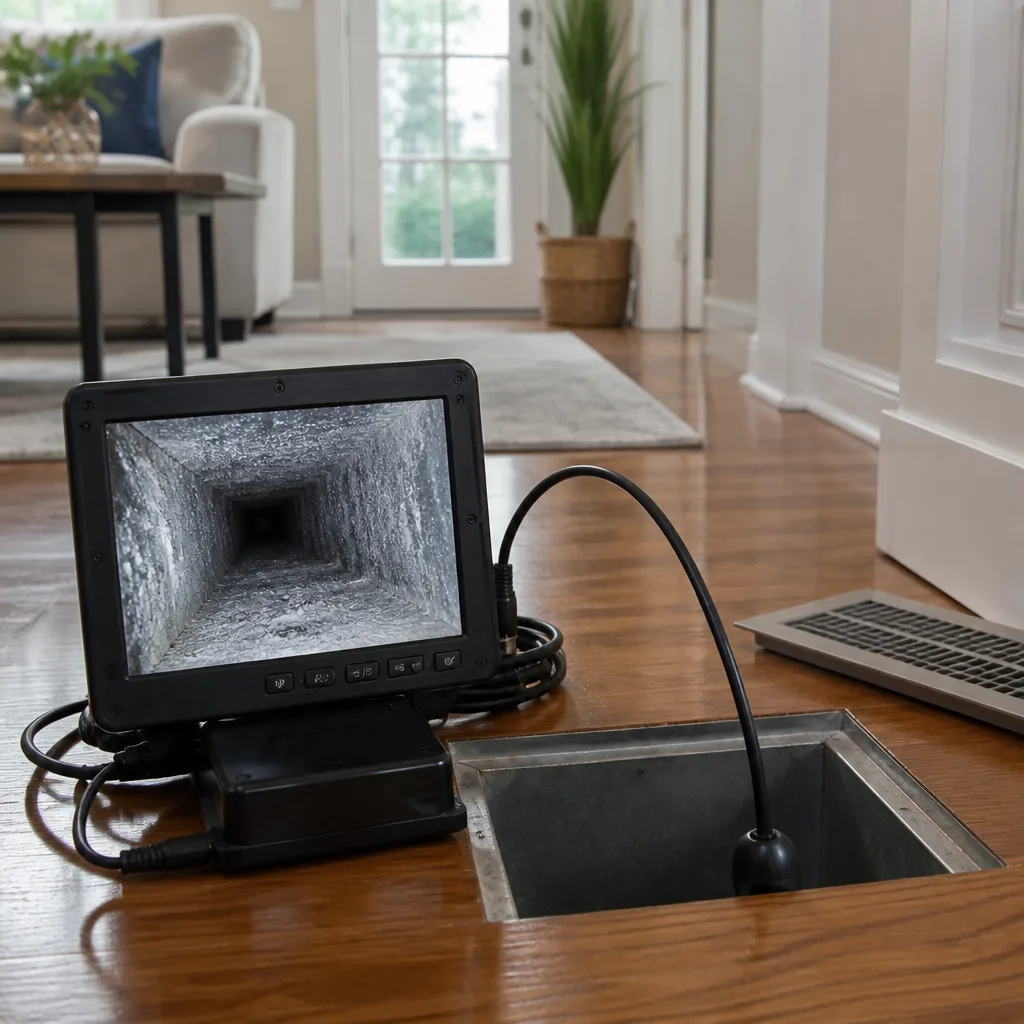 Camera inspection
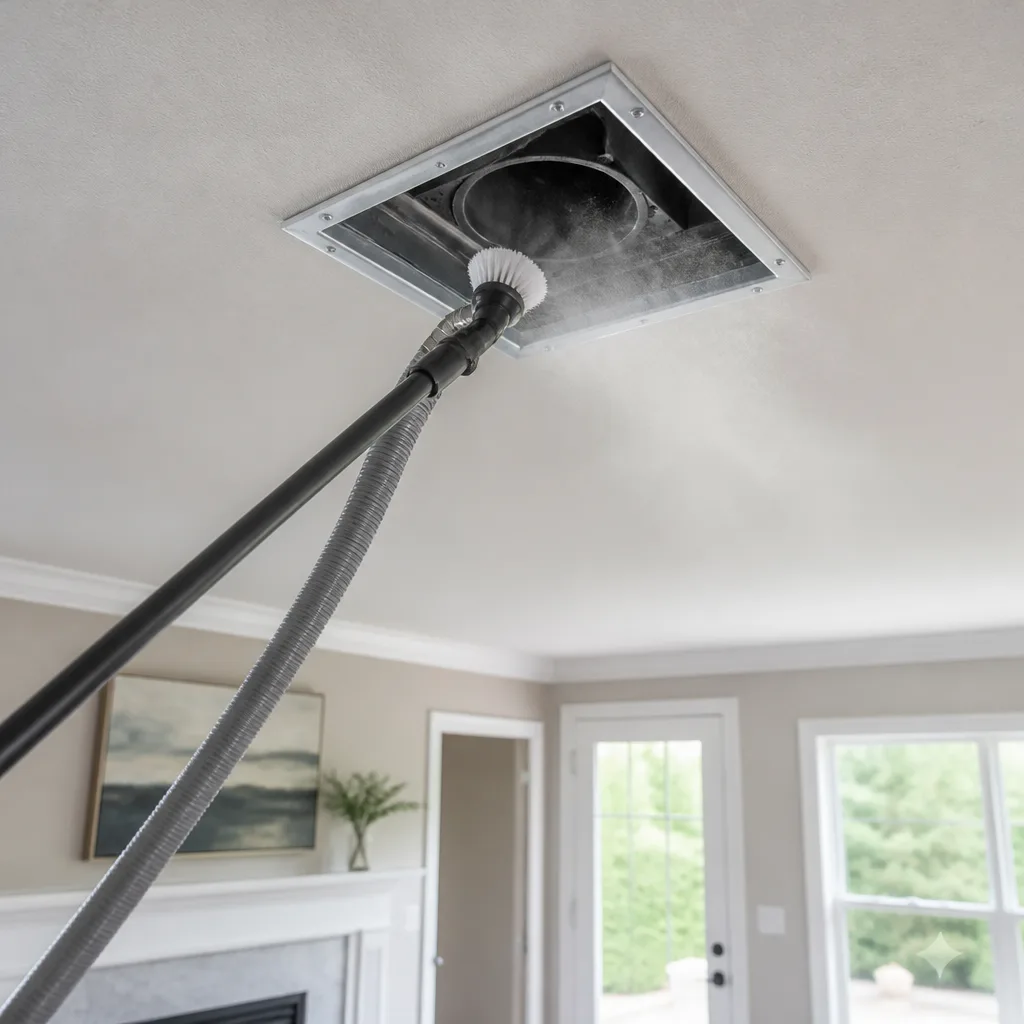 Sanitizing & deodorizing
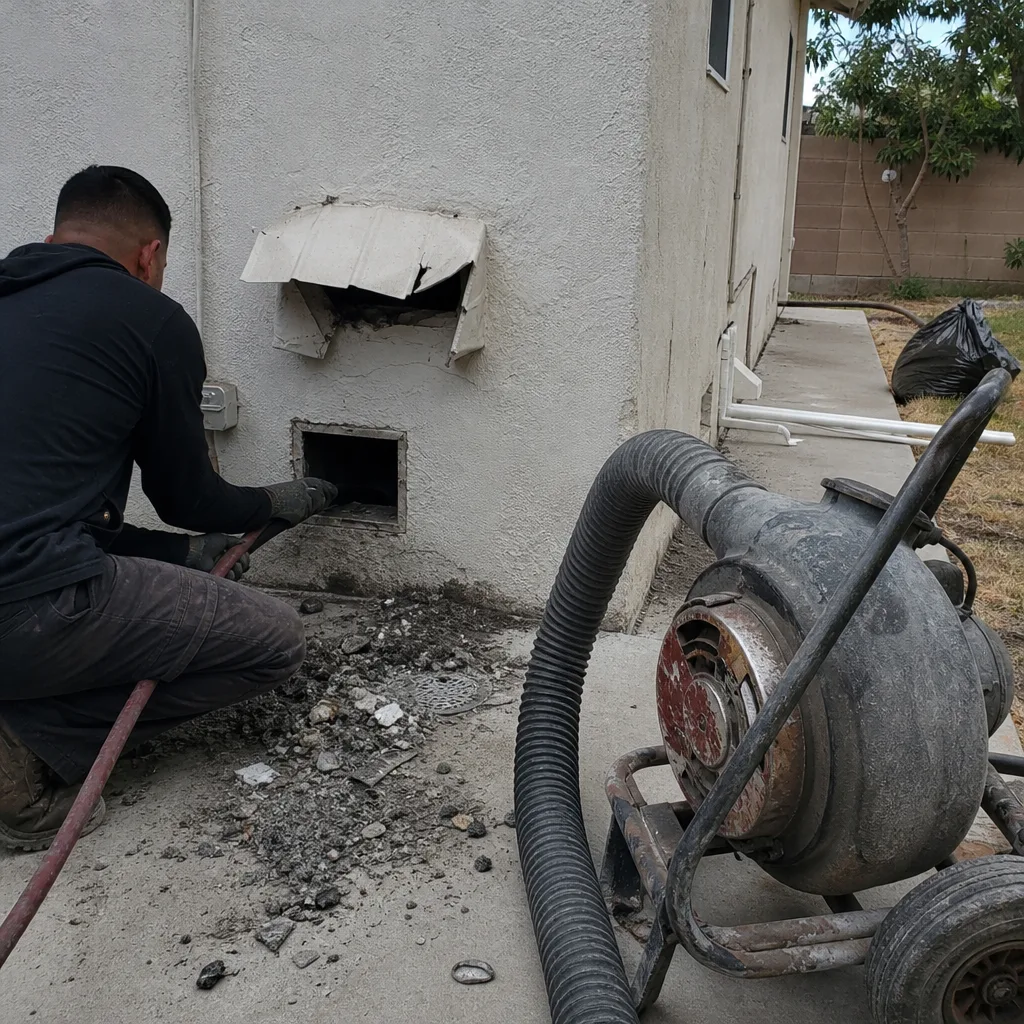
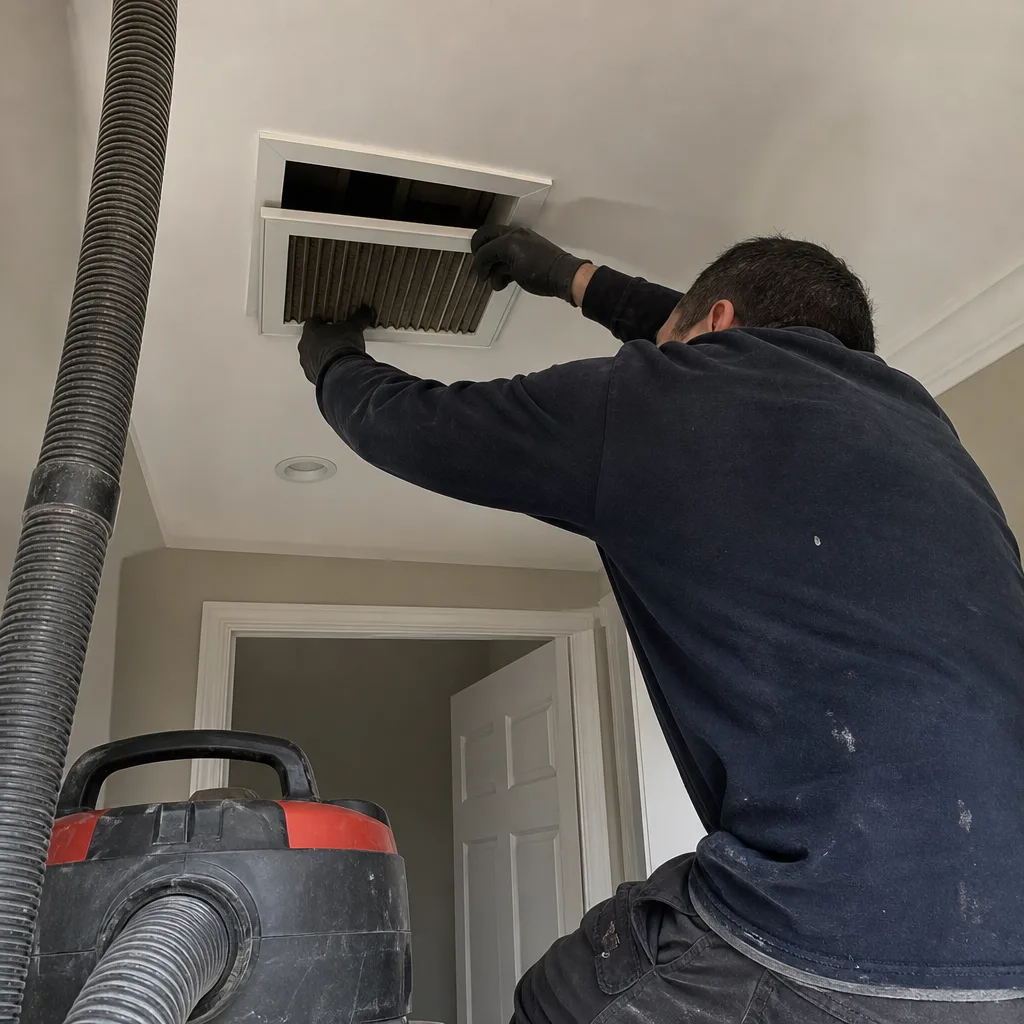
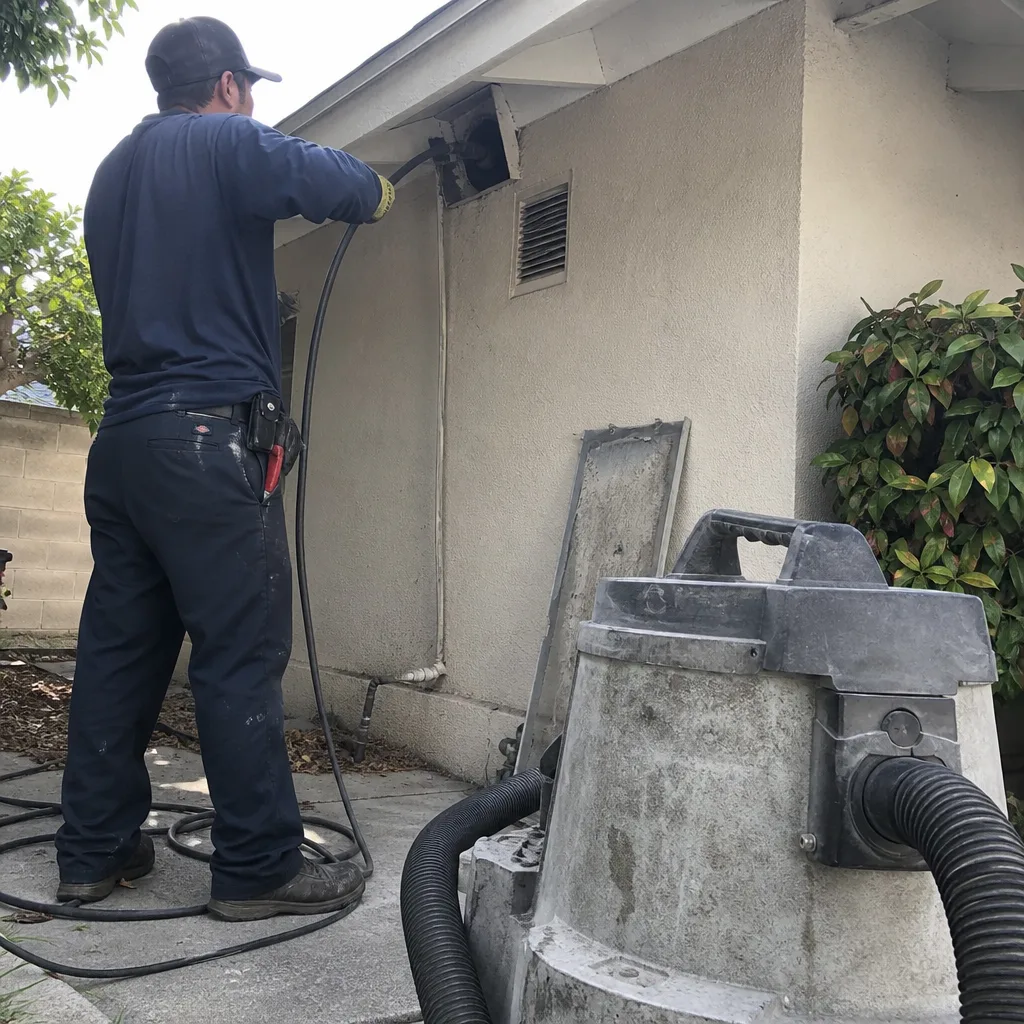
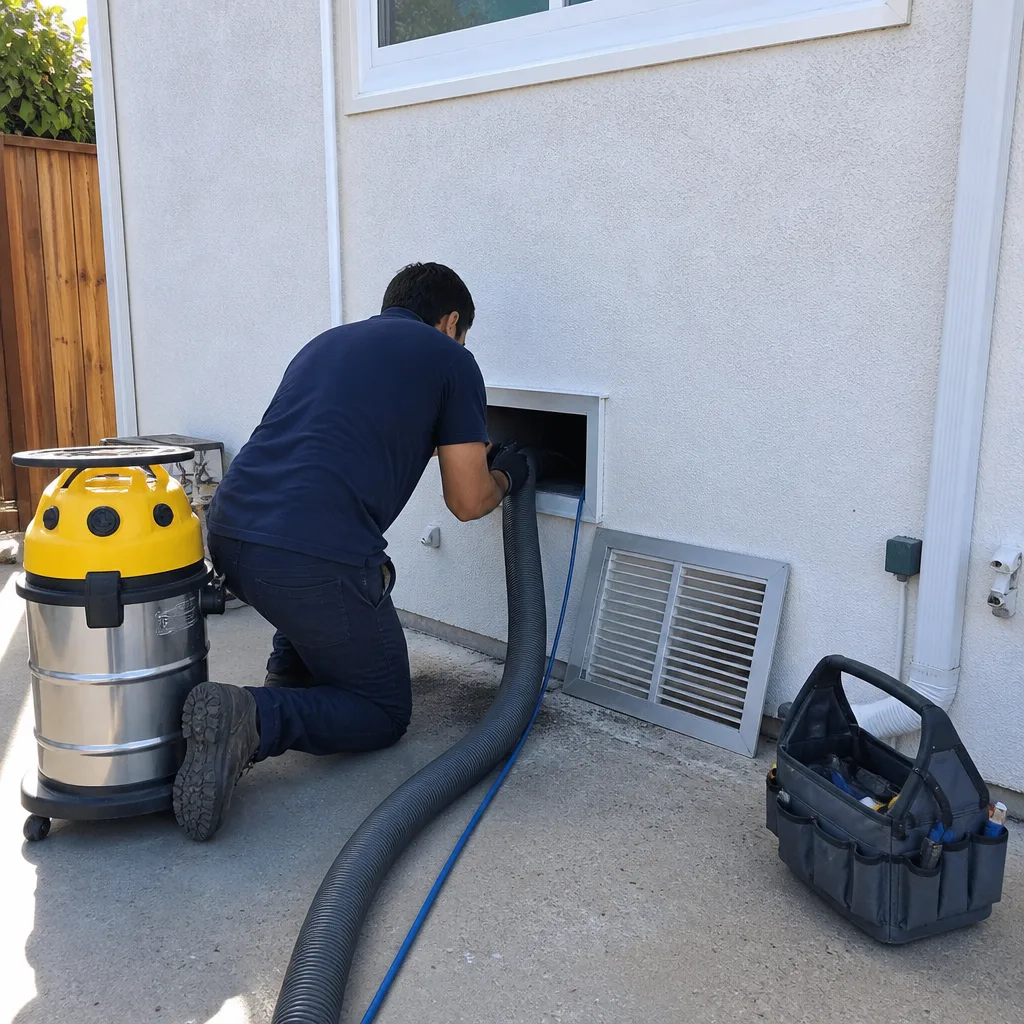
Whole-system duct and dryer vent check with before-and-after photos - you see exactly what came out of your vents
That "$99 whole-house special" is a bait ad - the real number appears once they are in your hallway, or the "clean" is a shop-vac at the register. We photograph the inside of your ducts before and after instead.
Air Duct Cleaning Emergency Preparedness Guide for Glendora Homes
During the 2020 Bobcat Fire, air quality monitors in Glendora recorded PM2.5 concentrations above 300 µg/m³ for multiple consecutive days. What most homeowners never learned is that their HVAC systems, running continuously to filter that smoke, were quietly accumulating fine combustion particulate inside duct liners. That particulate is not household dust. It’s chemically distinct, it’s stubborn, and standard cleaning passes won’t remove it. This guide covers what Glendora homeowners should do before, during, and after a wildfire smoke event to protect their duct systems and, by extension, the air their households breathe for months afterward. For ongoing care, see our Air Duct Cleaning services.
Quick Answer
Glendora homes facing wildfire smoke should prepare their HVAC systems before fire season by sealing return air leaks and installing MERV-13 filters, shut the system down entirely during active heavy smoke events, and after the smoke clears, have ducts inspected and cleaned using HEPA-rated source-removal equipment rather than standard vacuum methods. Combustion particulate from wildfire smoke embeds in duct liners and regular cleaning won’t extract it fully; professional remediation with negative-air HEPA filtration is what actually restores the system. Review our Air Duct Cleaning Maintenance Checklist for Glendora Homeowners for pre-season steps.
Styles & brands we work with
- Whole-home duct cleaning
- Dryer vent cleaning
- Camera inspection
- Sanitizing & deodorizing
Table of Contents
- Why Glendora’s Fire Risk Changes How You Think About Ducts
- Pre-Fire-Season HVAC Preparation for Glendora Homes
- During a Smoke Event: Shutdown Protocol and Why Recirculation Isn’t Enough
- Post-Fire Duct Remediation: What Actually Works
- Post-Event Inspection Sequence: When and How to Restart Your System
- Insurance Documentation: Records That Support a Smoke-Damage Claim
- Common Mistakes to Avoid
- When to Call a Professional
- Frequently Asked Questions
Why Glendora’s Fire Risk Changes How You Think About Ducts
Glendora sits directly against the San Gabriel Mountains, which means two things: the city is beautiful, and it’s in a documented wildfire risk corridor. The Bobcat Fire in 2020 burned over 115,000 acres just north of the city. Before that, the 2016 Fish Fire and the 2014 Colby Fire both sent heavy smoke through Glendora neighborhoods. This is not a hypothetical risk. It’s a recurring event pattern.
What gets overlooked in most emergency preparedness discussions is the role of the HVAC system as the primary pathway for smoke entry into a home’s interior. Your duct system connects every room to a central air handler. When outdoor air is smoky and your system is running, even with a standard filter, fine particulate gets pulled into the return ducts, circulated through the supply side, and eventually deposited on duct surfaces, coil fins, and blower components.
And here’s what matters: combustion particulate from wildfire smoke is chemically different from household dust. Household dust is mostly skin cells, fabric fibers, and soil tracked in from outside. Wildfire smoke particulate is hydrocarbon-based, acidic, and often carries volatile organic compounds that off-gas slowly. It adheres to duct surfaces differently. It requires different removal methods. At Duct Cleaning Glendora home inspections after the Bobcat Fire, we have found smoke residue deposited deep inside return duct liners where surface-level vacuum passes never reach.
Understanding that distinction changes how a Glendora homeowner should approach emergency planning. This is not about keeping vents looking clean. It’s about whether your HVAC system becomes a lingering smoke delivery mechanism for months after the fire is contained.
Pre-Fire-Season HVAC Preparation for Glendora Homes
The single most effective thing you can do for your duct system is prepare it before smoke season starts. Glendora’s high fire danger typically peaks from August through November, with Santa Ana wind events driving the worst conditions. Preparation in late spring or early summer puts you ahead of the curve.
1. Seal Return Air Leaks
Return air ducts are under negative pressure when your system runs. Any leak in a return duct, especially in an attic or crawl space, is actively pulling unfiltered air into the system. During a smoke event, that means smoky air bypasses your filter entirely and goes straight into the blower and supply ducts. In many Glendora homes built before 1990, return duct leakage of 15 to 25 percent is common. A duct inspection that includes sealing return air leaks with mastic or foil tape rated for HVAC use is the single best pre-season investment you can make. We complete this work as part of Air Duct Repair in Glendora when we find compromised return runs during an inspection.
2. Install MERV-13 Media
Standard fiberglass filters, the ones you can see through, are rated MERV-2 to MERV-4. They catch large particles and protect the equipment, but they do almost nothing for smoke. MERV-13 media captures particles down to roughly 0.3 microns, which includes most smoke particulate. Check that your filter rack can accept a MERV-13 filter without excessive pressure drop. Some older systems in Glendora homes struggle with the added resistance, which is why a technician should verify compatibility before you simply swap in a denser filter. Honeywell makes MERV-13 rated media filters that fit common residential filter racks, and we regularly assess whether a system can handle the upgrade during a standard Air Duct Cleaning in Glendora visit.
3. Locate and Test the System Shutoff
Every HVAC system has a shutoff switch, usually located on or near the air handler, and a circuit breaker in the main panel. In the middle of a smoke emergency is not when you want to figure out where those are. Locate both. Test them. Show every adult in the household. If the air handler is in a closet or attic that’s awkward to reach, consider having a remote disconnect wired in. Knowing you can kill the system entirely, fast, is the single most important preparation step after sealing leaks.
During a Smoke Event: Shutdown Protocol and Why Recirculation Isn’t Enough
When the air quality index in Glendora pushes past 150, which happened repeatedly during the Bobcat Fire, the question is whether to run your HVAC system and in what mode. The conventional wisdom says recirculation mode, where outside air dampers close and the system just cycles indoor air through the filter, is protective. It is not as protective as it seems.
Here’s why. Recirculation mode reduces outdoor air intake, but it does not eliminate it. Most Glendora homes have some outside air entering through leaky return ducts, bathroom vents, range hoods, and door seals. More importantly, recirculation mode keeps the blower running, which means air is moving through your duct system continuously. That moving air is depositing whatever particulate is present onto duct surfaces, coil fins, and the blower wheel. Running the system during heavy smoke actively increases contamination load, even with a MERV-13 filter installed.
The correct protocol for active heavy smoke events is simple:
- Shut the system down completely. Switch off at the thermostat, then kill power at the air handler switch and breaker. A dead system cannot circulate smoke.
- Seal vents in rooms you are not using. Close supply registers and return grilles in unoccupied rooms. This limits passive smoke infiltration into the duct network.
- Run standalone HEPA air cleaners instead. Portable units with true HEPA filters clean room air without moving it through your duct system. Abatement Technologies makes both whole-home units and portable scrubbers; a portable HEPA unit is the better choice during an active event.
- Wait until outdoor AQI drops below 100 and holds. Do not restart your HVAC system on the first clear-looking day. Smoke particulate remains airborne for days after visible haze clears.
One more note from experience: if your system has an economizer or fresh air intake damper, verify that it is fully closed during smoke season. Many Glendora commercial buildings and some larger residential systems have these, and a failed damper actuator will pull outdoor air in regardless of thermostat settings.
Post-Fire Duct Remediation: What Actually Works
Once the smoke clears and you are ready to address whatever accumulated inside your duct system, understand the distinction between standard duct cleaning and actual smoke particulate remediation. They are not the same thing, and conflating them leads to systems that look cleaner but still smell like smoke every time the blower kicks on.
Standard duct cleaning uses vacuum equipment and brushes to remove loose household dust. That may be adequate for a system that simply accumulated normal dust over a few years. Wildfire smoke particulate is different. It is smaller, stickier, and often slightly acidic. It bonds to duct liners, especially fibrous acoustic lining that is common in older Glendora homes. It also deposits on the underside of the evaporator coil and on blower wheel vanes, places where normal cleaning passes rarely reach without specific tools.
What actually works is source-removal cleaning combined with HEPA-rated negative air pressure. The method matters:
- Rotobrush rotary brush systems mechanically agitate duct walls, dislodging adhered particulate rather than simply vacuuming loose surface dust.
- Nikro HEPA negative-air vacuums create continuous suction at the point of agitation and capture extracted particulate in HEPA-rated filtration. The particulate leaves your home, not just moves around inside it.
- Guardsman or equivalent line set and coil treatments address residue on the coil and blower, which are part of the contamination pathway.
The dual-action approach of mechanical agitation plus HEPA negative air is what professional indoor air quality standards recommend for combustion particulate. A single pass with a shop vac and a brush on a drill will not accomplish this. If a company quotes you per-vent pricing and shows up with a truck-mounted vacuum and no agitation equipment, you are not getting smoke remediation. You are getting surface dusting.
Post-Event Inspection Sequence: When and How to Restart Your System
Before you run your HVAC system again after a Glendora smoke event, follow a deliberate sequence. Rushing this step is how homeowners end up blowing a concentrated dose of smoke odor through the entire house on the first hot day after a fire.
- Visual register inspection. Remove two or three supply registers in different parts of the house. Look for dark streaking on the register face, the inside of the register boot, and the first few inches of visible duct. Streaking is deposition evidence.
- Filter inspection. Pull the filter. If it is gray-brown and smells smoky, the system has been processing contaminated air. Replace it before proceeding.
- Blower compartment check. Look at the blower wheel through the access panel. A visible coating of fine gray-brown dust on the wheel vanes indicates particulate is throughout the airstream.
- Static restart test. With all registers open and a fresh MERV-13 filter installed, turn the system on in fan-only mode for 60 seconds. Stand at a supply register. If you detect smoke odor, shut it down. The ducts need professional attention before the system returns to regular use.
- Full cycle test. If fan-only mode runs clean, switch to heating or cooling mode and run a full 15-minute cycle. Monitor register output for odor throughout.
If odor appears at any stage, do not run the system. Duct smoke residue gets redistributed every time the blower moves air, and repeated short cycles bake particulate onto coil surfaces where it becomes progressively harder to remove. The right move is a professional inspection with the equipment to identify where the contamination load is and remove it at the source.
Insurance Documentation: Records That Support a Smoke-Damage Claim
Smoke damage claims in Glendora after wildfire events are common, and insurers are increasingly rigorous about what they will cover. Duct cleaning and HVAC remediation are frequently contested line items. The difference between an approved claim and a denied one often comes down to documentation quality.
What insurers look for:
- Pre-event baseline records. If you had your ducts cleaned or inspected before fire season, keep the invoice, the before-and-after photos from that work, and any technician notes. A documented pre-existing clean system is a strong baseline for claiming that post-fire contamination is event-related.
- AQI data logs for Glendora. Screenshot or save air quality readings from official monitoring stations during the event. Specific PM2.5 numbers tied to specific dates establish exposure. Glendora’s air quality during the Bobcat Fire exceeded 300 µg/m³, and having that documented by date strengthens causation.
- Post-event inspection photos. Photographs of filter discoloration, register streaking, and blower wheel coating all establish that contamination entered the system. Take these before any cleaning begins.
- Equipment and method records from remediation. A professional remediation receipt should specify the equipment used, including whether HEPA-rated negative air was deployed. An itemized method description is far more defensible than a line item that says “duct cleaning.”
- Post-remediation verification. After cleaning is complete, new photos of clean duct surfaces, a new filter installed, and any air quality readings taken after the work closes the loop. This documentation sequence shows the full arc from contamination to remediation.
We provide documentation of equipment deployed, areas treated, and before-and-after imaging on every Air Duct Cleaning in Glendora project for exactly this reason. If you are planning to file a claim, ask for documentation up front, before work begins.
Common Mistakes to Avoid
- Running the HVAC system during heavy smoke because you assume the filter will handle it. Even a MERV-13 filter does not prevent resuspension and deposition of smoke particulate on duct surfaces. During AQI events above 150, shut the system down.
- Restarting the system on the first clear day. Smoke particulate remains airborne for days after visible haze clears. Wait until Glendora AQI readings hold below 100 before restarting.
- Assuming standard duct cleaning removes smoke residue. Combustion particulate requires mechanical agitation plus HEPA negative-air capture. A vacuum-only pass leaves the sticky particulate behind.
- Trusting the “recirculation mode is safe” advice. Recirculation reduces outdoor air intake but keeps the blower running, which actively distributes whatever particulate is present throughout the duct system.
- Replacing the filter only, and declaring the system clean. The filter is evidence of contamination, not the sole location of it. Duct surfaces, coil fins, and the blower wheel all accumulate particulate.
- Filing an insurance claim without documentation. Claims without pre-existing baseline records, event-time AQI data, and post-event photos are routinely underpaid or denied. Document everything.
- Running the system to “dry it out” after using water misters or coolers during a smoke event. Introducing moisture to a system with smoke residue creates a slurry that adheres harder to duct surfaces. Let the system stay off until professionally evaluated.
When to Call a Professional
Call a professional if you detect smoke odor at any supply register during a restart test, if you see streaking inside register boots or on the blower wheel, if your household has anyone with asthma or respiratory sensitivity and a significant smoke event has occurred, or if you are planning an insurance claim and need documented remediation. These are not situations where a filter swap and a few days of open windows will resolve the problem. The contamination is distributed throughout a duct network you cannot fully see or reach. Duct Cleaning Glendora offers free estimates in Glendora – call (833) 620-4169 and we will assess your system, show you what we find, and provide documentation you can use for insurance purposes. We also handle Dryer Vent Cleaning in Glendora, which becomes relevant after smoke events when dryer vents have pulled in the same contaminated outdoor air.
Frequently Asked Questions
Look for visible evidence first: dark streaking inside register boots, a gray-brown film on the filter, and a visible coating on the blower wheel. If you detect smoke odor when the fan runs, that’s confirmation enough to warrant professional inspection before continued use.
Running the system with a new filter addresses airborne particulate but does nothing for whatever has already deposited on duct surfaces, coil fins, and blower components. Every subsequent cycle resuspends some of that particulate, which is why odor persists for months in contaminated systems.
Smoke remediation for a typical Glendora home duct system, using HEPA negative-air and mechanical agitation methods, ranges from roughly $600 to $1,400 depending on system size, configuration complexity, and contamination level. This is higher than a standard maintenance cleaning because the method required is different and more equipment-intensive. Call (833) 620-4169 for an exact quote – estimates are free and we provide documentation suitable for insurance claims.
Coverage depends on your policy language and the documentation you provide. Many policies cover smoke-remediation duct cleaning when the claim is well-documented with baseline records, AQI data, and photographic evidence of contamination. Insurers are more likely to approve claims that specify remediation methods, not just “cleaning.”
Wait until outdoor AQI readings in Glendora hold below 100 for at least 24 to 48 hours before restarting your system. Airborne particulate drops slowly after a major event, and the first clear-looking day is frequently still unhealthy.
A MERV-13 rated media filter is the standard recommendation for smoke season, provided your system can handle the pressure drop. Have a technician verify compatibility before swapping in a denser filter. Honeywell MERV-13 media filters are widely available and fit most standard residential filter racks.
When combustion particulate is the source of the odor, yes – source-removal cleaning with mechanical agitation and HEPA negative-air capture removes the particulate that carries the odor. Residual odor may sometimes linger in insulation or soft furnishings, but a properly remediated duct system should not smell like smoke when the blower runs.
The Bottom Line
Glendora’s wildfire risk is documented and recurring, and your duct system is the pathway through which smoke particulate enters and lingers in your home. Pre-season preparation – sealing return leaks, installing MERV-13 media, and knowing your shutoff locations – reduces contamination load. Shutting the system down entirely during heavy smoke events protects it. Post-event remediation requires HEPA-rated source removal, not standard duct cleaning. And documentation at every step is what makes insurance claims defensible. Preparedness here is not about panic; it’s about knowing the sequence and acting before the next smoke event arrives. Explore more guides & resources for year-round HVAC protection.
Written by the team at Duct Cleaning Glendora, serving Glendora since 2014.
See the difference
 Before
 After
 Before
 After
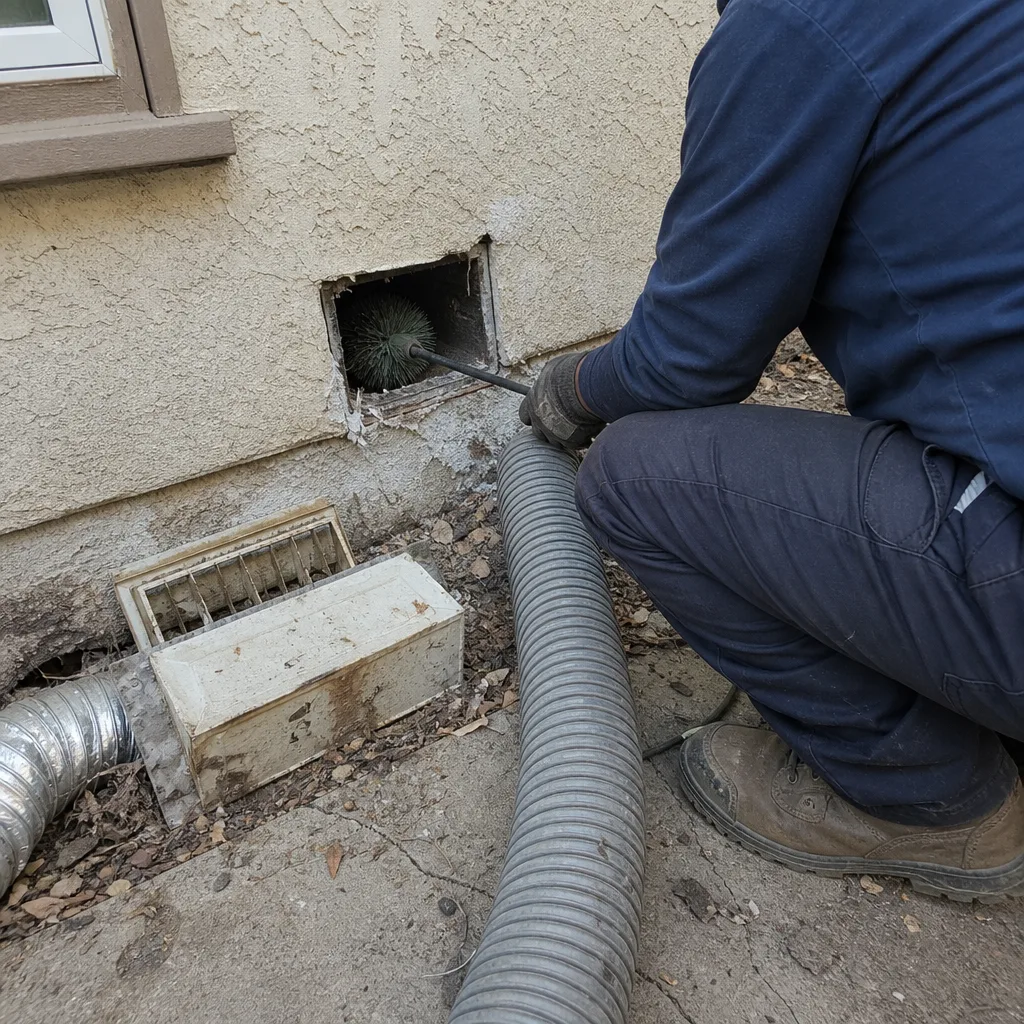 Before
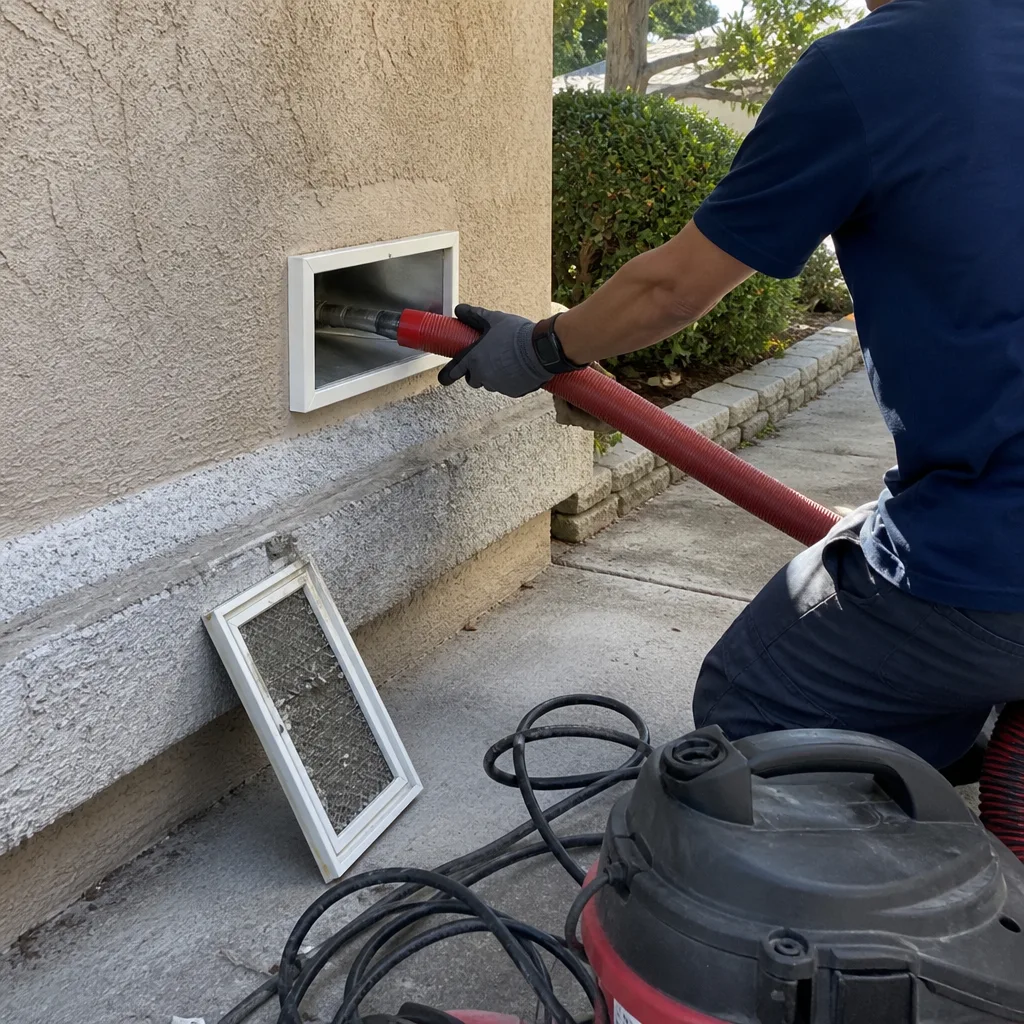 After