
Last updated November 2, 2026
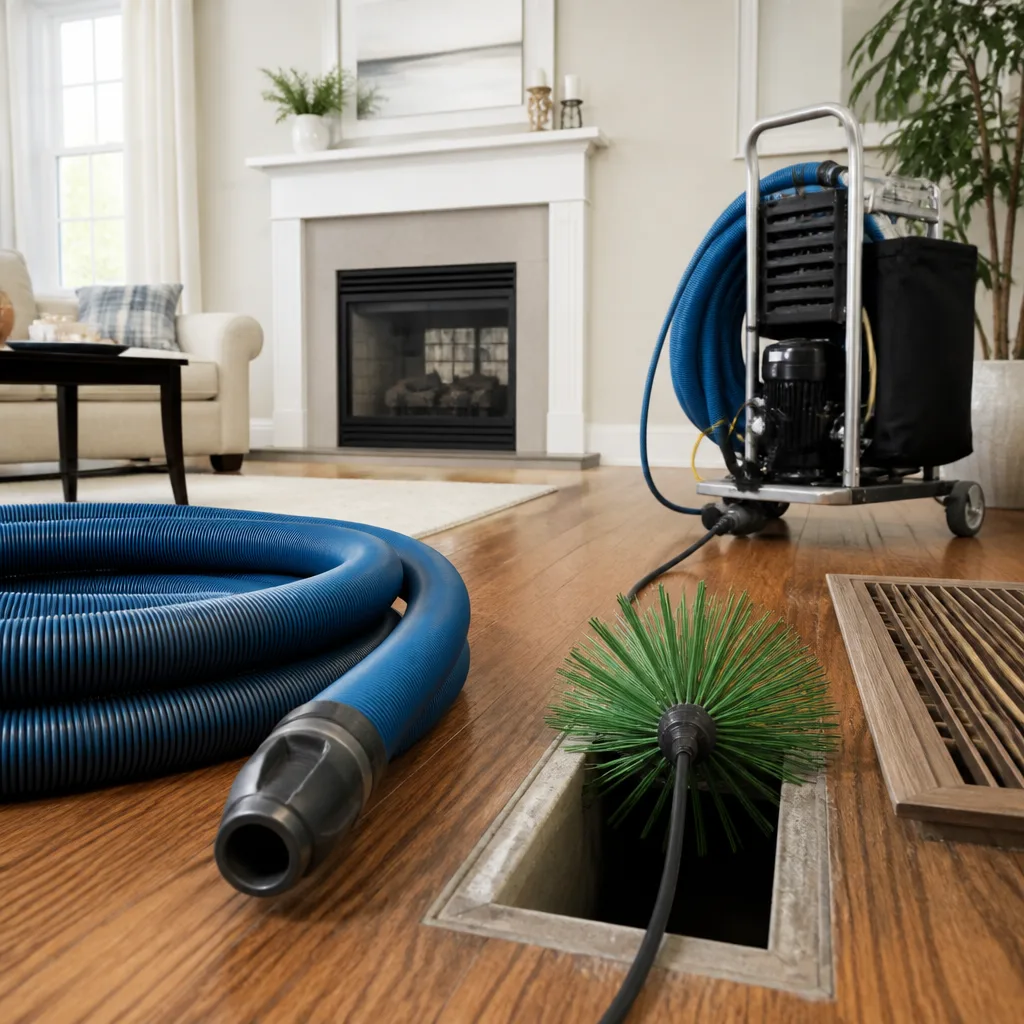 Whole-home duct cleaning
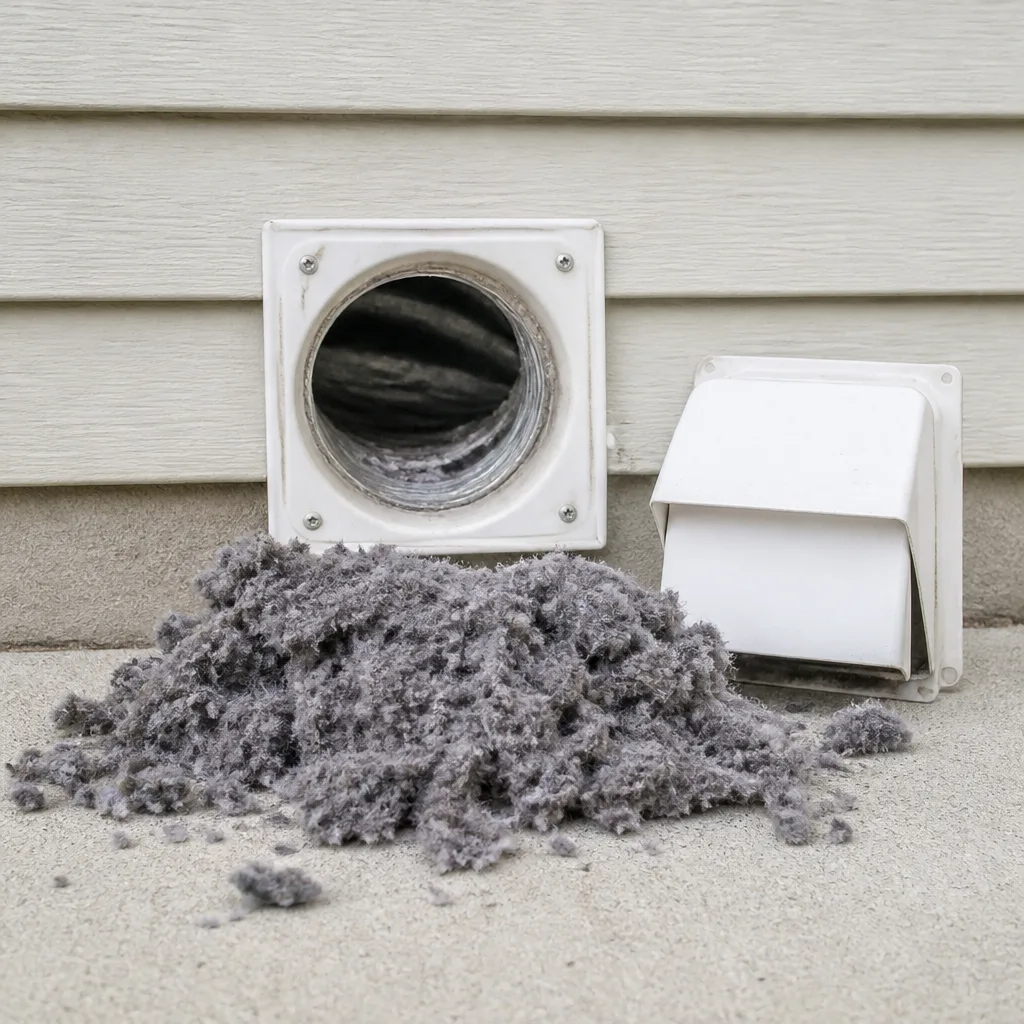 Dryer vent cleaning
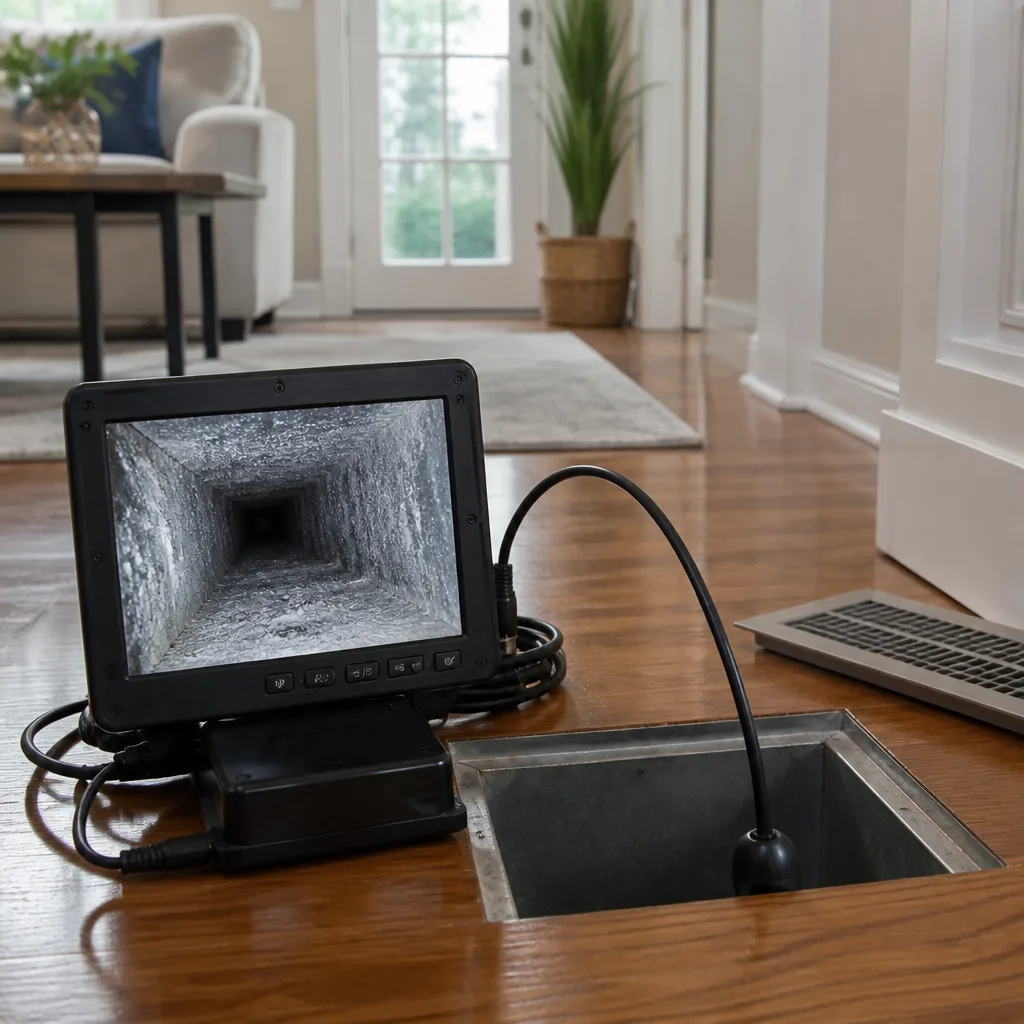 Camera inspection
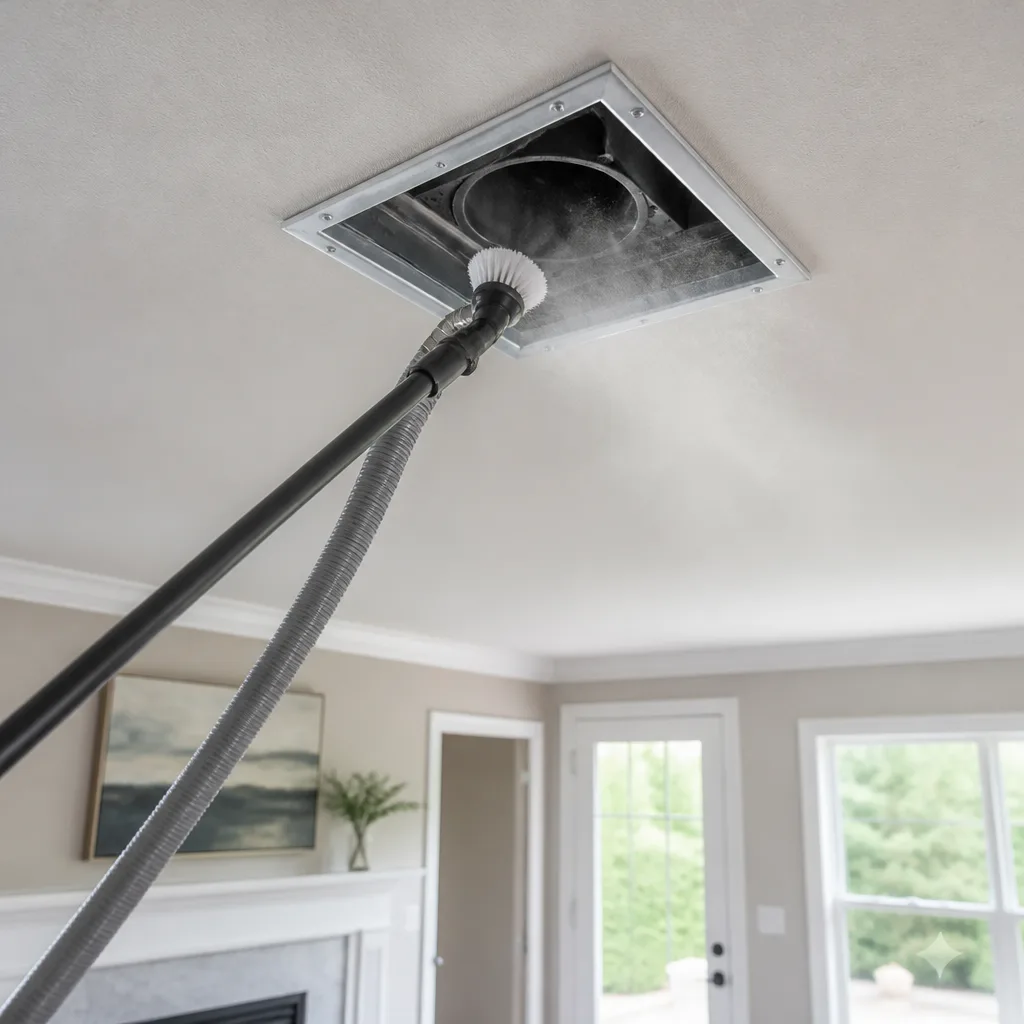 Sanitizing & deodorizing
Whole-system duct and dryer vent check with before-and-after photos - you see exactly what came out of your vents
That "$99 whole-house special" is a bait ad - the real number appears once they are in your hallway, or the "clean" is a shop-vac at the register. We photograph the inside of your ducts before and after instead.
Air Duct Cleaning Permits, Codes & Inspections in CA: What You Need to Know
Here’s a counterintuitive fact for Glendora homeowners: the $199 whole-house duct cleaning special rarely ends at $199, and the surprise add-on isn’t always just an upsell. It’s often a technician explaining that the job requires cutting a new access hole, replacing a rusted duct section, or sealing a disconnected joint. That’s the moment a routine cleaning crosses into Title 24-regulated HVAC work requiring a California C-20 contractor license and a pulled permit. Most homeowners never realize the line was crossed until a home inspector flags it three years later during escrow. This guide walks you through exactly where that line sits, what Glendora’s building department actually enforces, and how to verify any contractor before they touch your system. For related reading, see our Air Duct Cleaning Warning Signs: A Glendora Homeowner’s Reference Guide.
Quick Answer
Air Duct Cleaning services alone do not require a permit anywhere in California, including Glendora, because they’re classified as maintenance rather than construction. However, any duct modification – cutting access panels, replacing duct sections, applying internal sealants or encapsulation coatings, or altering airflow design – does trigger permit requirements under Title 24 Part 6 and requires a licensed C-20 HVAC contractor. If your “cleaning” involves any of those modifications, you need a permit, and skipping it creates a title-transfer problem when you sell.
Styles & brands we work with
- Whole-home duct cleaning
- Dryer vent cleaning
- Camera inspection
- Sanitizing & deodorizing
Table of Contents
- The C-20 License: Where California Draws the Line Between Cleaning and Contracting
- Title 24 Part 6: Duct Sealing, Leakage Testing, and When It Applies
- City of Glendora: What the Building Department Actually Requires
- Access Panels, Cut Holes, and the Modification Gray Zone
- Duct Encapsulation and Internal Coatings: The Regulatory Blind Spot
- How to Verify a Contractor’s License via CSLB (5-Minute Check)
- Unpermitted Duct Work, Home Inspections, and Los Angeles County Title Transfer
- Red Flags in a Duct Cleaning Quote: What Glendora Homeowners Should Question
The C-20 License: Where California Draws the Line Between Cleaning and Contracting
California’s Contractors State License Board (CSLB) issues a specific C-20 classification for warm-air heating, ventilating, and air-conditioning contractors. The key distinction CSLB makes is between maintenance work and installation, modification, or repair work. Cleaning the interior surfaces of existing ductwork falls under maintenance, which does not require a contractor’s license. But here’s what most homeowners don’t realize: the moment a technician removes a duct section to access a deeper area, cuts a new access port because the existing one is inaccessible, or replaces a section of flex duct that’s collapsed, that technician is now performing HVAC contracting work. And in California, performing C-20 work without a C-20 license is a misdemeanor.
We’ve watched Glendora homeowners sign off on duct cleaning jobs where the technician “had to” cut a new access hole in the main trunk line because the original installer never provided adequate access. That hole requires a patch panel, proper sealing, and – by the letter of California law – a permit. When a technician tells you they’ll just “cut a quick hole and seal it back up,” they’re describing a code-regulated modification, not routine maintenance. In our experience, the companies that operate this way can’t show you a license because they don’t have one. And that’s why CSLB exists.
The practical takeaway: before any duct work begins in your Glendora home, ask the technician two questions: “What’s your CSLB license number?” and “Is any part of this job going to require cutting, replacing, or sealing access panels or duct sections?” If they can’t answer the first question or answer the second with “no, we’ll just make it work,” you should find another company. A proper air duct cleaning in Glendora starts with an assessment of whether existing access points are sufficient for the work without modification.
Title 24 Part 6: Duct Sealing, Leakage Testing, and When It Applies
California’s Title 24 Building Energy Efficiency Standards, Part 6, governs duct sealing and leakage requirements for HVAC systems. When any duct modification occurs – a replaced section, a new access panel, a reconnected joint – Title 24 requires that the affected portions be sealed and, for larger modifications, tested for leakage. The standard is clear: duct leakage must not exceed 5% of the system’s total airflow for new installations or major alterations. That’s not a suggestion; it’s a compliance threshold.
The trigger point matters. Routine cleaning of accessible ductwork does not invoke Title 24 sealing requirements, because no modification is occurring. But the moment a technician cuts into the duct, detaches a section for access, or replaces a damaged segment, Title 24 Part 6 applies. The modified section must be sealed with approved materials (typically UL 181-rated mastic or foil tape that meets specific standards, not flimsy cloth-backed tape from a hardware store), and depending on the scope of the modification, leakage testing with a duct blaster may be required.
In Glendora, where summer temperatures routinely push past 95 degrees, duct leakage is not an abstract energy-efficiency metric. A system losing 20% of its conditioned air into an attic that’s 130 degrees is working materially harder and costing you real money each month. That’s why the standard exists, and why unpermitted, unsealed modifications hurt in two ways: you lose efficiency immediately, and you inherit a compliance problem when the home is sold. We use source-removal cleaning methods with Rotobrush rotary brush systems paired with Nikro HEPA negative-air vacuums for the cleaning itself, but when we encounter duct sections that need repair during a cleaning, the repair conversation immediately includes permits and Title 24 compliance. If you’re experiencing issues, our Air Duct Cleaning Troubleshooting: Common Problems and How to Fix Them offers additional guidance. They are not optional add-ons; they’re the same job.
City of Glendora: What the Building Department Actually Requires
Glendora’s Building and Safety Division operates under the Los Angeles County permitting framework, and its requirements for HVAC work mirror California state law with local procedural specifics. For the kind of work that accompanies many duct cleaning jobs – cutting access panels, replacing duct sections, modifying plenums – a mechanical permit is required. The permit process involves submitting a description of the work, paying the permit fee based on the valuation of the work, and scheduling an inspection after completion. The inspection verifies that the modification meets current California Mechanical Code and Title 24 standards.
Here’s where Glendora homeowners get caught: the city does not send a building inspector to your house to confirm whether duct work was permitted. Enforcement happens at the point of sale. When you list your home, the buyer’s home inspector will examine the HVAC system, and visible modifications without corresponding permit records will be noted in the inspection report. In Los Angeles County’s competitive real estate market, that finding becomes a negotiation point, a repair request, or – in some cases – a reason for the buyer to walk.
The practical recommendation if you’re in Glendora and a duct cleaning company tells you a permit isn’t needed: they might be right, but only if the work is truly limited to cleaning accessible portions of the duct system. If they’re also proposing to cut, replace, or seal anything, ask them to put it in writing and take that written description to the City of Glendora Building and Safety Division for a determination. The counter staff can tell you in minutes whether a permit is required. We’ve directed many customers through this exact process, and the answer is usually obvious from the description of the work.
Access Panels, Cut Holes, and the Modification Gray Zone
The single most common way unpermitted duct work happens in Glendora homes is the access panel problem. A proper duct cleaning requires access to the interior of the main supply and return trunks. In an ideal system, the original installer placed access panels at intervals that allow full cleaning without modification. But many Glendora homes – especially those built in the 1960s through 1980s – don’t have adequate access points. Some have none at all in the main return trunk.
When a technician encounters a system without access, there are three legitimate paths. The first is to perform source-removal cleaning through the available openings (registers, plenum connections) without cutting new access, accepting that some portions of the trunk may be less accessible. The second is to recommend adding access panels, which requires a permit and should be performed by a C-20 licensed contractor. The third – the path we’ve seen far too often from $199 special operators – is to cut a hole, scrape out whatever can be reached with a shop-vac, seal the hole with duct tape, and call the job done.
That third path creates a permanent problem. The hole remains, poorly sealed, leaking conditioned air into the attic or wall cavity. The improper seal eventually fails, and the leak worsens. When the home is inspected at sale, the inspector identifies the non-standard access point and the non-compliant sealing. The new buyer requests remediation. That remediation typically costs far more than pulling the original permit would have. In our experience running source-removal cleaning with Abatement Technologies air scrubbers on applicable jobs, we also encounter many systems where a previous “cleaning” left behind exactly this kind of modification. The smart play for Glendora homeowners is to ask upfront whether the cleaning can be completed through existing access, and if it can’t, to decide consciously between accepting limited cleaning and doing the permitted right thing.
Duct Encapsulation and Internal Coatings: The Regulatory Blind Spot
Duct encapsulation – also called internal coating or duct sealing by coating – involves applying a liquid sealant to the interior surfaces of ductwork. It’s marketed as a way to address dust accumulation, minor leaks, or fiberglass insulation degradation without replacing ducts. What most California homeowners don’t know is that this practice occupies an uncomfortable regulatory gray zone. The CSLB has not issued clear guidance treating encapsulation as either cleaning or contracting, but the materials used and their permanence clearly push it into modification territory.
The practical concerns are threefold. First, the coating changes the internal dimensions and surface characteristics of the duct, which can affect airflow if applied unevenly. Second, many encapsulation products have specific curing requirements, and if they’re applied by an unlicensed technician who doesn’t follow those requirements, the material can fail, flake, and blow particulates into the living space. Third, because the coating is a permanent modification, it can void warranties on flex duct from some manufacturers and certainly should be reflected in remodel or sale disclosures. When we assess a system in Glendora that has been previously coated, we look for cracking, peeling, and airflow restriction as part of our standard evaluation before any source-removal cleaning begins.
The advice we give every homeowner in Glendora considering encapsulation is to treat it exactly as you would treat duct replacement: require a C-20 licensed contractor, require a permit if the city determines one is needed, and require documentation of the product used, its application specs, and its warranty. If a company is reluctant to provide that documentation, that’s your answer.
How to Verify a Contractor’s License via CSLB (5-Minute Check)
Verifying a contractor’s license in California takes five minutes, and the fact that most homeowners never do it is precisely why unlicensed operators keep working in Glendora. Here’s the step-by-step process:
- Go to the CSLB website at cslb.ca.gov and select “Check a License” from the main navigation.
- Enter the company name or license number. If the company’s legal name differs from its marketing name, try both. Many duct cleaning businesses operate under a DBA that won’t appear in CSLB records.
- Verify the classification. Look specifically for “C-20” (Warm-Air Heating, Ventilating, and Air-Conditioning) rather than a general building classification. If you’re hiring for duct repair or modification, a general contractor’s license without C-20 is insufficient.
- Check license status. The record will show whether the license is active, suspended, or expired. Also note the issue date – a license issued three weeks ago tells you the company has limited operating history.
- Review any disciplinary history. The CSLB record includes citations, suspensions, or complaints that resulted in formal action. A company with repeated citations for unpermitted work should not be in your home.
One more practical note for Glendora homeowners: ask for a certificate of insurance directly from the contractor’s insurance provider, not a photocopy from the contractor. Unlicensed operators often carry no liability insurance or worker’s compensation, and if someone is injured in your crawlspace or attic during an unlicensed job, the financial exposure lands on you. A licensed C-20 contractor with proper insurance is the baseline for any work beyond simple cleaning. When we do air duct repair in Glendora, the license and insurance documentation is part of the pre-work conversation, not something you should have to ask for.
Unpermitted Duct Work, Home Inspections, and Los Angeles County Title Transfer
If you’re in Glendora and planning to sell within the next five years, unpermitted duct modifications are a ticking title-transfer problem. Los Angeles County home inspectors are trained specifically to identify HVAC system alterations, and the pattern recognition is straightforward: a non-standard access panel, mismatched duct segment materials, visible mastic sealing that appears newer than the surrounding area, or flex duct that doesn’t match the original installation. When these appear, the inspector’s report includes a recommendation to verify permits with the city.
The buyer’s agent then pulls permit records from the City of Glendora. Nothing there. The negotiation begins. In a seller’s market, the buyer may accept a credit and handle remediation themselves. In a neutral or buyer’s market, that finding becomes a significant liability, often triggering a full HVAC inspection by a licensed contractor and potentially a demand for complete duct replacement. The $200 saved by skipping the permit years earlier becomes a $4,000 to $8,000 remediation item.
There’s a second, quieter issue: home insurance claims related to HVAC failure. If a fire or water damage incident originates in a duct system with unpermitted modifications, the insurer may deny the claim based on the unauthorized alteration. Fire investigators and insurance adjusters understand building codes and permit requirements. The risk profile extends far beyond the resale moment. For Glendora homeowners with existing unpermitted work, the practical path is to have a C-20 contractor evaluate the system, determine if the assembly is mechanically sound, and if so, pull permits retroactively where the city allows it, or provide a thorough condition report for disclosure. If it’s not sound, replace it properly, permit in hand, and remove the issue entirely.
Red Flags in a Duct Cleaning Quote: What Glendora Homeowners Should Question
Most permit and code violations begin with a quote that deserves closer reading. Based on years of working in Glendora homes – including many that had prior cleaning attempts – here are the red flags that signal a company is operating outside California’s regulatory framework:
- No CSLB license number on the quote or website. For any work beyond pure cleaning, this is a hard stop. Legitimate C-20 contractors display their number prominently; it’s not a trade secret.
- The quote includes “minor modifications” or “access adjustments” without line-item detail. These are permit triggers. A legitimate company will describe exactly what’s being modified and whether a permit applies.
- Price comes in dramatically lower than every other bid. In Glendora, legitimate whole-home source-removal cleaning with HEPA negative-air equipment typically ranges from $450 to $900 for a full system, depending on size and accessibility. A $99 or $149 special isn’t pricing the same service; it’s pricing a loss-leader that will expand once the technician is inside.
- The company doesn’t use HEPA negative-air containment. Without negative air, contaminants lifted during cleaning are recirculated into the living space. This isn’t a permit issue, but it’s a strong signal the company operates below professional IAQ standards.
- You’re told “permits aren’t necessary for anything we do” before they’ve seen your system. A legitimate answer is “it depends on what we find.” A blanket denial before inspection means they’ve already decided not to comply.
- The technician can’t explain what source removal means. If you ask about their process and the answer is “we vacuum out the vents,” they’re describing vent cleaning, not duct cleaning. The difference is the entire job.
- Dryer vent cleaning is offered as a “free add-on” to a duct cleaning special. Dryer vent cleaning is a distinct service requiring distinct equipment and inspection. Bundling it as an afterthought tells you it will be done as an afterthought. We treat it as a dedicated service at dryer vent cleaning in Glendora for exactly this reason.
Common Mistakes to Avoid
- Assuming all duct cleaning is maintenance and therefore permit-free. Cleaning is maintenance; the access modifications that often accompany it are construction. The distinction is in the specific work performed, not the category of company doing it.
- Trusting a brand-name vacuum cleaner as proof of licensure. The equipment doesn’t make the contractor legal. CSLB licensure and C-20 classification are the only legitimate credentials for HVAC modification in California.
- Ignoring the permit conversation because “I’m not selling.” The permit issue doesn’t disappear with time; it compounds. Unpermitted work discovered during a future sale costs more to remediate than to prevent.
- Accepting an access panel without asking about sealing standards. Title 24 requires compliant sealing materials and methods. Duct tape is not a compliant material for duct sealing, despite the name.
- Paying for internal encapsulation without a product warranty evaluation. Coatings applied inside a duct alter the system permanently. The product, its application standards, and its warranty should be documented before any work begins.
- Not pulling a systems permit history before buying a Glendora home. The City of Glendora can provide permit records for an address. Five minutes of due diligence before closing can prevent an expensive surprise after.
- Assuming a home warranty covers unpermitted duct work problems. Standard home warranty policies exclude pre-existing conditions and often exclude any system that has been modified without permits. The claim will likely be denied.
See the difference
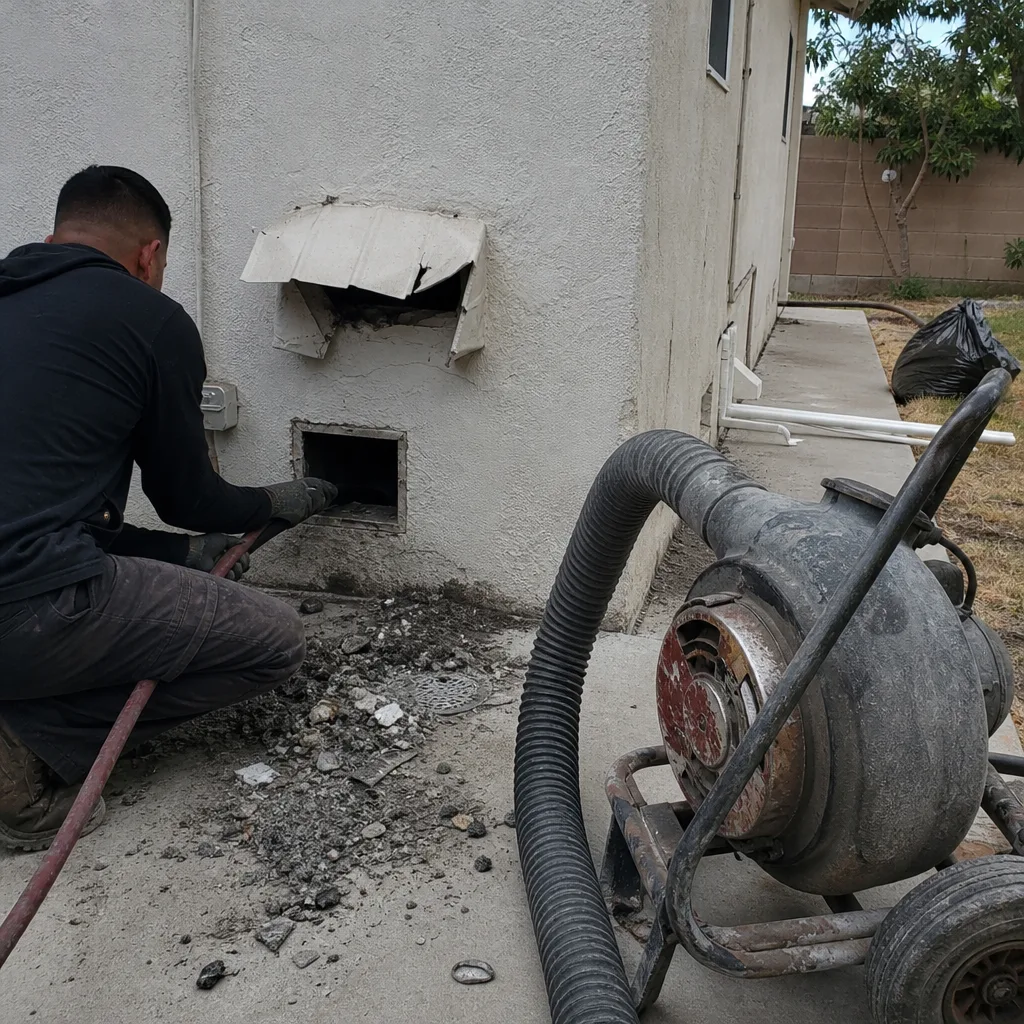 Before
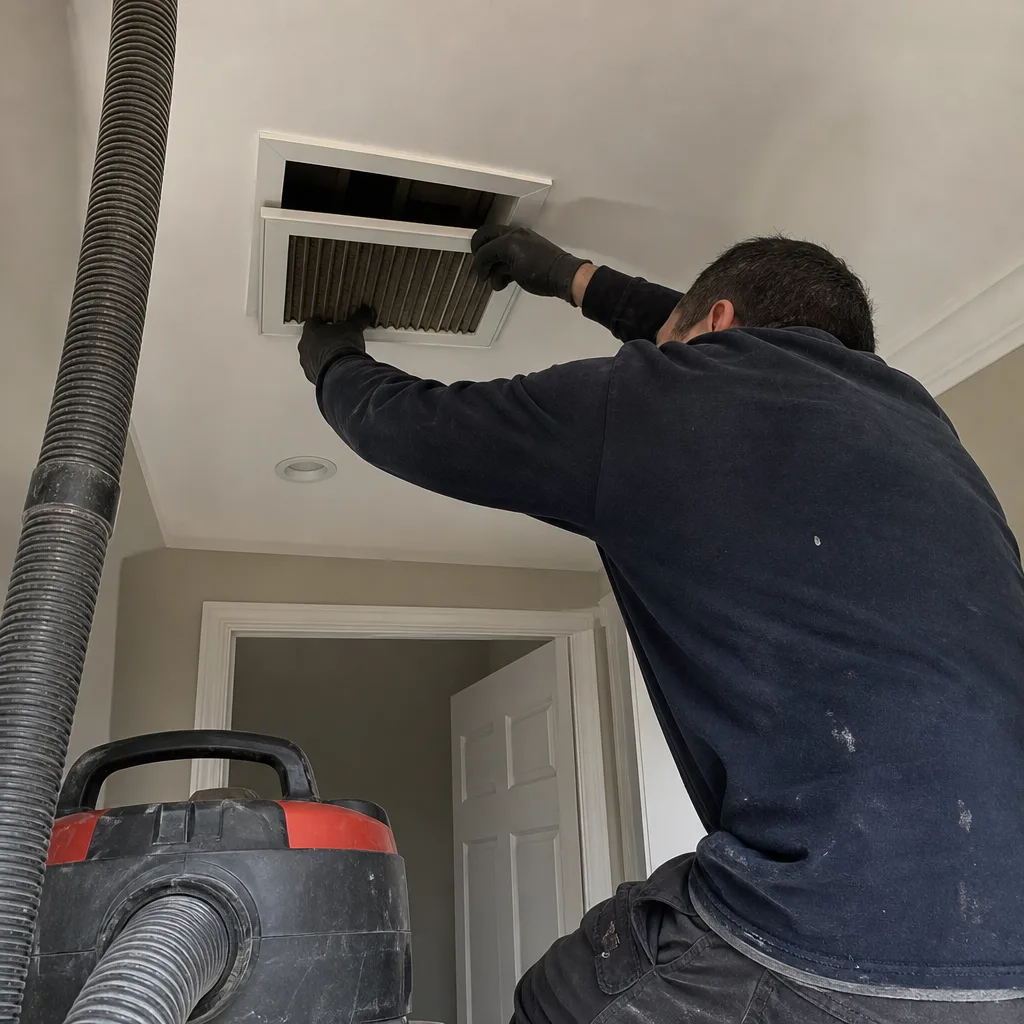 After
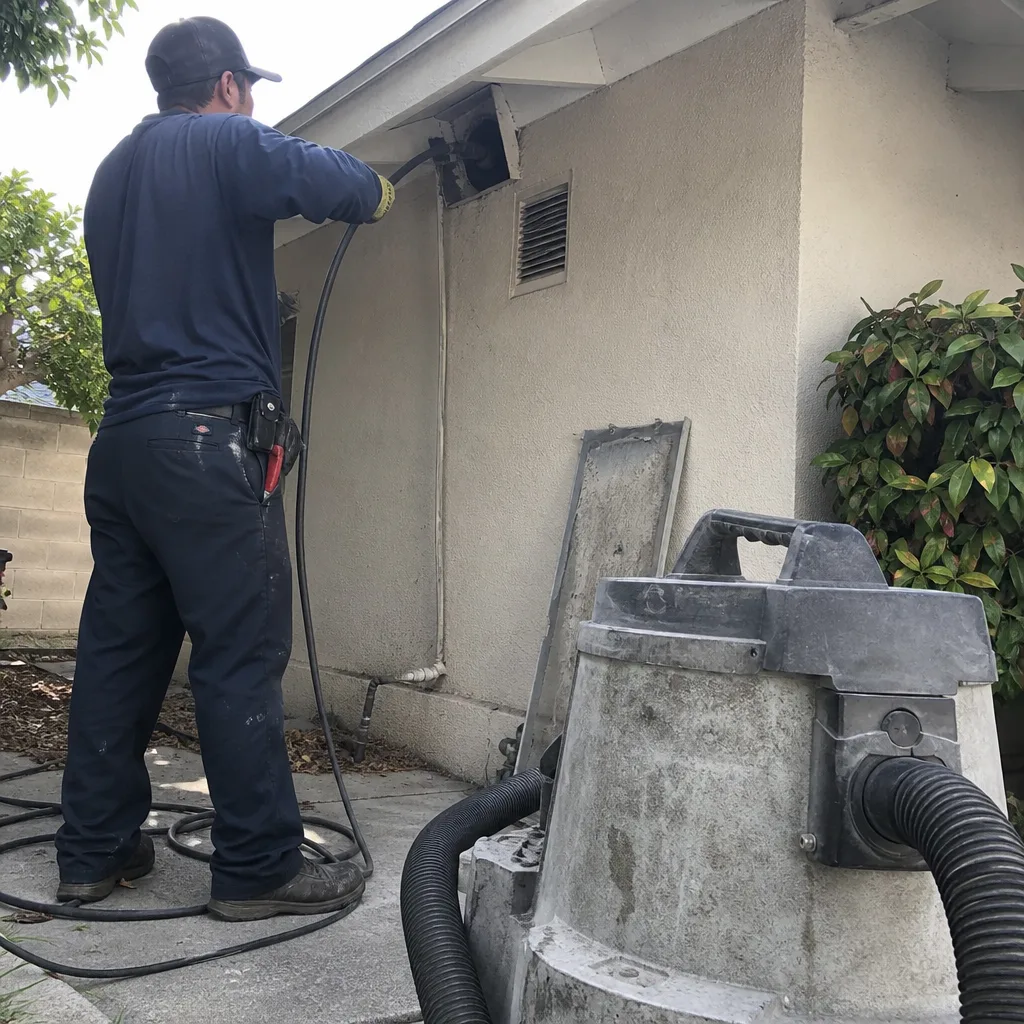 Before
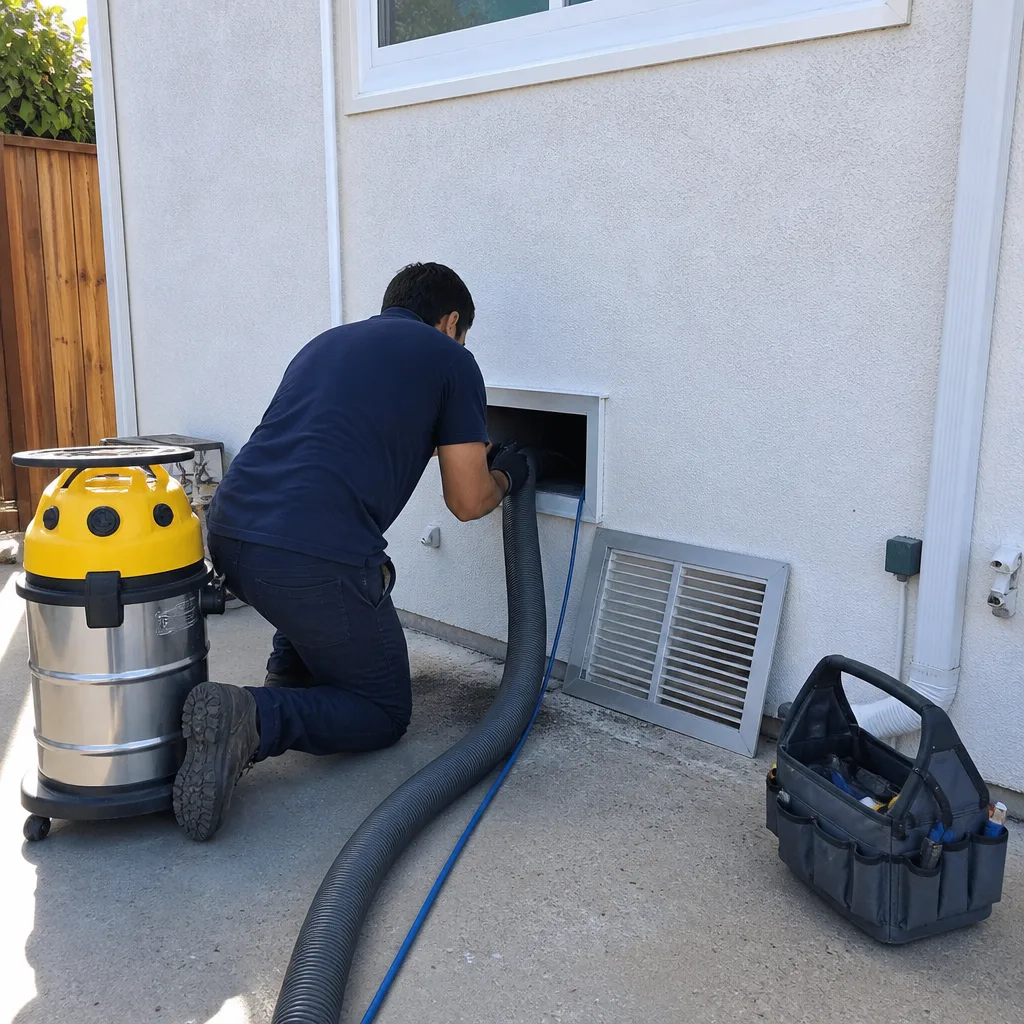 After
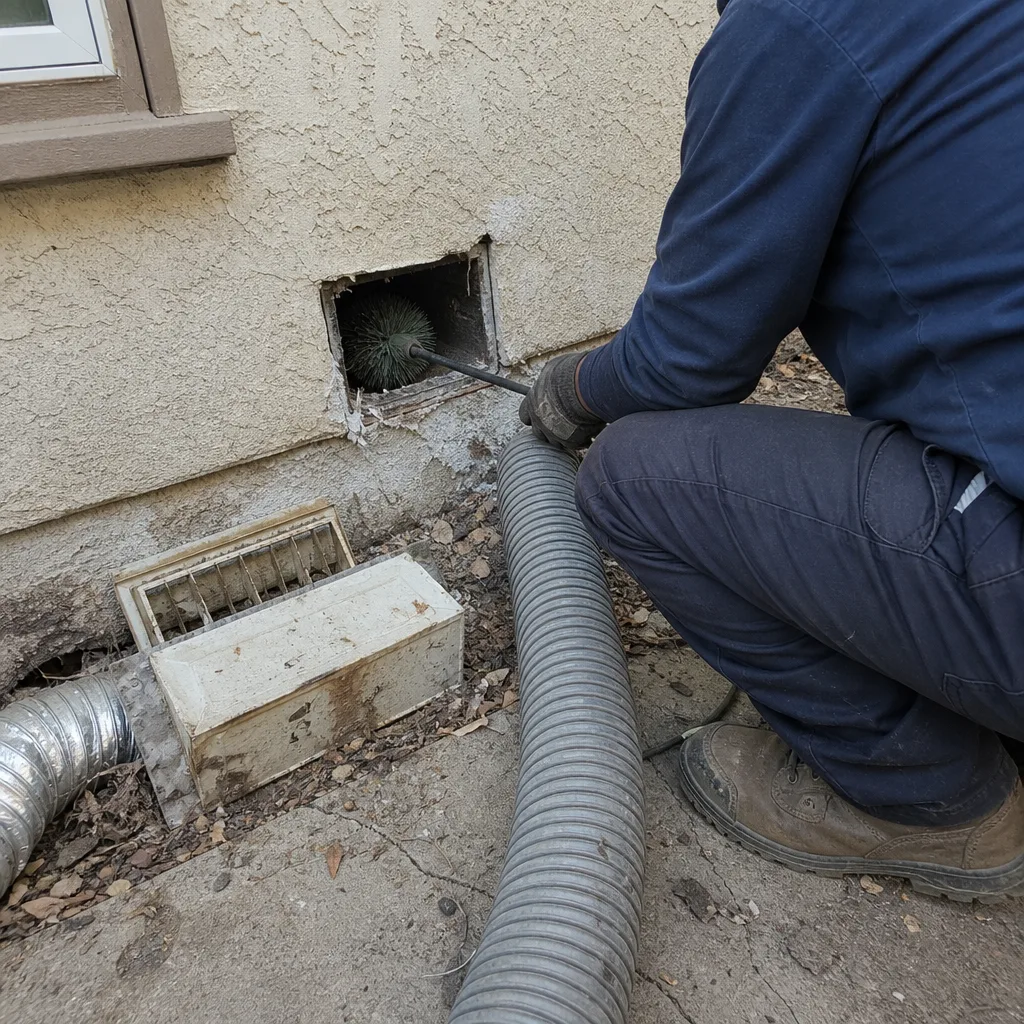 Before
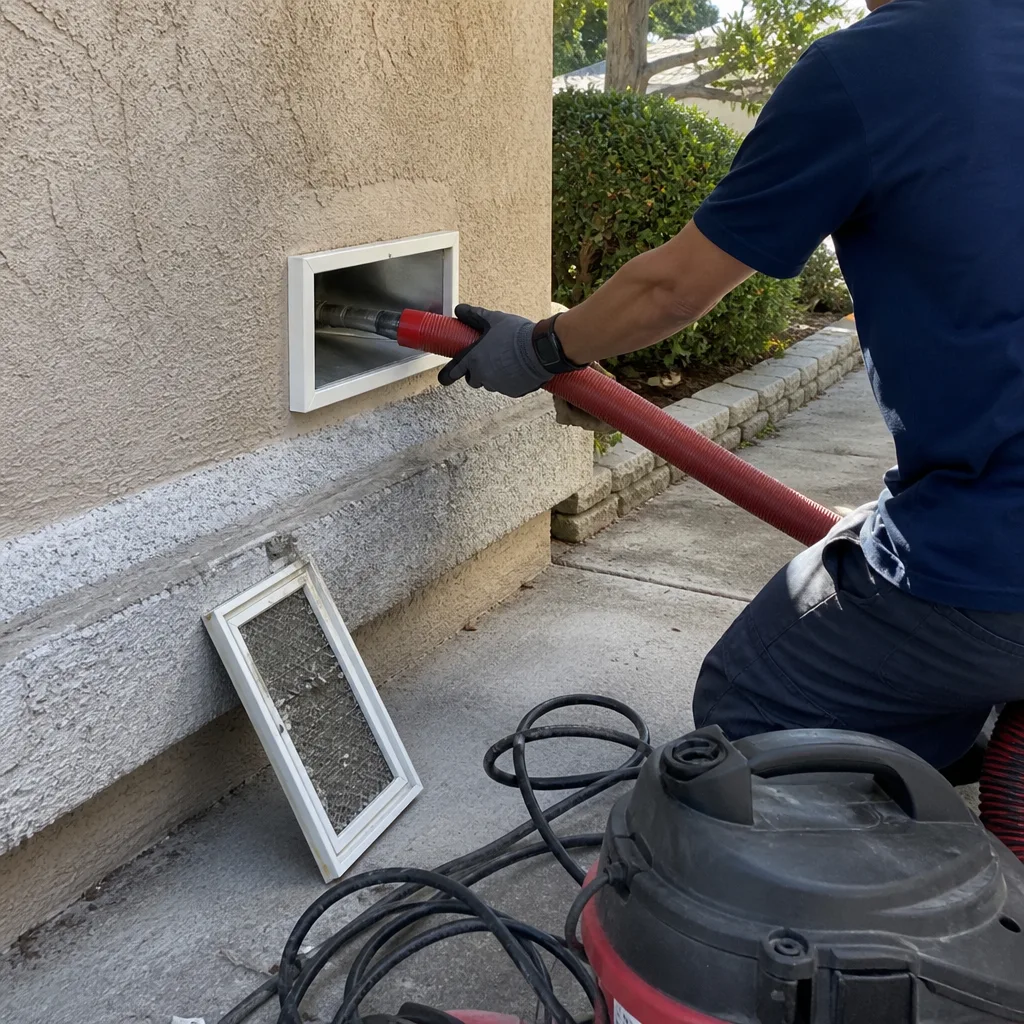 After
When to Call a Professional
If you’ve read this far and recognize that your Glendora duct system has questionable access panels, visible damage, or prior unpermitted modifications, the next step is a professional evaluation by a C-20 licensed contractor. You should also call if you’ve never had your duct system inspected, if your home is more than 15 years old and has original ductwork, or if you’re within a year of listing your home for sale and want to resolve any permit issues before they become negotiation points. A proper evaluation includes an assessment of access point adequacy, visible leakage at joints and connections, evidence of prior modifications, and an honest determination of what can be cleaned without modification and what would require permitted work. Duct Cleaning Glendora offers free estimates in Glendora – call (833) 620-4169 to schedule an evaluation that includes a full permit and compliance reality check for your specific system.
Frequently Asked Questions
No, air duct cleaning itself does not require a permit anywhere in California, including Glendora, because the state classifies it as maintenance, not construction. However, if the cleaning requires cutting new access panels, replacing duct sections, reconnecting separated joints, or applying internal coatings, those modifications trigger permit requirements under the California Mechanical Code and Title 24. Call (833) 620-4169 for an honest assessment of whether your specific job crosses the line.
In Glendora, a legitimate whole-home source-removal cleaning with HEPA negative-air equipment typically ranges from $450 to $900, depending on system size, number of stories, accessibility, and the condition of the ducts. Prices below $300 for a “whole house” cleaning should be treated with skepticism; they’re almost certainly pricing a surface-level register clean or a loss-leader that will expand once the technician is on site. Call (833) 620-4169 for a flat-price quote on your specific system.
The most reliable method is to pull the permit history for your address from the City of Glendora Building and Safety Division, then compare that record against any visible duct modifications in the attic, crawlspace, or utility area. Physical signs of likely unpermitted work include non-standard access panels, mismatched duct segment materials, flex duct that doesn’t match the surrounding installation, or visible mastic sealing that appears newer than the adjacent area. A C-20 licensed contractor can perform a targeted evaluation of the system.
The price difference reflects a fundamental difference in what’s being sold. Low-price quotes typically cover surface-level register cleaning with a portable vacuum, no HEPA negative-air containment, no source removal, and sometimes no access to the main trunk lines. Serious quotes from licensed C-20 contractors using commercial equipment like Rotobrush rotary brush systems with Nikro HEPA vacuums price a different job entirely: full-source removal, containment, and a system assessment. In our experience across hundreds of Glendora homes, the low-price option rarely cleans the full duct system.
You can clean accessible portions of your duct system without a permit, but the practical reality is that without mechanical agitation equipment and HEPA negative-air containment, a homeowner’s scope of cleaning is limited to what can be reached from the registers. The important safety consideration: do not cut into the ductwork to access deeper sections. Unpermitted modification of the duct system creates code violations, title-transfer problems, and potential safety issues. A proper cleaning through existing access is the limit of what DIY should attempt.
No, dryer vent cleaning is classified as maintenance and requires no permit in California, provided the cleaning is performed through existing access points and no vent rerouting, replacement, or modification occurs. However, we treat dryer vent cleaning as a distinct service requiring dedicated rotary brush equipment sized for dryer duct diameters, and we recommend it at least annually for any Glendora home with a gas or electric dryer. A clogged dryer vent is a leading cause of residential dryer fires, and the cleaning is preventative maintenance that stays safely within the permit-free zone.
The Bottom Line
The permit question for air duct cleaning in California comes down to a single distinction: maintenance versus modification. Cleaning through existing access is maintenance, and it needs no permit. Cutting new access, replacing duct sections, reconnecting separated joints, or applying internal coatings is modification, and that requires a C-20 licensed contractor, a City of Glendora permit, and Title 24-compliant sealing. The consequences of skipping the permit surface years later during escrow, during an insurance claim, or during an energy audit. Take five minutes to verify any contractor’s C-20 license via CSLB before they touch your system. The good news: legitimate source-removal cleaning with proper equipment rarely requires modification at all. If your ducts have adequate access, a Rotobrush rotary brush system with Nikro HEPA negative-air containment cleans thoroughly without crossing the permit line. That’s the version of the job you want, and it’s the version we perform at our Duct Cleaning Glendora home base every week.
Written by the team at Duct Cleaning Glendora, serving Glendora since 2014. Explore more guides & resources on our blog.