
Last updated November 2, 2026
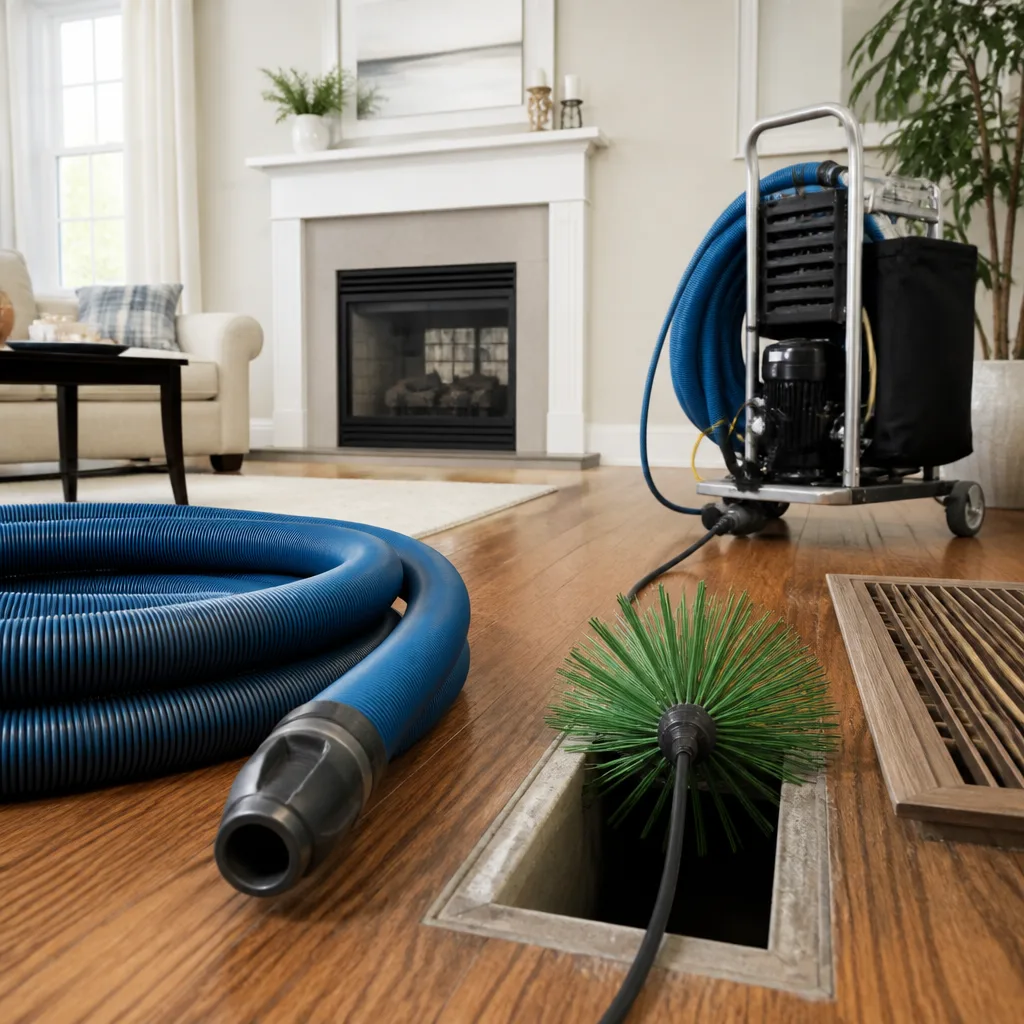 Whole-home duct cleaning
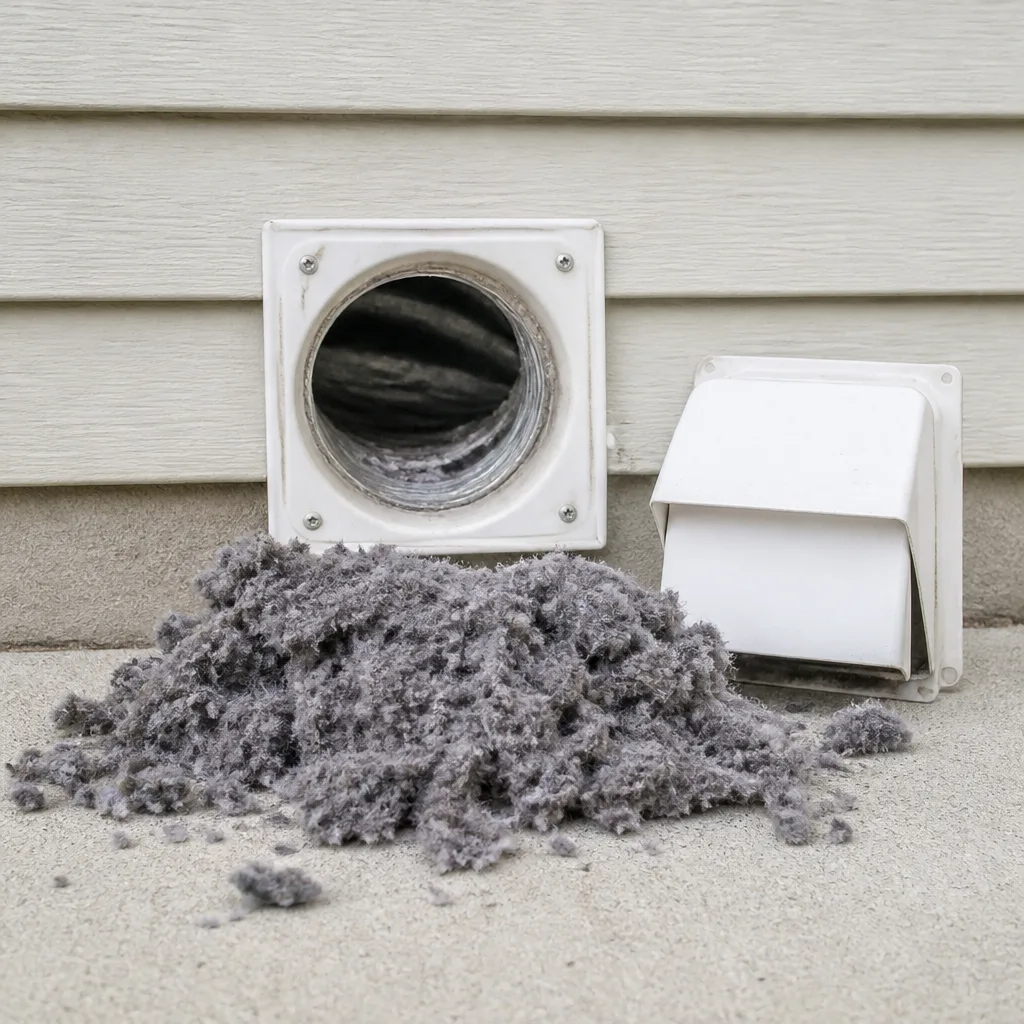 Dryer vent cleaning
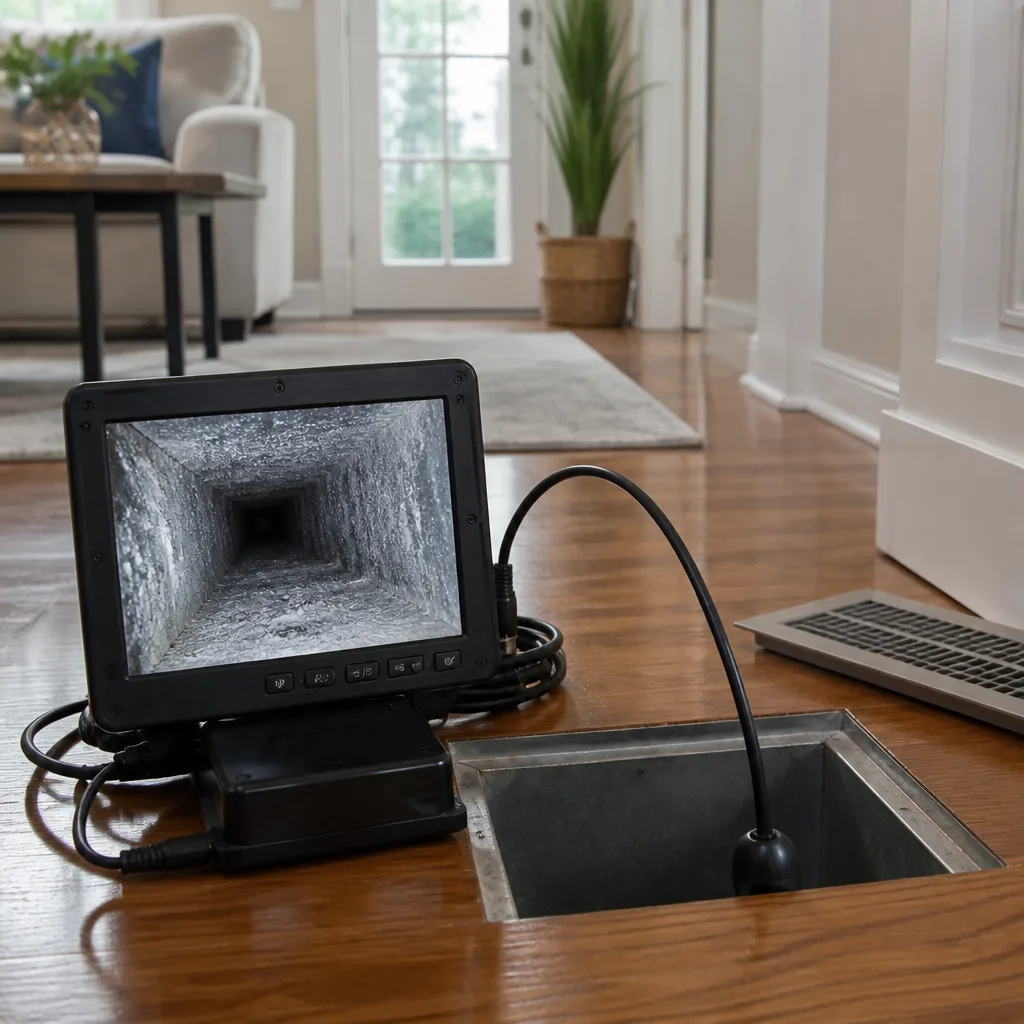 Camera inspection
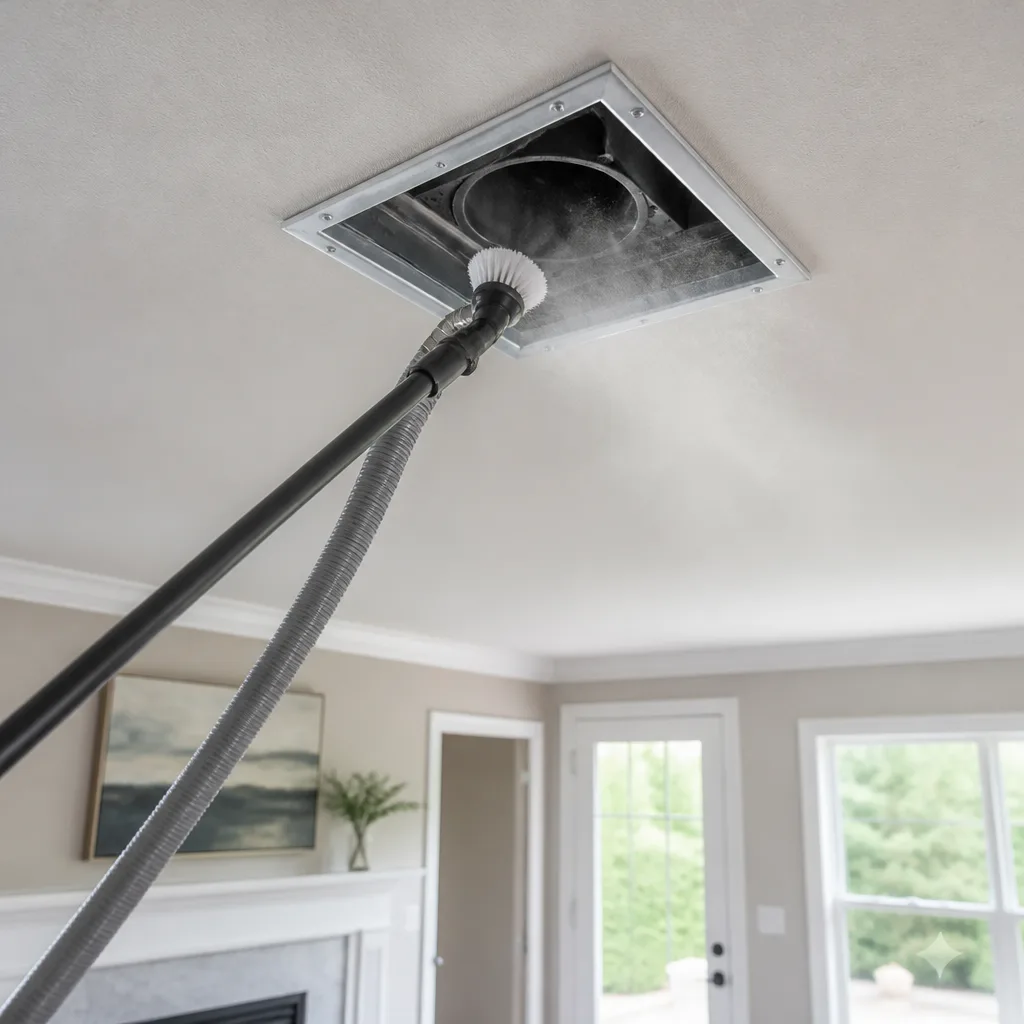 Sanitizing & deodorizing
Whole-system duct and dryer vent check with before-and-after photos - you see exactly what came out of your vents
That "$99 whole-house special" is a bait ad - the real number appears once they are in your hallway, or the "clean" is a shop-vac at the register. We photograph the inside of your ducts before and after instead.
Seasonal Air Duct Cleaning Care for Glendora: Year-Round Homeowner’s Guide
After a Santa Ana wind event, the particulate that settles inside a Glendora HVAC system isn’t just household dust. It includes fine desert sand with a median particle size below 2.5 microns, which standard 1-inch pleated filters pass freely and which accumulates in heat exchanger fins and duct liner fibers between cleaning cycles. Most homeowners in Glendora think about duct cleaning once every few years, usually when they notice dust on furniture. This guide explains why timing matters just as much as frequency, and how the four distinct air-quality seasons in the San Gabriel Valley foothills each leave a different residue inside your ductwork. You’ll learn what each season deposits, when to inspect, when to clean, and which maintenance tasks prevent small problems from becoming expensive repairs.
Styles & brands we work with
- Whole-home duct cleaning
- Dryer vent cleaning
- Camera inspection
- Sanitizing & deodorizing
Quick Answer
Seasonal air duct care in Glendora means matching maintenance to four distinct contaminant cycles: wildfire smoke season (late summer through fall), Santa Ana wind season (fall through winter), high-pollen spring, and summer inversion-layer stagnation. Most homes benefit from a professional source-removal cleaning every 2 to 4 years, with annual inspections timed around September before the wind and fire season peaks. Homes with pets, allergy-sensitive occupants, or older leaky ductwork typically need attention on the shorter end of that range.
Table of Contents
- Glendora’s Four Air-Quality Seasons and What They Deposit in Your Ducts
- Pre-Fire-Season Preparation: Sealing, Filtration, and Inspection
- Post-Santa Ana Inspection Protocol: What to Look For
- Spring Pollen Intrusion and Duct Board Failures
- Summer Inversion Layer: The Slow Accumulation Problem
- The Glendora 12-Month Duct Maintenance Calendar
- What Actually Happens During Source-Removal Duct Cleaning
- Common Mistakes to Avoid
- When to Call a Professional
- Frequently Asked Questions
- The Bottom Line
Glendora’s Four Air-Quality Seasons and What They Deposit in Your Ducts
Glendora sits directly against the foothills of the San Gabriel Mountains, which means air doesn’t move through this city the way it moves through flatland Los Angeles basin communities. The mountains act as a barrier that traps particulates against the slope, while the canyons funnel high-velocity wind down into residential neighborhoods. The result is four distinct air-quality periods, each with a different dominant contaminant profile. Understanding these is the foundation of any effective seasonal duct care plan.
Wildfire Smoke Season: August Through November
Wildfire smoke carries fine particulate matter, volatile organic compounds, and partially combusted carbon. What most homeowners don’t realize is that smoke particles are not uniform. The visible ash is heavy enough to fall out of the air quickly, but the sub-micron particles stay suspended and get pulled directly into return air grilles whenever your HVAC runs. Inside the duct system, these particles bond with the existing dust layer and create a greasy, stubborn residue that dry brushing alone won’t remove. In our experience cleaning Glendora homes after the 2020 Bobcat Fire and the 2024 Bridge Fire season, we’ve consistently found smoke residue coating duct interiors even in homes where windows stayed closed for the entire event. The HVAC system’s continuous air circulation means smoke enters regardless of how sealing you were.
Santa Ana Wind Season: October Through January
Santa Ana winds originate in the Great Basin and accelerate through the Cajon Pass and San Gabriel Canyon systems, picking up fine desert sand from the Mojave. By the time this air reaches Glendora neighborhoods like North Glendora and the areas along Sierra Madre Avenue, it carries particulate with a median size below 2.5 microns. These particles pass through standard 1-inch filters without resistance. They settle in supply plenums, accumulate on heat exchanger fins, and work their way into fibrous duct liner. The mechanical abrasion of this fine sand against duct surfaces over repeated wind events actually roughens the interior, creating more surface area for future dust adhesion. This is why homes in wind-exposed areas of Glendora often show accelerated duct loading compared to homes farther downslope.
High-Pollen Spring: February Through May
Glendora’s spring pollen load is significant because of the city’s mix of ornamental landscaping, native oak and sycamore, and the extensive citrus legacy plantings in older neighborhoods. Unlike smoke or sand, pollen is organic and sticky. It adheres to filter media quickly, but in homes with cracked duct board, separated plenum connections, or gaps at register boots, pollen bypasses filtration entirely. We see this regularly in mid-century homes near Glendora’s downtown core where original duct systems have shifted over decades. Pollen inside ducts doesn’t just sit there. It breaks down, feeds microbial growth in the presence of any moisture, and becomes a persistent allergen reservoir that recirculates every time the blower runs.
Summer Inversion Layer: June Through September
During summer months, the marine layer that cools coastal communities rarely penetrates far enough inland to provide relief to Glendora. What develops instead is a temperature inversion that traps ozone, vehicle exhaust, and secondary aerosol formation against the foothills. This is the slowest form of duct contamination. There’s no dramatic event like a windstorm or fire. Instead, the HVAC system draws in whatever is in the ambient air, and the fractional amount that bypasses the filter gets deposited incrementally. Over a full summer, this accumulation is measurable. Homes with high-efficiency systems that run longer cycles actually pull in more of this contaminated air, which means newer, more efficient equipment can accumulate deposits faster than older systems that ran less frequently.
Pre-Fire-Season Preparation: Sealing, Filtration, and Inspection
The single most effective thing a Glendora homeowner can do to reduce post-fire remediation costs is prepare the duct system before red-flag days arrive. This preparation falls into three categories, and none of them requires specialized skills or tools beyond basic inspection.
- Seal return air gaps. Walk through your home and identify every return air grille. Remove the grille cover and check whether the sheet metal or duct board behind it is properly connected to the wall or floor opening. In many Glendora homes, especially those built in the 1960s and 1970s, the return air path channels through wall cavities and floor joists rather than sealed ductwork. Gaps in these paths pull unfiltered air from attics, crawlspaces, and wall voids directly into the system. Sealing these gaps with mastic or foil tape before smoke season keeps contaminated air out of the circulation loop entirely.
- Upgrade filter MERV rating. A MERV 8 filter captures roughly 20% of sub-2.5 micron particles. A MERV 13 captures over 85%. The tradeoff is resistance: higher MERV filters restrict airflow, which can reduce efficiency or strain older blowers. The practical approach for Glendora is to run MERV 11 or 12 during the August through November period when smoke risk is highest, then drop back to MERV 8 during winter and spring when the threat profile changes. Check your system’s static pressure tolerance before making any permanent change.
- Complete a visual duct inspection. Remove several supply registers and use a flashlight to examine what’s visible. Look for accumulated dust at register boots, evidence of moisture staining, and any separation between the register boot and the surrounding drywall or flooring. Pay attention to the rooms furthest from the air handler, because these are the last to receive adequate airflow and the first to show accumulation patterns. If you see more than a light dusting, schedule a professional evaluation before fire season begins.
This preparation phase is also the right time to have your Air Duct Cleaning in Glendora performed if your system hasn’t been serviced in over three years. Starting fire season with clean ducts means smoke residue has no existing dust layer to bond with. Post-fire cleaning is always more involved than pre-season cleaning because smoke creates that greasy adhesion layer we described earlier. Removing it requires additional mechanical agitation and more contact time with the cleaning head.
Post-Santa Ana Inspection Protocol: What to Look For
Every Santa Ana event pushes desert particulate into the ambient air around Glendora. Not every event produces enough system infiltration to require cleaning. The question is whether the event causes meaningful duct interior loading. Here’s the inspection protocol we recommend homeowners follow after any significant wind event, defined as sustained winds over 30 mph that lasted more than 12 hours.
Step 1: Inspect Filter Media
Remove your furnace filter and hold it up to a light. If you see a uniform light-brown or tan discoloration concentrated on the upstream side, that’s typical and expected. If you see a darker crust or grit that feels abrasive when you run a finger across it, that’s Mojave sand that penetrated the filter weave. This is the material that also entered the duct system in smaller sizes that the filter couldn’t catch.
Step 2: Check Register Faces
Examine the supply registers in the rooms that sit closest to the air handler. Use a damp white cloth and wipe the inner surface of the register boot, the part you can reach without removing the grille. If the cloth comes away with a tan or reddish-brown residue, significant fine particulate has been moving through the supply side. This means deposition is also occurring downstream at heat exchanger fins and in the supply trunk.
Step 3: Test Airflow at Registers
Place a tissue or lightweight paper against each supply register while the system is running. Note which registers produce strong movement and which barely flutter the paper. Santa Ana dust loading can reduce airflow at registers by 15% or more before it becomes obvious that anything is wrong. Rooms that were previously comfortable becoming warmer is a symptom homeowners often attribute to HVAC failure when the actual cause is restricted airflow through a loaded coil or duct system.
If any of these three checks indicates significant infiltration, it’s time for a professional evaluation. What we typically find in post-Santa Ana cleanings in Glendora is a heavier-than-normal loading in the return air trunk and the first few feet of the supply plenum. This is mechanical abrasion at work: the fine sand scours the duct interior and reduces surface smoothness, which in turn makes future accumulation happen faster. That’s why addressing it promptly matters. Delaying a post-wind cleaning makes every subsequent season’s accumulation worse.
Spring Pollen Intrusion and Duct Board Failures
Spring pollen issues in Glendora are usually not about the filter. A properly sealed duct system with a MERV 8 or better filter captures the vast majority of pollen before it enters the airflow. The problem is that many older homes in Glendora do not have properly sealed duct systems. Fiberglass duct board, popular in residential construction from the 1960s through the 1980s, degrades over time. The resin binder that holds the fiberglass together breaks down with age and exposure to thermal cycling. Once degradation begins, the board becomes brittle and develops surface cracks.
Those cracks become pollen entry points. Supply plenums built from duct board are especially vulnerable because they sit directly downstream of the evaporator coil and experience significant temperature swings with every cooling cycle. When the plenum flexes with temperature change, gaps open at longitudinal seams and at the connection point with the sheet metal trunk. Pollen enters through these gaps and gets distributed throughout the entire supply side.
There are two indicators that suggest pollen intrusion rather than normal filter bypass. First, pollen residue inside the home will be concentrated in certain rooms or certain register locations rather than evenly distributed. Second, the pollen on furniture surfaces will have a distinct yellow-green tint consistent with specific tree pollens rather than the gray-brown of typical house dust. If you notice either pattern in March or April, inspect your accessible ductwork for cracks, separations, or missing mastic at seam joints. Duct board repair or replacement falls under Air Duct Repair in Glendora and is often the actual solution when a homeowner assumes the issue is simply that the system needs cleaning. Cleaning a duct system with compromised integrity treats the symptom while the pollen keeps entering through the same gaps.
Homes with Honeywell or Aprilaire whole-home air quality components installed have an advantage during pollen season because these systems can be configured to run continuous low-speed circulation, which increases the number of air changes per hour and improves overall particulate capture. However, those systems assume the duct network itself is intact. A high-quality filtration system connected to leaky ducts still delivers pollen.
Summer Inversion Layer: The Slow Accumulation Problem
Summer dust accumulation in Glendora duct systems doesn’t announce itself. There’s no wind event, no smoke plume, no visible pollen coating on outdoor surfaces. What happens instead is a gradual daily loading as the HVAC system cycles ambient air through the return side. Ozone from vehicle emissions reacts with hydrocarbons in the warm air, creating secondary organic aerosols that are small enough to pass through MERV 8 filters. These aerosols deposit in the system at a rate of grams per month, not pounds.
By the end of a single summer season, this deposition may not be visible to the naked eye. By the end of three or four summers, it has combined with the winter Santa Ana deposits and the spring pollen residue into a layered accumulation that affects system performance. This is why the cleaning interval matters so much. The difference between a two-year-old system and a four-year-old system in Glendora conditions is not a linear doubling of debris. It’s exponential because each layer provides a new adhesion surface for the next season’s material.
The practical recommendation for homeowners during summer inversion months is straightforward. Change or wash filters on schedule, which for most households means every 60 to 90 days. If you have pets, reduce that interval to 30 to 45 days. Watch for any increase in dust settling on horizontal surfaces shortly after cleaning. And if you notice a difference in air quality between upstairs and downstairs rooms, or between the front and back of the house, that’s a signal that deposition is not uniform in the trunk lines and that a professional inspection is warranted.
The Glendora 12-Month Duct Maintenance Calendar
Generic maintenance calendars tell you to check things in spring and fall. Glendora’s actual climate events don’t map to that pattern. Here’s a month-by-month schedule based on the city’s real weather patterns and the contaminant cycles described throughout this guide.
| Month | Climate Event | Duct System Task |
|---|---|---|
| January | Santa Ana winds typically active | Post-wind filter inspection. Change filter if tan residue present. Check registers in bedrooms closest to windward side of house. |
| February | Rain events possible; pollen begins | Inspect for moisture staining at register boots after heavy rain. Begin watching for pollen on window sills and interior surfaces. |
| March | Peak pollen period begins | Upgrade to MERV 11 filter if not already in place. Inspect accessible duct board for cracks and seam gaps. Note any room-specific pollen concentration. |
| April | Pollen continues; first warm days | Run system on continuous fan for several hours and monitor for pollen redeposition. This indicates duct integrity issues rather than filter failure. |
| May | Pollen tapering; temperatures rising | Schedule professional inspection if any spring pollen intrusion was suspected. Consider duct repair before summer cooling demand peaks. |
| June | Inversion layer forms; ozone increases | Baseline airflow test at all registers. Note which rooms flow weakest. Clean condenser coil if accessible through service panel. |
| July | Peak inversion; peak cooling demand | Change filter at the 30-day mark regardless of visual condition. High-efficiency systems running continuously load filters faster than intermittent systems. |
| August | Fire season begins; inversion persists | Upgrade to MERV 12 or 13 for smoke period. Seal any identified return air gaps. This is the critical pre-fire-season window. |
| September | Peak fire risk; first Santa Ana possible | Complete full visual duct inspection. Schedule professional source-removal duct cleaning if system hasn’t been cleaned in 3+ years or if inspection showed loading. |
| October | Santa Ana season begins in earnest | Post-wind event checks begin. Inspect filter and registers after any sustained wind event over 30 mph lasting 12+ hours. |
| November | Santa Ana continues; fire season winds down | Change filter after any nearby wildfire smoke event even if the filter doesn’t look loaded. Smoke particles don’t always discolor visibly. |
| December | Cooler; occasional offshore winds | Annual system review. Recirculate house air with fan-on mode during any stagnant periods to increase filtration passes. Schedule next year’s maintenance calendar. |
This calendar assumes a normally functioning system in a home without unusual circumstances. Homes with indoor pets, smokers, or residents with respiratory conditions should shift the inspection and filter-change tasks forward by one month in each season. Homes with recently replaced windows or added insulation may also need more aggressive maintenance, because tighter envelopes mean less natural air exchange and more recirculated air passing through the duct system.
What Actually Happens During Source-Removal Duct Cleaning
Not all duct cleaning is the same, and understanding the difference matters if you’re comparing services in Glendora. The two general approaches are surface suction and source removal. Surface suction uses a large vacuum connected to the duct system, usually through the return air trunk, while a technician may or may not use hand brushes to disturb debris at register openings. This approach removes loose dust in the trunk lines but does not effectively address material bonded to duct walls, accumulated in corners, or embedded in duct liner fibers.
Source-removal cleaning uses mechanical agitation to dislodge bonded material before the vacuum extracts it. In our cleaning process, we pair a Rotobrush rotary brush system with a Nikro HEPA negative-air vacuum. The rotary brush spins at high speed inside the duct, physically scrubbing the interior surfaces and dislodging the bonded layers that surface suction leaves behind. The Nikro vacuum maintains negative pressure on the system during cleaning, which means dislodged particulate gets captured directly into HEPA filtration rather than being blown into the living space. The dual-action approach, mechanical agitation plus continuous containment, is what professional indoor-air-quality standards recommend for effective source removal.
For homes with heavier contamination from fire smoke or long-term neglect, we add an Abatement Technologies air scrubber to the equipment set. This unit runs during the cleaning process and filters the ambient room air through HEPA media, capturing any particles that escape during register handling or equipment setup. It’s remediation-grade equipment adapted for residential service, and it makes a measurable difference in airborne particulate levels during the job. What it means practically is that when we’re done, the air in the home should be measurably cleaner than when we arrived, not just the ducts.
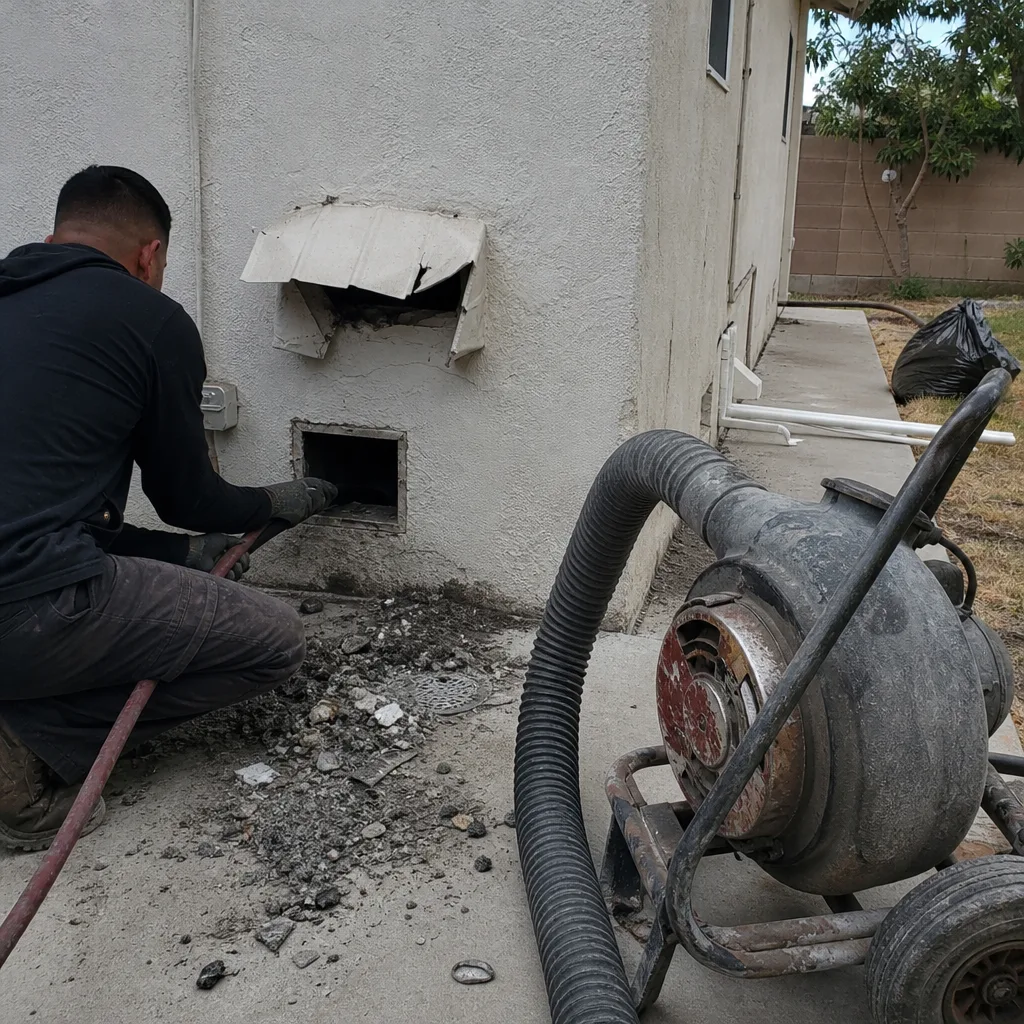
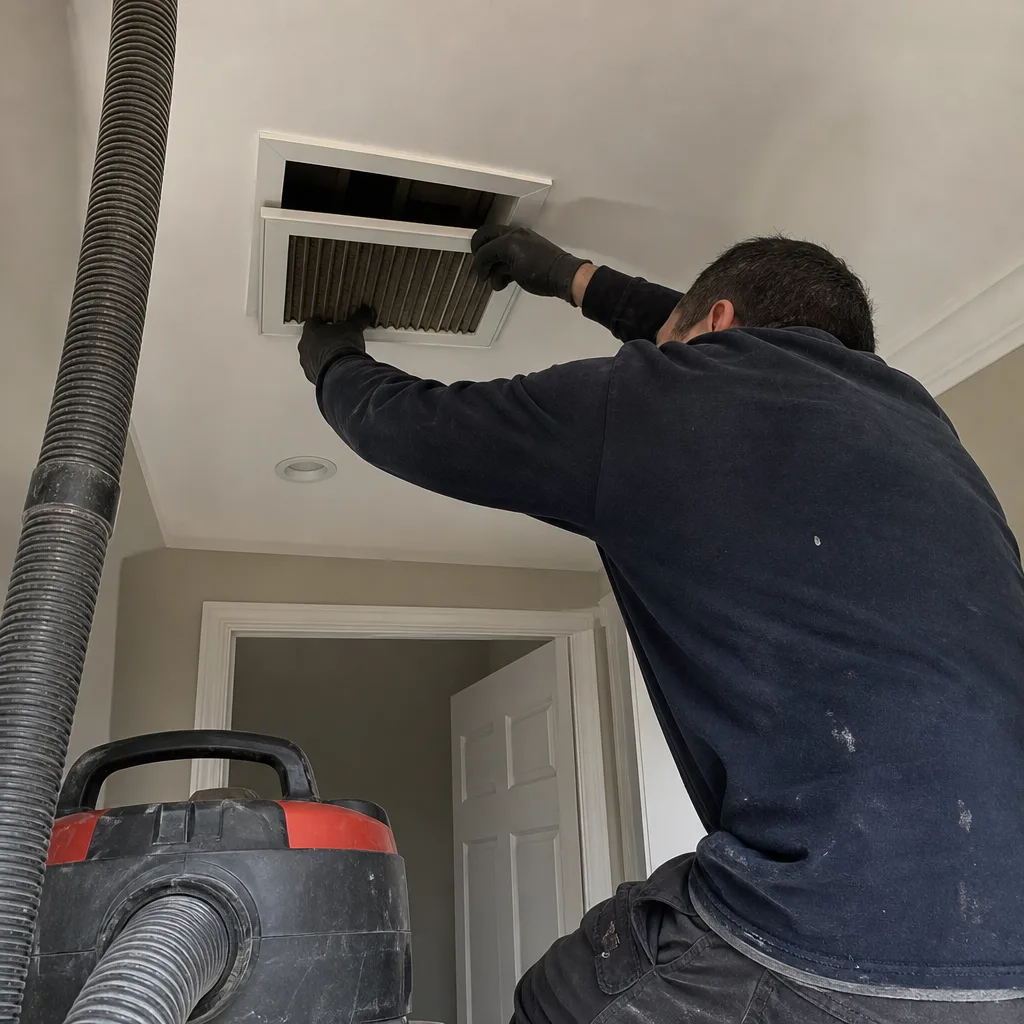
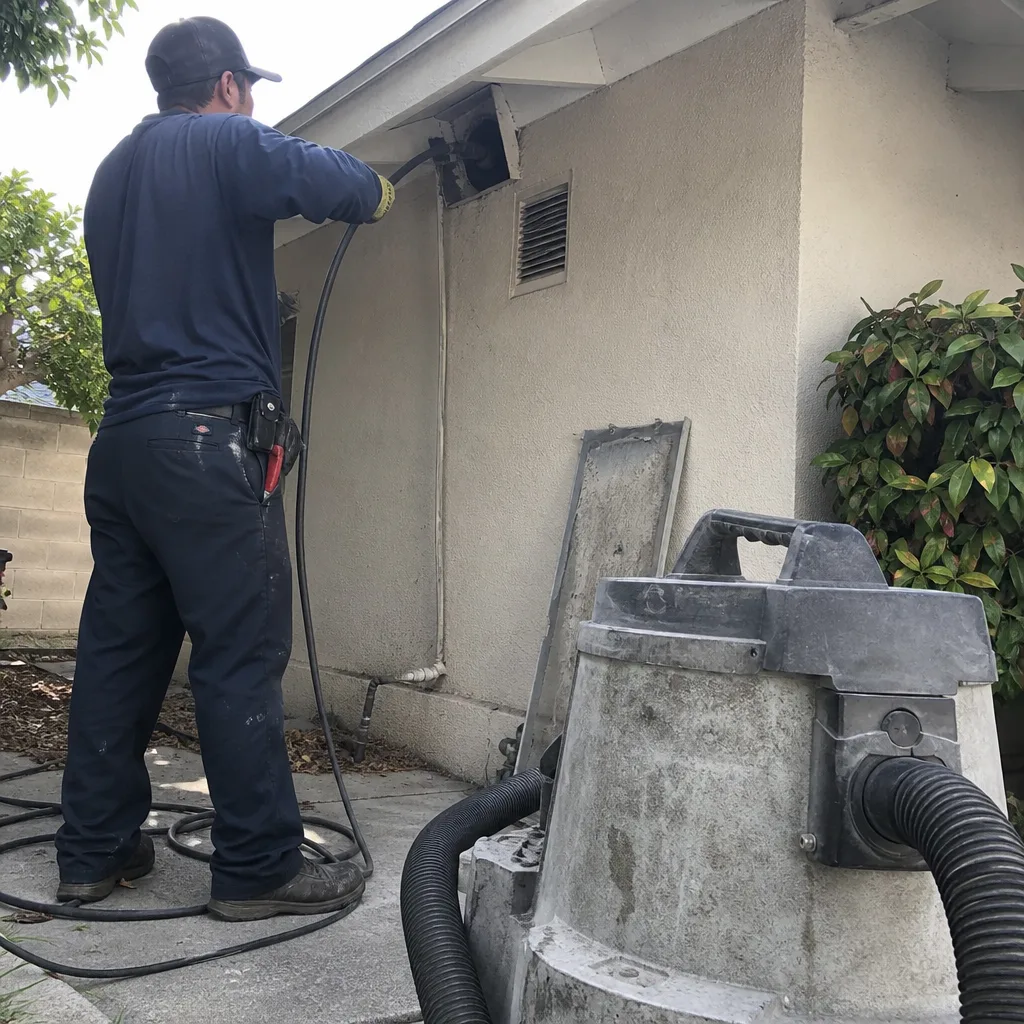
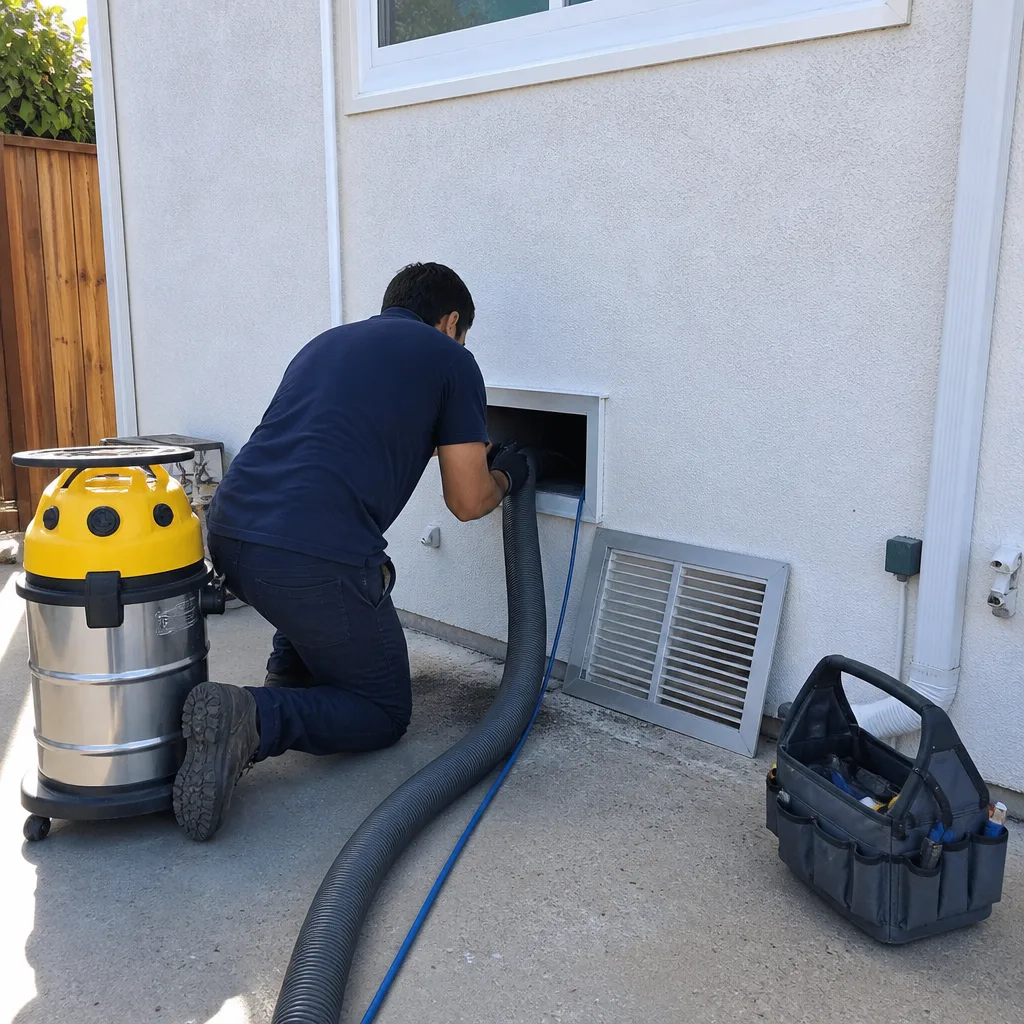
This full-equipment approach is documented and visible to the homeowner. We show before-and-after images of the actual duct interiors we clean, not stock photos from an equipment catalog. You should expect the same from any contractor you hire. If a company won’t show you the interior of your ducts before and after the work, you have no way to verify that the cleaning actually happened.
Common Mistakes to Avoid
- Assuming a new filter means clean ducts. Filters protect the equipment, not the duct system. A MERV 8 filter captures larger particles and lets fine particulate pass. Duct loading occurs regardless of how diligently you change filters if the system has never been cleaned. Filter changes slow accumulation but don’t prevent it.
- Cleaning only the visible vents. What you see at register openings is a fraction of the system. The return trunk, supply trunk, plenums, and transitions hold the majority of accumulated material. Any service that only addresses what’s visible through register openings is not cleaning your duct system. It’s cleaning your registers.
- Waiting for visible dust before acting. By the time dust is visibly accumulating on furniture shortly after cleaning, the system has already reached significant loading. Dust on surfaces is a late-stage symptom, not an early indicator. Use the inspection protocols in this guide to catch loading before it becomes visible in the living space.
- Ignoring return air path gaps. Many Glendora homes use wall cavities and floor joist spaces as return air paths. Gaps in these paths pull air from attics, crawlspaces, and garages directly into the HVAC system. This unfiltered air carries whatever contaminants exist in those spaces, including insulation fibers, pest debris, and vehicle exhaust from attached garages.
- Assigning all airflow problems to the HVAC equipment. When a room stops cooling adequately, the natural assumption is that the air conditioner is failing. In many cases the system is fine and the ductwork is loaded. Before authorizing an expensive compressor replacement, have the duct system evaluated. Restricted airflow from duct loading mimics equipment failure symptoms.
- Using the cheapest service without verifying method. Duct cleaning pricing in Glendora varies widely, and the variation tracks closely with the method used. A service that takes 45 minutes and costs very little is doing surface suction only. A source-removal cleaning with mechanical agitation takes several hours for a typical single-family home. The difference in outcome is not marginal.
- Skipping the pre-fire-season window. Fire season in Southern California is not a maybe. Every year, smoke events occur somewhere in the region, and prevailing winds often carry that smoke into the San Gabriel Valley. Preparing your system in August or early September is cheaper and more effective than reacting after your ducts have already absorbed smoke residue.
When to Call a Professional
Some duct maintenance tasks are appropriate for homeowner attention: filter changes, register inspections, and airflow observations all fall into this category. Others require professional equipment and training. Call a duct professional when you see moisture or water staining at register boots or on visible duct surfaces, when you find mold growth or persistent musty odor that doesn’t respond to filter changes, when multiple rooms show reduced airflow despite a clean filter, when you’ve had a pest infestation in the attic or crawlspace that likely entered the duct system, or when a wildfire smoke event occurred nearby and your post-event inspection shows the telltale tan or crust residue described earlier in this guide.
You should also call if construction or renovation work was performed in the home without proper duct sealing. Drywall dust, paint overspray, and flooring debris find their way into open duct openings quickly and are among the most difficult materials to remove once they’ve bonded to duct surfaces. Duct Cleaning Glendora offers free estimates in Glendora. Call (833) 620-4169 to schedule an inspection or get a quote for any of these situations.
Frequently Asked Questions
Most Glendora homes benefit from source-removal duct cleaning every 2 to 4 years, with the shorter interval applying to homes with pets, smokers, allergy-sensitive residents, or systems that have never been cleaned. The National Air Duct Cleaners Association recommends every 3 to 5 years as a general baseline, but Glendora’s Santa Ana wind events and wildfire smoke exposure justify more frequent service than the national average. Call (833) 620-4169 for an evaluation of your specific system condition.
A whole-system source-removal cleaning in Glendora typically runs between $450 and $900 for a single-family home, depending on system size, number of registers, and accessibility. Homes with two systems or extensive duct runs fall higher. Be wary of quotes below $200 for a whole-system cleaning, as these almost always indicate surface suction only without mechanical agitation. We quote one flat price per system before work begins, with no per-vent pricing and no surprise add-ons.
Cheaper quotes typically reflect a different service method. Surface suction with a single vacuum unit and no mechanical agitation takes under an hour and removes only loose dust in the trunk lines. Source-removal cleaning with rotary brush agitation, HEPA negative-air containment, and multi-hour contact time removes the bonded material that surface suction cannot. The price difference is the equipment, the time, and most importantly, the result. A cheap cleaning that leaves bonded debris in place means you’ll need another cleaning sooner, and the total cost over five years is usually higher. Call (833) 620-4169 to discuss what our process includes and how it differs from surface-level services.
You should receive before-and-after photos or video of your actual duct interiors, not stock images. The technician should allow you to observe the equipment in operation and should be able to point to specific areas that were addressed. At minimum, ask to see the after-photos of the return trunk, supply trunk, and at least two branch lines. If the company cannot provide this documentation, you have no way to verify the work was performed as described.
Duct cleaning can reduce the concentration of recirculated allergens in homes where the duct system has accumulated pollen residue, dust mite debris, and pet dander over multiple years. However, it’s not a standalone solution for allergies. Homes with significant allergy issues typically also need upgraded filtration, sealed return air paths, and source control measures like regular surface cleaning and humidity management. The effectiveness of duct cleaning for allergy reduction depends on whether the ducts were actually loaded with allergens in the first place, which an inspection can determine.
Yes. Dryer vent cleaning addresses the dedicated exhaust line that runs from your clothes dryer to the exterior termination point. This line accumulates lint, not the household dust found in HVAC ducts. Lint buildup is a fire hazard and a performance problem for the dryer, but it doesn’t affect indoor air quality the way HVAC duct loading does. Dryer Vent Cleaning in Glendora uses different equipment than air duct cleaning and typically takes 45 to 90 minutes. We recommend dryer vent cleaning annually for households that run the dryer more than three times per week.
The Bottom Line
Glendora’s air quality is shaped by the San Gabriel Mountains, the Santa Ana wind corridor, and the region’s fire ecology. Each season deposits a distinct contaminant profile inside residential duct systems, and each profile responds differently to maintenance. Pre-season preparation, post-event inspection, and periodic source-removal cleaning are the three pillars of effective duct care in this city. Most homes need professional cleaning every 2 to 4 years, with annual inspections timed around September before the wind and fire season peaks. When you hire a duct contractor, verify the method, not just the price. Surface suction is not the same as source removal, and the difference shows up in your system’s long-term performance.
For a full-system evaluation Duct Cleaning Glendora home services are available throughout the city. We bring Rotobrush rotary agitation, Nikro HEPA negative-air containment, and Abatement Technologies air scrubbing to every applicable job. We show you what we find, quote one flat price before work starts, and document the results with before-and-after images of your actual duct interiors. Call (833) 620-4169 for a free estimate.
Written by the team at Duct Cleaning Glendora, serving Glendora since 2014.
See the difference
 Before
 After
 Before
 After
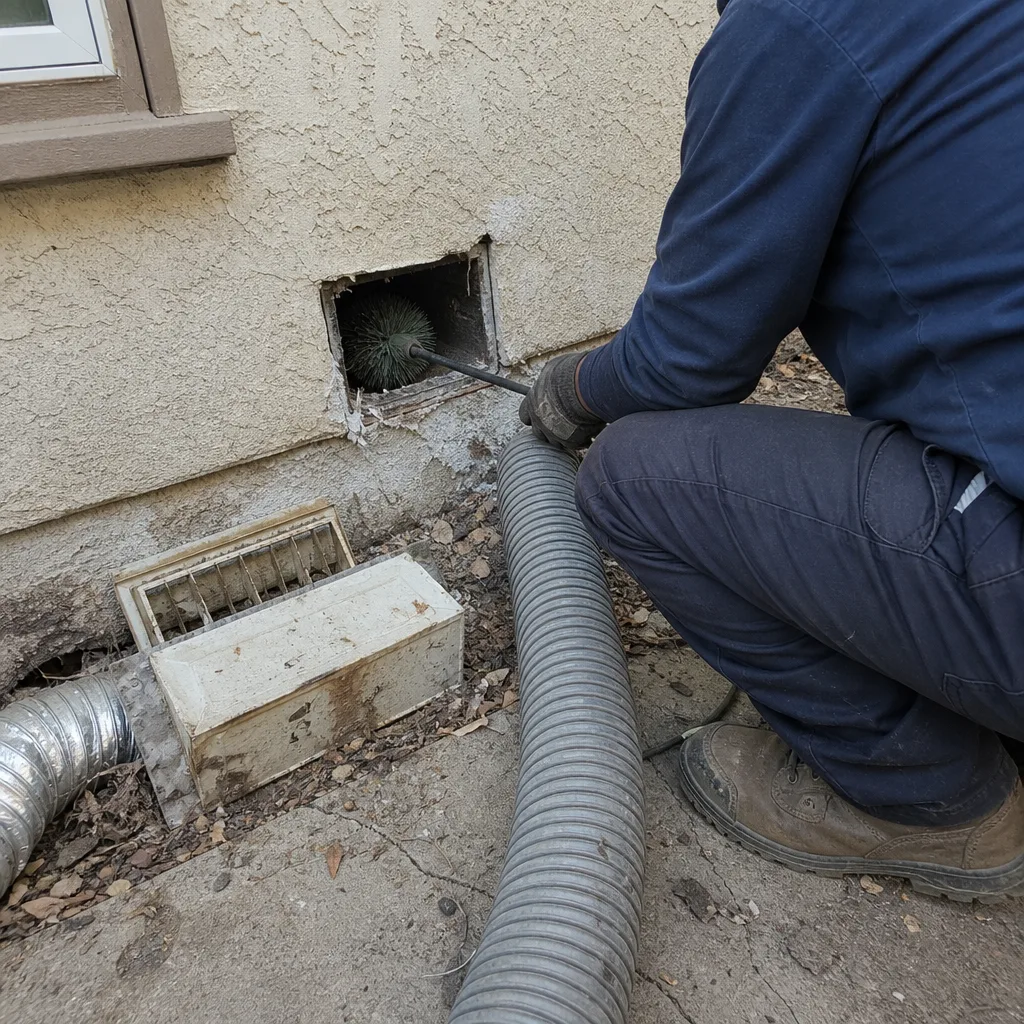 Before
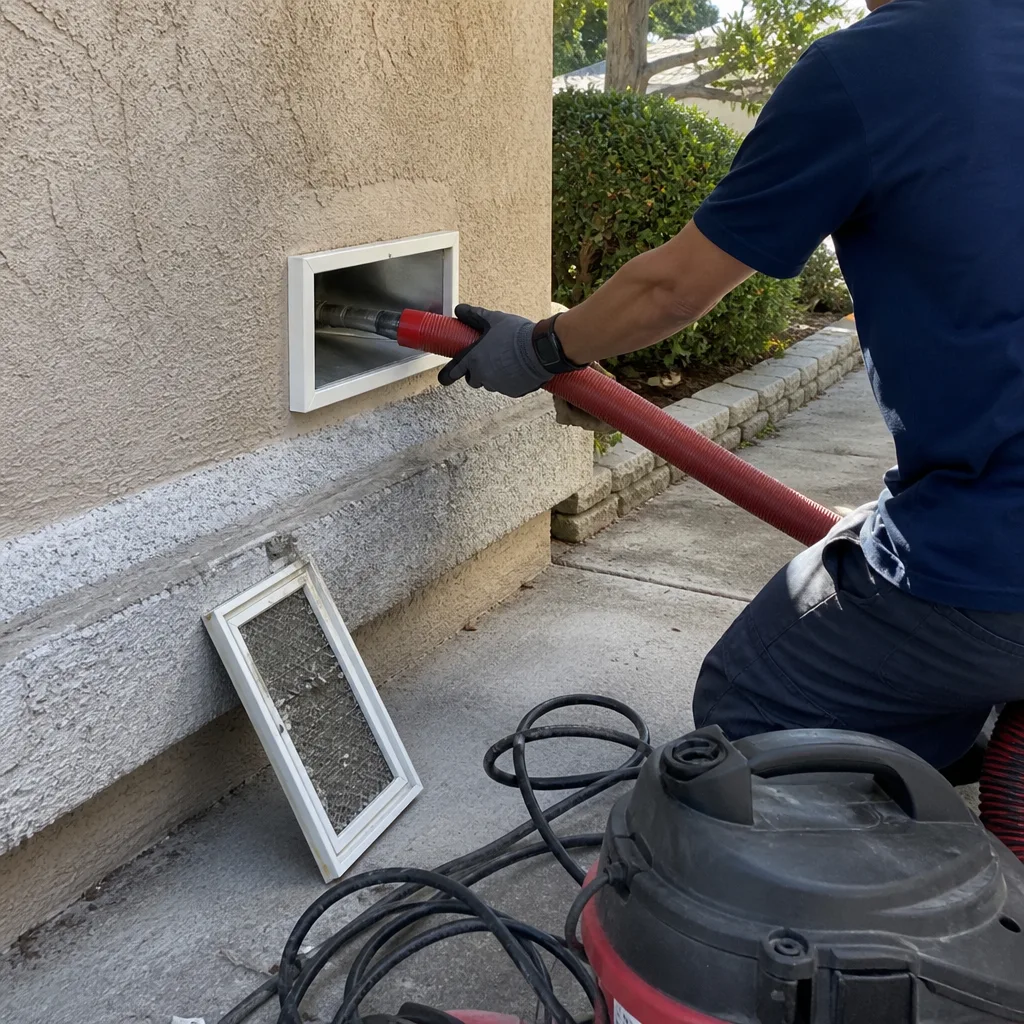 After