
Last updated November 2, 2026
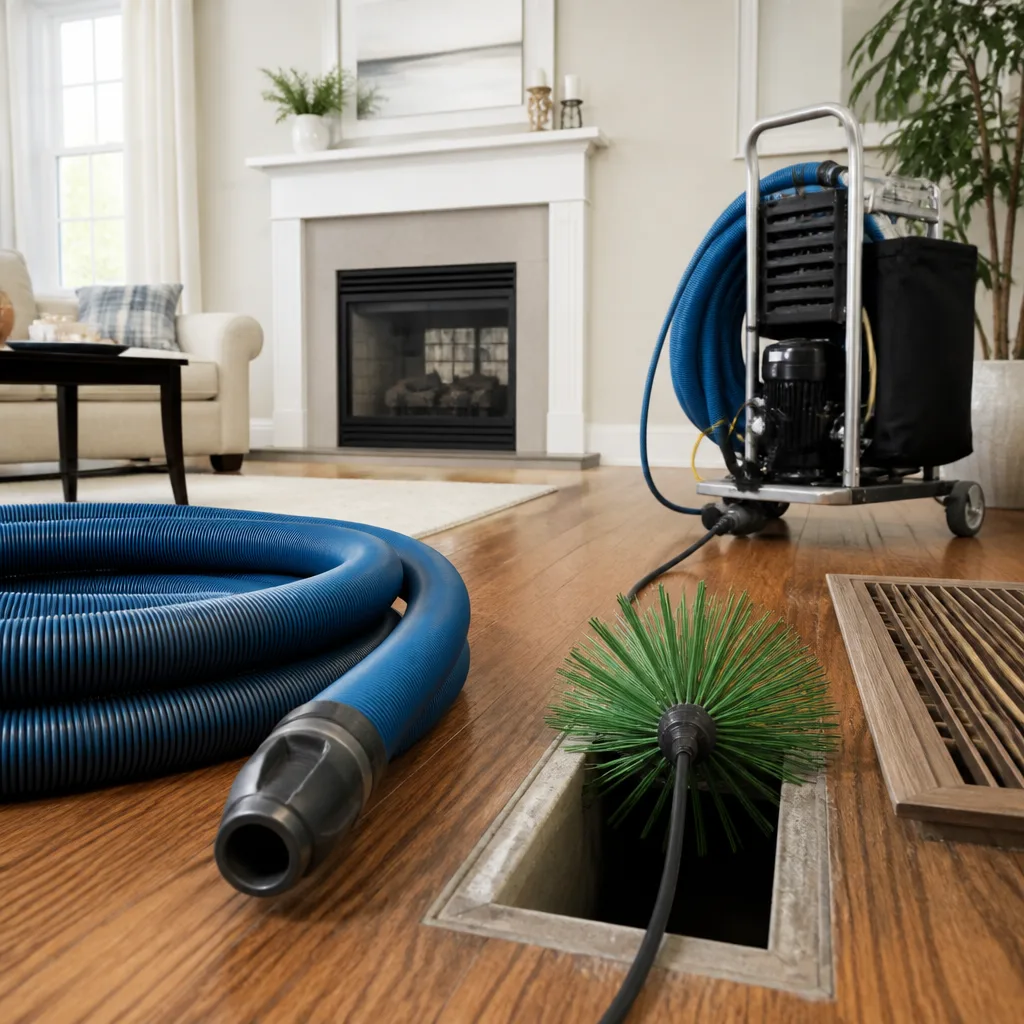 Whole-home duct cleaning
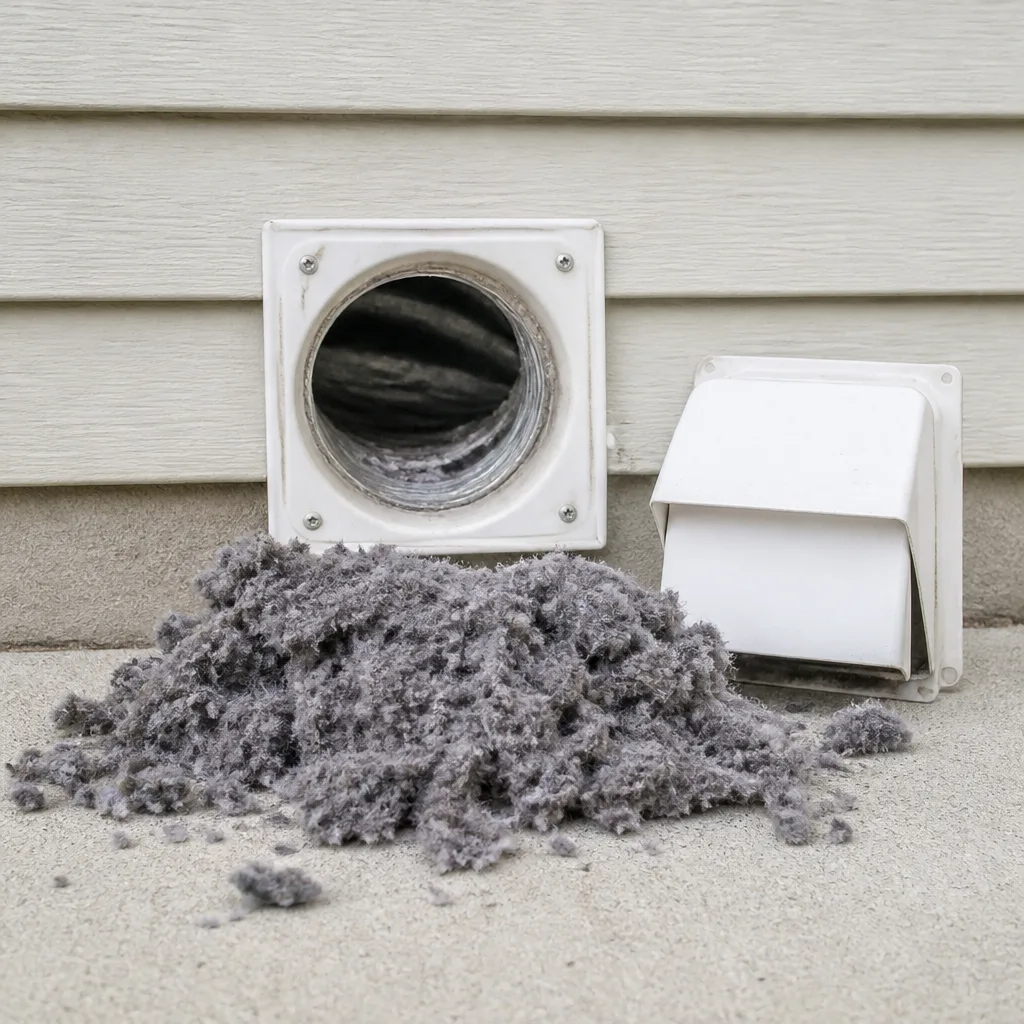 Dryer vent cleaning
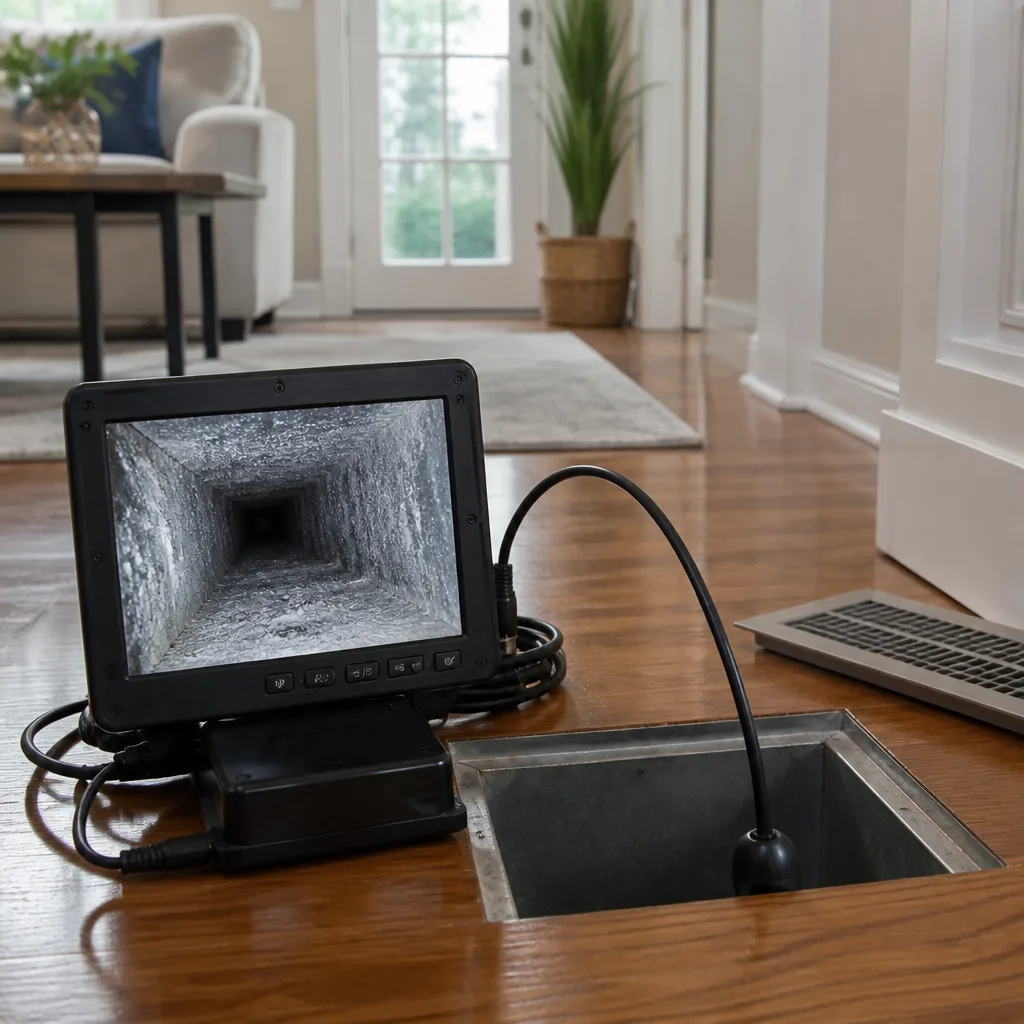 Camera inspection
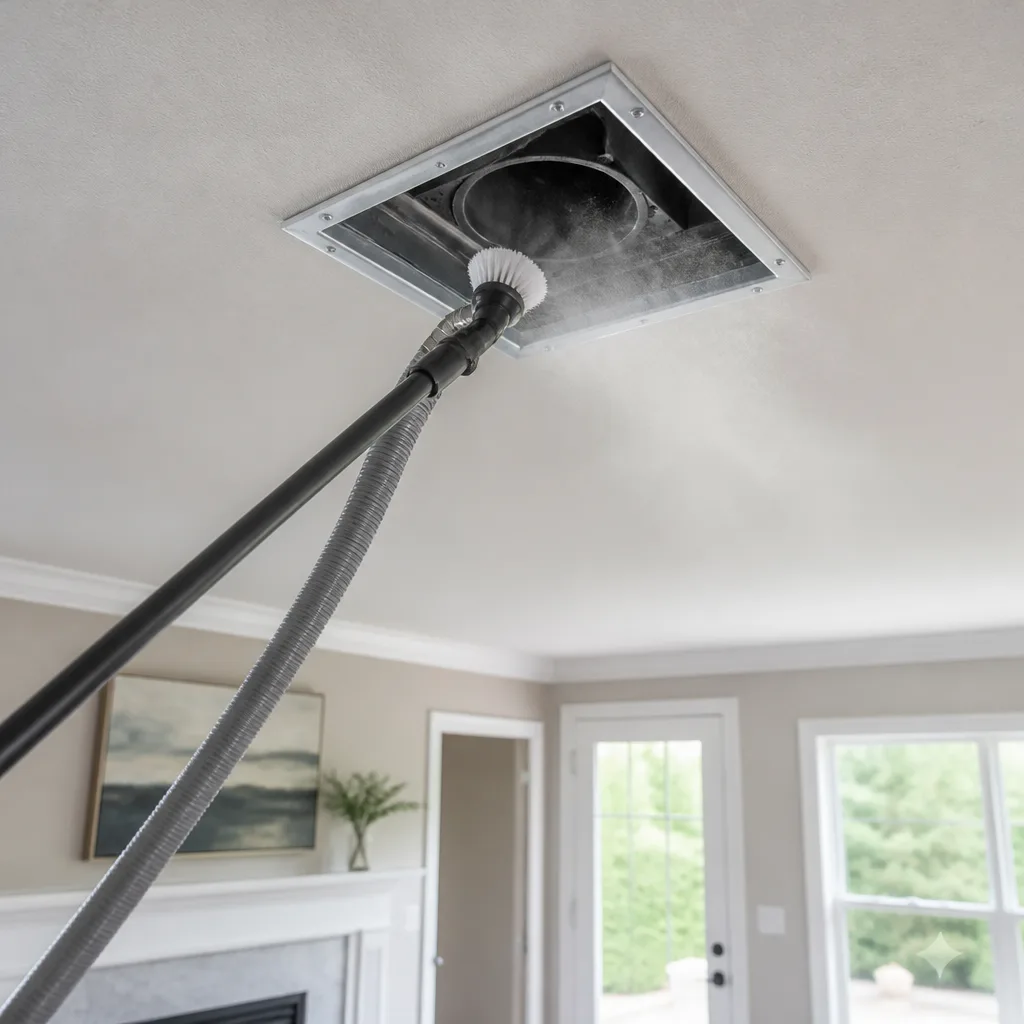 Sanitizing & deodorizing
Whole-system duct and dryer vent check with before-and-after photos - you see exactly what came out of your vents
That "$99 whole-house special" is a bait ad - the real number appears once they are in your hallway, or the "clean" is a shop-vac at the register. We photograph the inside of your ducts before and after instead.
DIY vs Professional Air Duct Cleaning: The Glendora Homeowner’s Decision Guide
A consumer shop vac moves about 100 cubic feet of air per minute. A professional truck-mounted negative-air system moves 2,500 to 4,000 CFM. That gap isn’t a technical footnote; it’s the entire answer to whether duct cleaning can be a do-it-yourself job. If you live in Glendora and you’ve been weighing the cost of a pro against a Saturday with a rented vacuum and good intentions, our How to Hire an Air Duct Cleaning Contractor in Glendora: A Step-by-Step Guide and this article will show you exactly what each approach can and cannot do, in measurable terms, so you can spend money where it actually changes the air in your home.
Duct Cleaning Glendora home guide has one goal: give you the equipment-level truth that most articles skip. By the end, you’ll know which three DIY tasks are genuinely worth your time, why the rental machines at the hardware store fall short, and the specific Glendora situations where professional cleaning pays for itself.
Quick Answer
DIY air duct cleaning can handle visible surfaces like register covers and the first few inches of duct openings, but it cannot generate the negative pressure required to pull debris from the trunk lines and boot connections where most contamination settles. In Glendora, where summer wildfires and Santa Ana winds load ducts with fine particulate, professional source-removal cleaning with HEPA negative-air equipment is the only method that reaches the full duct system. Rent or buy if you want to maintain registers between Air Duct Cleaning services; hire a pro if you need the ducts themselves cleaned.
Styles & brands we work with
- Whole-home duct cleaning
- Dryer vent cleaning
- Camera inspection
- Sanitizing & deodorizing
Table of Contents
- The Equipment Gap: CFM, Static Pressure, and Why They Matter
- What DIY Duct Cleaning Can Genuinely Accomplish
- What DIY Cannot Do: The Physics of Duct Contamination
- The Rental Equipment Question: What You Can Actually Rent and What It Won’t Do
- When DIY Efforts Backfire: The Dislodged-Debris Problem
- When Professional Cleaning Has a Documented Payoff
- What Glendora Specifically Means for Your Ducts
- What Each Approach Actually Costs in Glendora
The Equipment Gap: CFM, Static Pressure, and Why They Matter
Air duct cleaning is not a scrubbing job. It’s a pressure job. Contaminants adhere to duct walls through electrostatic attraction, moisture bonding, and simple gravity. Removing them requires a sustained negative pressure differential across the duct surface, and that requires airflow volume measured in cubic feet per minute (CFM) combined with static pressure measured in inches of water gauge.
A standard consumer shop vac, even a large 16-gallon model, produces roughly 100 to 200 CFM at the hose end and generates 2 to 4 inches of water gauge. That’s enough to lift loose dust from a flat, open surface. It is not enough to create meaningful airflow velocity 10, 15, or 20 feet down a duct run, around a bend, or through a boot connection. By the time the suction reaches the far side of the duct, the velocity has dropped below the threshold required to break the boundary layer where particles actually rest.
A professional truck-mounted or trailer-mounted negative-air machine operates at 2,500 to 4,000 CFM and maintains 8 to 12 inches of water gauge at the duct connection. In our experience cleaning ducts across Glendora, this is the difference between removing what you can see at the register and removing what’s coating the trunk line. The professional system doesn’t just pull harder; it creates a continuous air stream through the entire duct network while agitation tools work each section from the inside.
That’s the core of source-removal methodology: mechanical agitation combined with continuous negative-air capture. The agitation loosens the debris, and the air stream carries it out and into containment. Without both elements working at sufficient scale, you’re dusting the surfaces you can reach and ignoring the rest.
- Consumer shop vac: 100-200 CFM, 2-4 inches water gauge, effective range roughly 2-3 feet of straight duct
- Professional negative-air system: 2,500-4,000 CFM, 8-12 inches water gauge, effective range spanning the full duct run
- Why range matters: most residential duct runs in Glendora homes extend 15-30 feet from the nearest access point, with multiple bends and boot connections
What DIY Duct Cleaning Can Genuinely Accomplish
A fair guide doesn’t tell you DIY is worthless. It isn’t. There are three specific tasks where a homeowner in Glendora can make a real difference with tools they already own or can rent cheaply, and these tasks have measurable value.
Task 1: Register and Grille Cleaning
The metal or plastic covers over your supply and return openings collect dust, hair, and cooking grease on the side facing the room. This is the one part of the duct system you can fully access, fully clean, and fully verify. Remove each register, wash it in warm water with a degreasing dish soap, dry it thoroughly, and reinstall. If the opening behind it shows a visible dust ring, wipe that with a damp cloth as far as your hand reaches. This task takes an hour in a typical Glendora single-family home and improves both appearance and the first few inches of airflow pathway.
Task 2: Exterior Dryer Vent Cap Cleaning
Dryer vents are a separate system from air ducts, but they’re the one DIY-accessible duct run that matters for fire safety. The exterior cap on your Glendora home accumulates lint at the flap and the surrounding screen. If you have a leaf blower, you can clear accessible lint from the outside in about ten minutes. This is not a substitute for Dryer Vent Cleaning in Glendora of the full run, but it’s a legitimate maintenance task between professional services. Remove the cap (usually held by two screws), pull out the lint ball around the flap, and check that the flap opens fully when the dryer runs.
Task 3: Replacing Accessible Flex Duct Sections
If you have a flex-duct run that is crushed, torn, or visibly degraded, and it runs through an accessible attic or crawl space, you can replace that section with new insulated flex duct from a home improvement store. This is a repair, not a cleaning, but it removes a contaminated or restricted section entirely. Measure the diameter (common sizes are 6, 8, and 10 inches), buy the same size, and secure the new section with mastic and metal bands or zip ties, matching the existing installation. This is one area where DIY actually beats cleaning because replacement eliminates the problem rather than treating it.
If you find damage you’re not comfortable repairing, that’s exactly what Air Duct Repair in Glendora service covers.
What DIY Cannot Do: The Physics of Duct Contamination
Here’s the uncomfortable truth that most DIY articles avoid: the surfaces you can reach from a register opening represent roughly 15 to 20 percent of your total duct surface area. The remaining 80 to 85 percent lives in the trunk lines, branch runs, elbows, and boot connections that run through walls, floors, attics, and crawl spaces.
What collects in that inaccessible 80 percent? In Glendora, we see three categories:
- Fine particulate from Santa Ana winds and wildfire smoke: particles under 10 microns that enter through the return air system and settle along the bottom of trunk lines as airflow slows
- Construction debris from the original build or renovations: drywall dust, sawdust, insulation fibers, and drywall screws that were swept into duct openings before registers were installed
- Biological material: hair, skin cells, and pet dander that pass through the filter and accumulate in low-airflow areas
None of this material can be reached with a shop vac hose extended through a register opening. A 2-inch hose inserted 3 feet into a register boot simply cannot make the turn into the branch line, let alone travel the length of the run. Even if it could, the CFM delivery at that distance drops to nearly zero.
Professional cleaning handles this through access: technicians cut or open access points at strategic locations along the trunk lines, insert a rotating brush or air whip to agitate the full run, and maintain continuous negative-air suction to capture everything the agitation releases. This is what the term source-removal means in our industry: removing the contamination from its source location, not just from the visible surfaces near it. The equipment we run on Glendora jobs includes Rotobrush rotary brush systems paired with Nikro HEPA negative-air vacuums, which together provide the agitation-and-capture combination that source removal requires.
The Rental Equipment Question: What You Can Actually Rent and What It Won’t Do
A reasonable homeowner might ask: why not rent a professional machine? It’s a fair question, and the answer needs to be specific.
At the time of writing, the typical rental equipment available at Glendora-area tool rental counters falls into two categories:
- Commercial-grade shop vacuums: 10-20 gallon capacity, 150-250 CFM, with longer hoses and filtration upgrades. Rental cost runs roughly $40 to $80 per day. These are better than a homeowner shop vac for flat surface pickup, but their CFM output remains at least an order of magnitude below a negative-air system. They cannot hold a pressure differential across a 20-foot duct run.
- Carpet cleaning machines with extractor wands: 300-500 CFM with heated water. Rental cost runs $100 to $150 per day. The CFM is better, but these machines are designed for hot water extraction on carpet surfaces, not for ductwork. The wand cannot fit into standard duct openings, and the hot water creates moisture you do not want inside duct surfaces that can’t dry quickly.
What you cannot rent, at least not through any consumer-facing rental counter in the Los Angeles basin, is a truck-mounted negative-air duct cleaning system. These are not rental items. They are capital equipment owned by duct cleaning companies and installed in a dedicated vehicle. The reason is practical: the machine, hoses, brushes, access tools, and containment system together represent $20,000 to $50,000 of equipment that requires training to operate without damaging ducts or blowing debris into living spaces.
So the rental comparison isn’t between a pro machine and a hobbyist machine of the same type. It’s between a hobbyist-grade vacuum and a machine that exists only in professional fleets. The gap is structural, not a matter of effort.
When DIY Efforts Backfire: The Dislodged-Debris Problem
Here’s the risk that no one talks about in the hardware store aisle: inadequate suction does not leave debris where it was. It moves it.
When you insert a shop vac hose or, worse, a length of PVC pipe with a brush head attached to it, into a duct opening, you agitate the settled debris. Some of it gets sucked into your vacuum. The rest of it gets lifted into the airstream. With only 100-200 CFM pulling, that airborne material drifts rather than being captured. Some of it settles back down further along the duct run. Some of it flows out through nearby registers into the air you breathe.
In practical terms: a homeowner who aggressively brushes their ducts with a shop vac attached can finish the afternoon with ducts that look cleaner near the register but release more fine particulate into the living space than before they started. The dust settles on furniture within 48 hours, and the homeowner concludes the job worked because the register area looks better. The air quality actually got worse for a period, and the debris is now distributed rather than concentrated.
This is not a theoretical risk. It’s what we hear from Glendora homeowners during Air Duct Cleaning in Glendora estimates: “I tried cleaning them myself last year, and it seemed like there was more dust in the house afterward.” The fix is straightforward when it’s caught, but the better outcome is avoiding the situation entirely.
The safe version of this principle: if your tool cannot pull the full volume of whatever it stirs up out of the duct and into containment, limit your tool to surfaces you can reach directly and clean with a damp cloth. Do not agitate what you cannot capture.
When Professional Cleaning Has a Documented Payoff
Professional duct cleaning is not a maintenance ritual that every home needs every year. It’s a response to specific conditions. For Seasonal Air Duct Cleaning Care for Glendora: Year-Round Homeowner’s Guide, here’s where the evidence for professional cleaning is strongest and where Glendora homeowners should actually schedule it.
Post-renovation. If you’ve completed a kitchen remodel, a bathroom remodel, or any project producing drywall dust, the dust does not stay in the work zone. Toenail-sized gaps in duct joints pull that fine particulate into the return air and deposit it through the system. Professional source-removal cleaning after construction is the only way to remove it. We see this constantly in Glendora’s older housing stock, where remodels happen in homes built with duct systems that were already decades old.
Post-rodent intrusion. Rats, mice, and roof squirrels are facts of life in the foothill neighborhoods around Glendora. When rodents nest or travel through duct systems, they leave urine, feces, fur, and nesting debris in places you cannot see and cannot reach. This is not a cleaning preference; it’s a health issue. Professional cleaning with containment-level filtration is the appropriate response.
Post-wildfire smoke events. The Bobcat Fire in 2020 and the recurrent smoke drift from Angeles National Forest fires load fine particulate onto every horizontal surface in Glendora homes, including the interior of duct runs. If you ran your furnace fan during smoke days, your ducts now hold a film of sub-micron particulate that will release into the airstream for months. Professional cleaning with HEPA filtration addresses this specifically.
After decades without service. A duct system that has never been cleaned in a 20 or 30 year-old Glendora home carries accumulated contamination from every previous occupant, every renovation, and every filter change that went too long. One comprehensive cleaning resets the baseline.
For a home with none of these conditions and minimal visible dust at registers, professional cleaning has less urgency. The honest answer is that some homes can go 5-7 years between cleanings and see no measurable difference in air quality. The key variable is what has happened in and around the house during that window.
What Glendora Specifically Means for Your Ducts
Glendora has a particular climate profile that shapes what accumulates in duct systems and how fast it accumulates. It’s worth understanding because it changes the cost-benefit math for professional cleaning.
First, the Santa Ana winds. These downslope winds start in the high desert and sweep through the passes into the San Gabriel Valley, carrying fine dust and particulate. Homes in the northern Glendora neighborhoods, closer to the foothills, see more of this airborne material than homes in the southern flatlands. All of it enters through return air grilles, and only the fraction that the HVAC filter catches stays out of the duct system. Typical 1-inch fiberglass filters catch less than 20 percent of particles under 10 microns.
Second, wildfire smoke. Glendora sits directly south of the Angeles National Forest, where fire is a recurring reality. The smoke that blankets the area during fire season carries particulate that a standard filter doesn’t stop, and whatever enters the duct system settles there for the long term.
Third, housing stock age. Much of Glendora’s housing inventory dates from the 1950s through the 1980s, and many of those homes have original or early-replacement duct systems. Older duct runs are more likely to have gaps at joints, interior corrosion, and decades of accumulated material. Newer construction in the northern developments has tighter, better-sealed systems, but those homes also see more wind-driven particulate.
All of this means the “every 3-5 years” recommendation you might see in generic duct cleaning articles should be adjusted by what’s happened to your specific Glendora home. A house near the foothills that ran its fan through three smoke seasons needs service sooner than a sealed newer home in the southern part of the city that runs a high-quality filter.
What Each Approach Actually Costs in Glendora
Let’s be direct about money, because vague pricing helps no one.
A serious DIY attempt, including a rented commercial shop vac, cleaning supplies, and a full day of labor, runs $80 to $150. What you get for that: clean register covers, a few feet of accessible duct opening, and the certainty that the rest of your system remains untouched.
A professional source-removal cleaning of a typical single-family Glendora home currently runs between $450 and $900 for the full system, depending on system size, number of access points, and the condition of the ductwork. Most three-to-four bedroom homes in Glendora fall in the $500 to $700 range. That price includes trunk line access, full agitation of every accessible duct run, HEPA negative-air capture, and inspection of the system condition while the work is underway.
For dryer vent cleaning specifically, a dedicated service call in Glendora typically runs $150 to $250. Given that dryer vent fires account for thousands of house fires annually across the country and that this service uses the same negative-air approach as duct cleaning, this is the highest-value professional service most homeowners can buy by dollar-per-risk-reduction.
The comparison isn’t $100 versus $600 as if they accomplish the same thing. It’s $100 to clean surfaces you can already see versus $600 to clean the surfaces you cannot see that determine what comes out of the air registers you breathe through every night.
Common Mistakes to Avoid
- Using a leaf blower inside the duct system. A leaf blower moves high CFM but creates positive pressure, not negative pressure. It blows debris into the living space and compacts material deeper into trunk lines. This is the single most counterproductive DIY duct action we encounter in Glendora homes.
- Inserting a brush attached to a drill without containment. The agitation dislodges more material than you can catch, and the debris ends up in the airstream of every room. If you’re going to agitate, you must have professional-grade negative air running simultaneously.
- Spraying disinfectants or sanitizers into the duct system. Liquid products introduce moisture into a space designed to stay dry, and most household sprays have no EPA registration for duct interiors. What coats duct surfaces stays there and can release volatile compounds for months.
- Poking into flexible duct with sharp or rigid tools. The inner liner of flex duct tears easily, and a torn liner inside the duct system is a new air leakage point. Once torn, the only repair option is replacement of the section.
- Assuming a shiny register equals a clean system. The register is the one part of the system you can see and the one part that gets the most airflow across it. The trunk line behind it can hold a quarter-inch of accumulated material while the register looks spotless.
- Using a rented carpet cleaner on ducts. The extractor wand cannot fit standard duct dimensions, and the hot water or cleaning solution creates moisture problems. This is a misuse of a machine that’s perfectly good at its actual job.
- Running the HVAC fan during a DIY attempt. The blower turns your partial cleaning into an active dust distribution system. If you’re cleaning registers or wiping accessible surfaces, kill the system at the thermostat first and let settled material stay settled.
See the difference
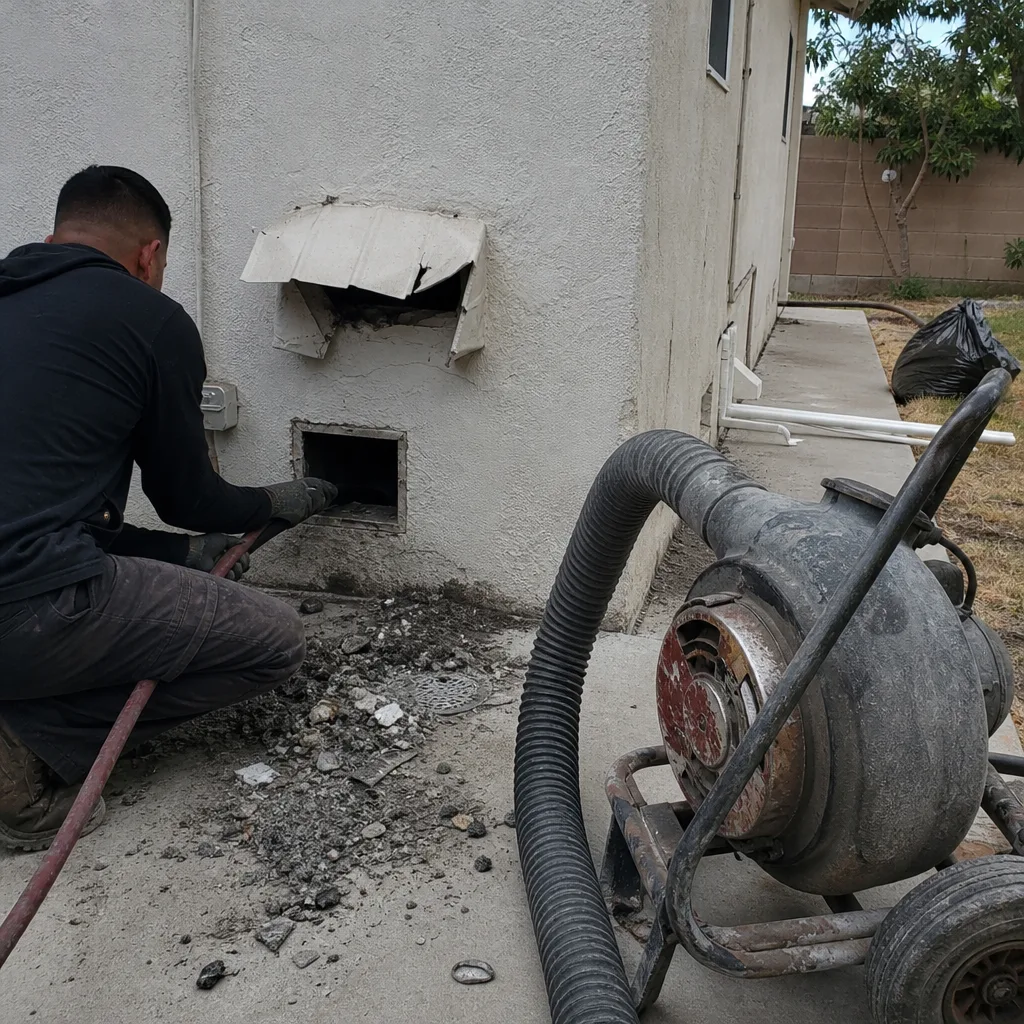 Before
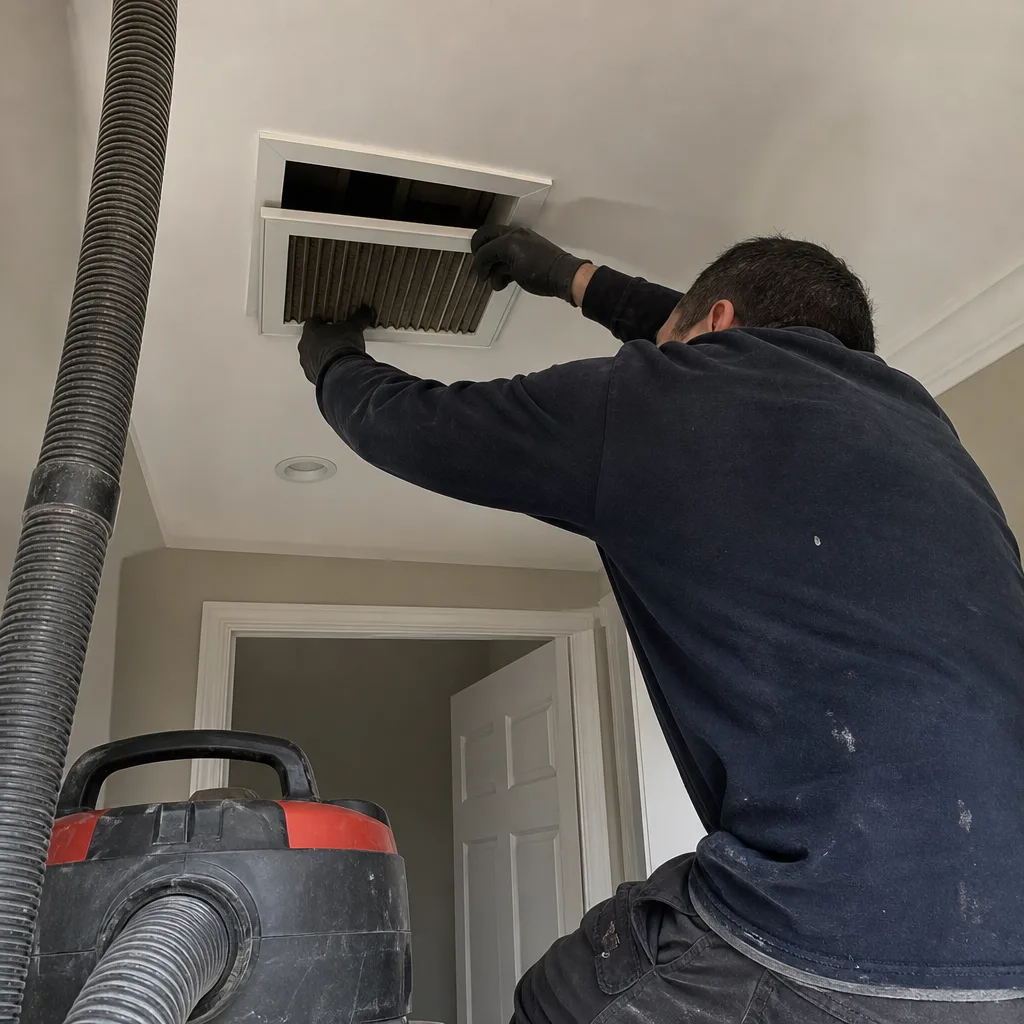 After
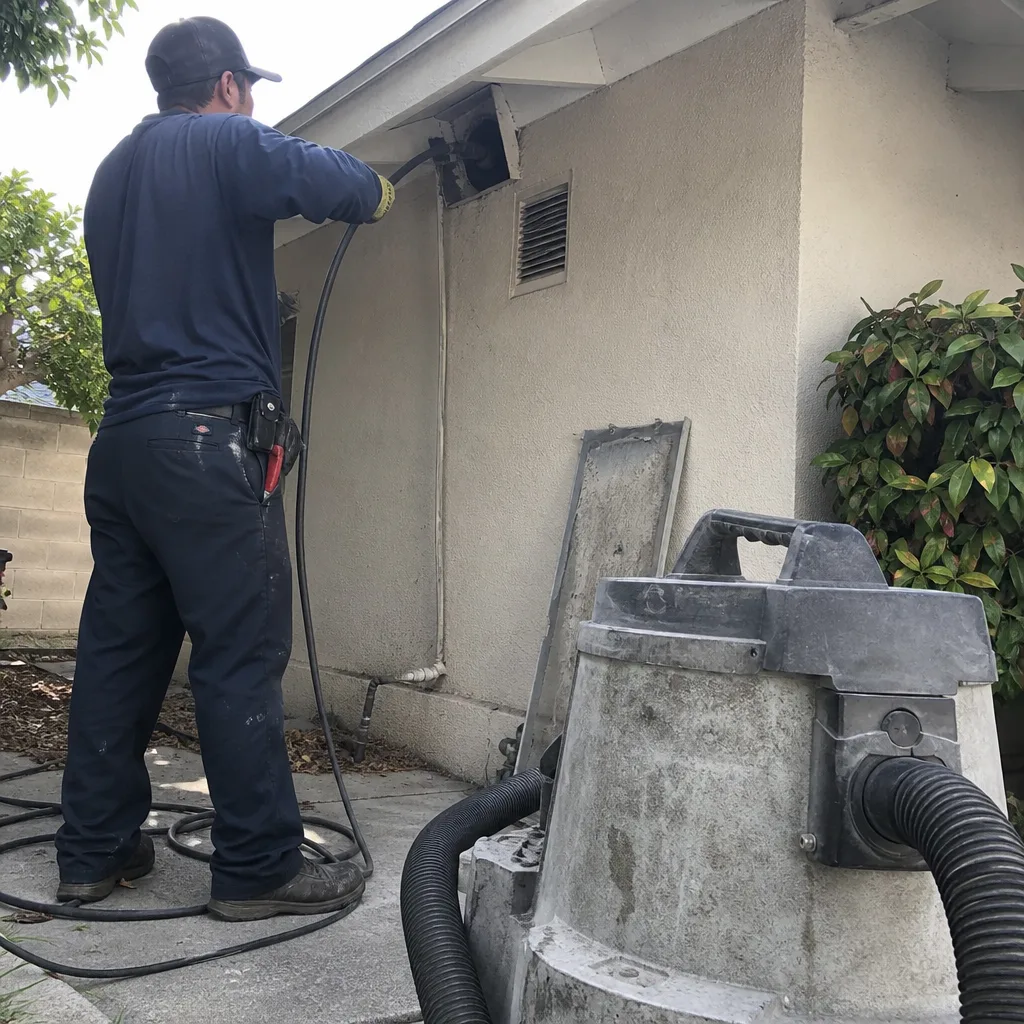 Before
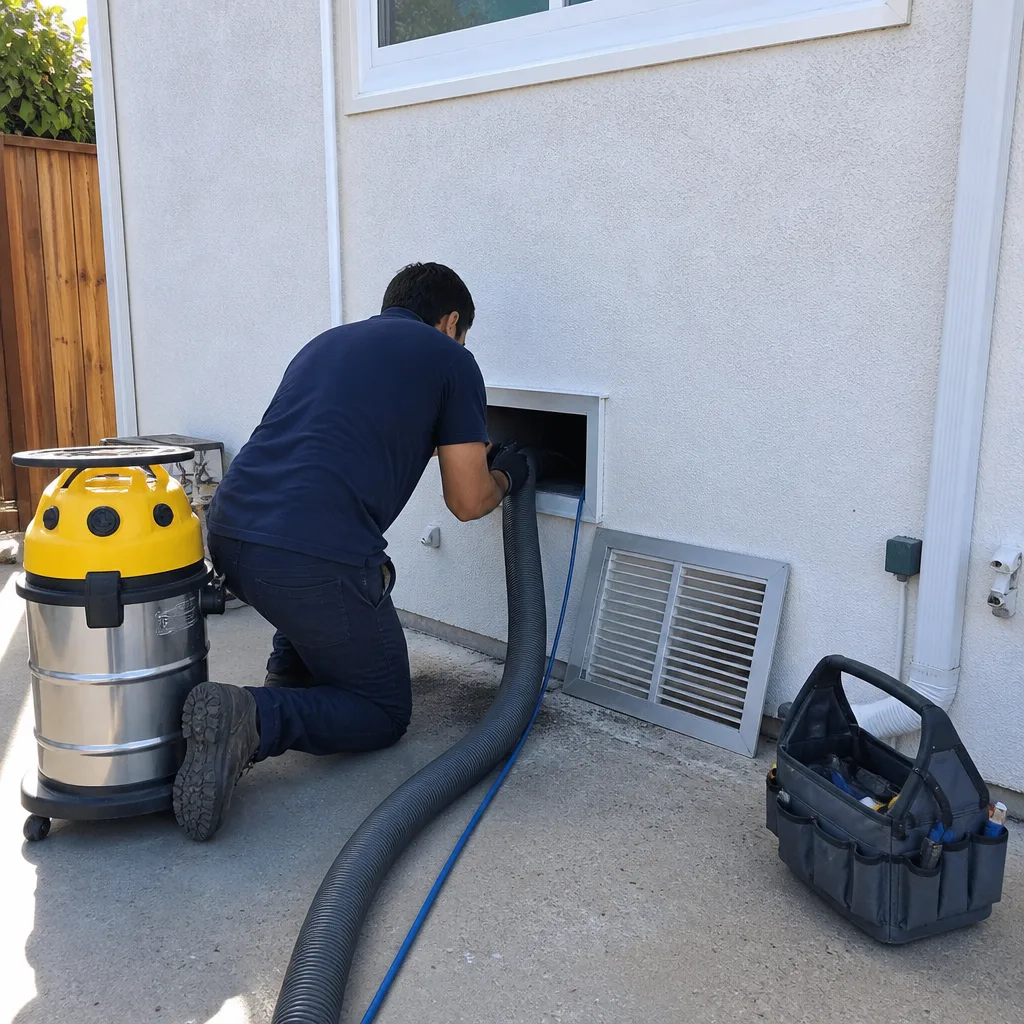 After
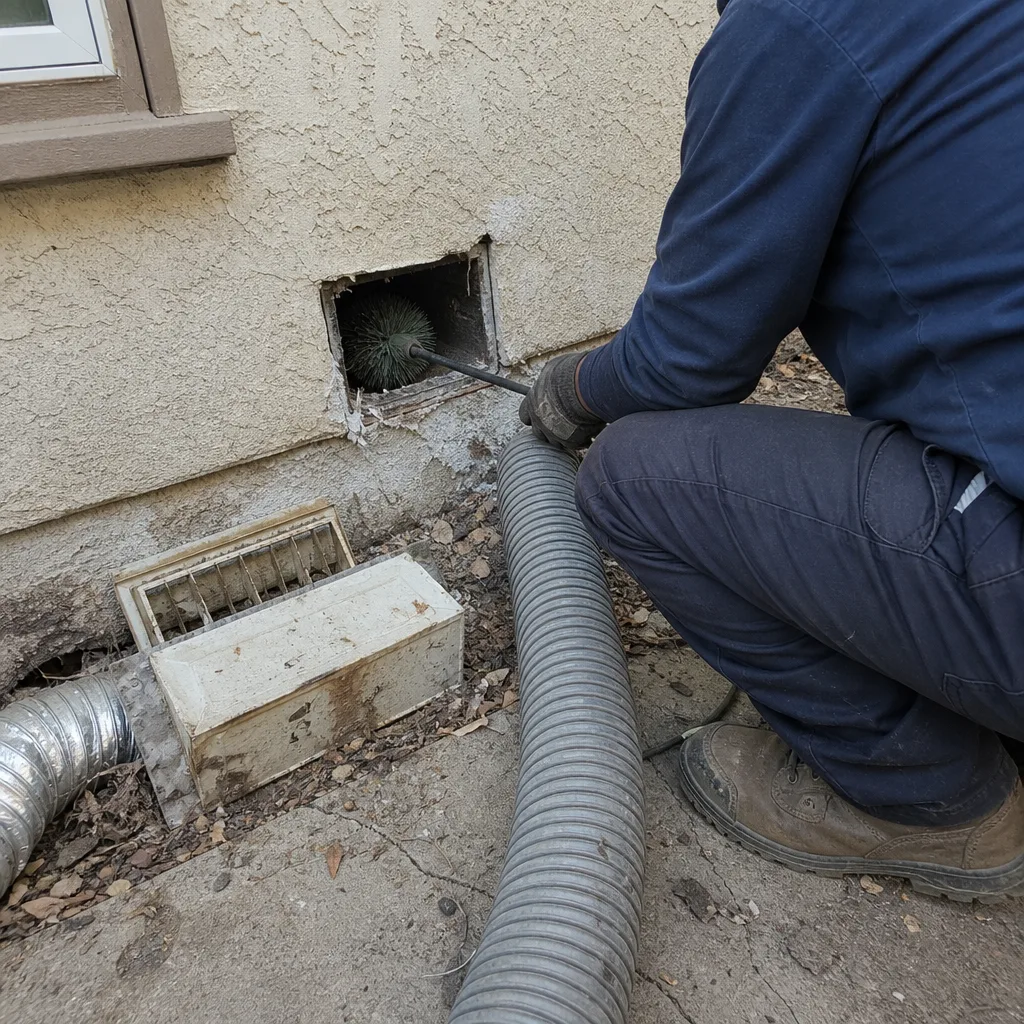 Before
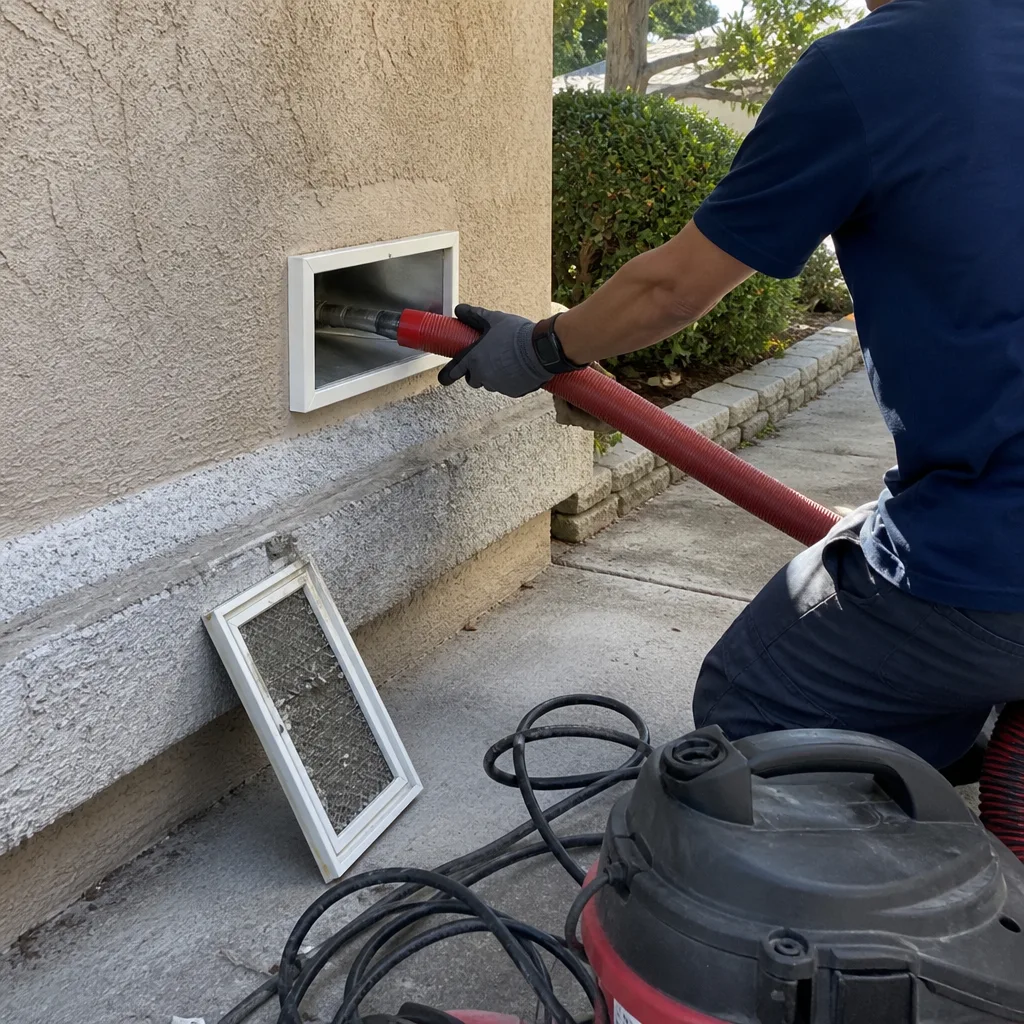 After
When to Call a Professional
Call a professional duct cleaner when you can see visible dust blowing from registers when the system starts, when you smell a musty or stale odor that follows the HVAC operation, when you’ve completed a renovation that produced dust, when you know rodents have been in your attic or crawl space, when a wildfire smoke event blew through while your fan was running, or when no one in the household can remember the ducts ever being cleaned. A professional assessment is also the cost-free way to find out whether your system needs cleaning at all. Duct Cleaning Glendora offers free estimates in Glendora; call (833) 620-4169 and describe what you’re seeing, and we’ll tell you honestly whether a cleaning makes sense for your situation.
Frequently Asked Questions
Professional air duct cleaning in Glendora typically costs between $450 and $900 for a full system cleaning, with most three-to-four bedroom homes falling in the $500 to $700 range. The price depends on system size, access point count, and the condition of the ductwork. For more guides & resources, call (833) 620-4169 for an exact quote; estimates are free.
You can clean register covers and the first few inches of accessible duct opening with a shop vac, but you cannot clean the trunk lines, branch runs, or boot connections where the majority of duct contamination lives. A shop vac’s 100-200 CFM output cannot sustain the negative pressure needed to pull debris from surfaces more than a few feet from the access point.
Cheaper quotes usually mean a surface-level suction pass through register openings without trunk line access, without mechanical agitation, and without HEPA negative-air containment. A $99 whole-house duct cleaning cannot include the labor and equipment required for source-removal methodology and either adds charges on arrival or simply leaves the interior of the duct system untouched.
A legitimate source-removal company will show you before-and-after photos from inside the trunk lines and access points, not just from the register openings. Ask for photo documentation of the trunk line before and after cleaning, and check that the company uses negative-air containment rather than just a vacuum hose. If a company refuses or cannot show interior documentation, the work didn’t happen where it matters.
Most Glendora homes benefit from professional duct cleaning every 3 to 7 years, with the interval shortened by renovations, wildfire smoke exposure, rodent activity, and whether the home sits in the foothill zones that see more Santa Ana wind-driven particulate. A home that ran its fan through two or three smoke seasons needs service sooner than a sealed, well-filtered home in the southern flatlands.
No, dryer vent cleaning is a separate system and a separate service. The duct that carries dryer exhaust to the outside of your Glendora home runs independently from the HVAC air distribution system. It requires its own cleaning with negative-air equipment, and it’s the single most direct fire-risk reduction measure available to a homeowner. Call (833) 620-4169 for a quote that covers either service or both.
The Bottom Line
The DIY versus professional duct cleaning decision comes down to a physics reality: consumer vacuums cannot generate the negative pressure required to clean anything beyond the visible register area. The 80 percent of your duct system that affects air quality, HVAC efficiency, and respiratory comfort is reachable only with professional source-removal equipment operating at truck-mount CFM levels. That doesn’t make DIY worthless; register cleaning, exterior dryer cap clearing, and accessible flex duct replacement are legitimate homeowner tasks. But for the actual interior of your Glendora home’s duct system, the effective choice is a professional cleaning at $500 to $700 for a typical single-family home, or no cleaning at all rather than a DIY attempt that risks dislodging debris without capturing it. The math is straightforward once you know what’s actually reachable.
Written by the team at Duct Cleaning Glendora, serving Glendora since 2014.