
Last updated November 3, 2026
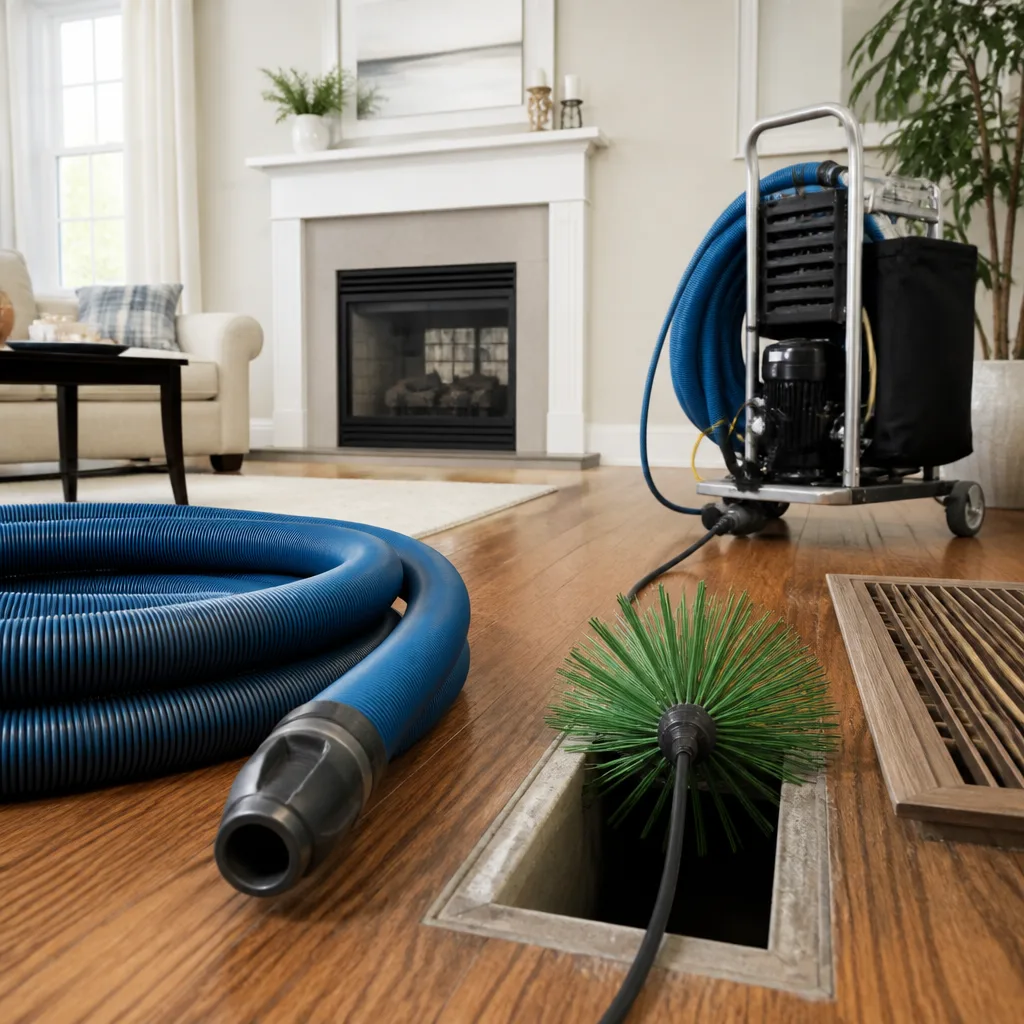 Whole-home duct cleaning
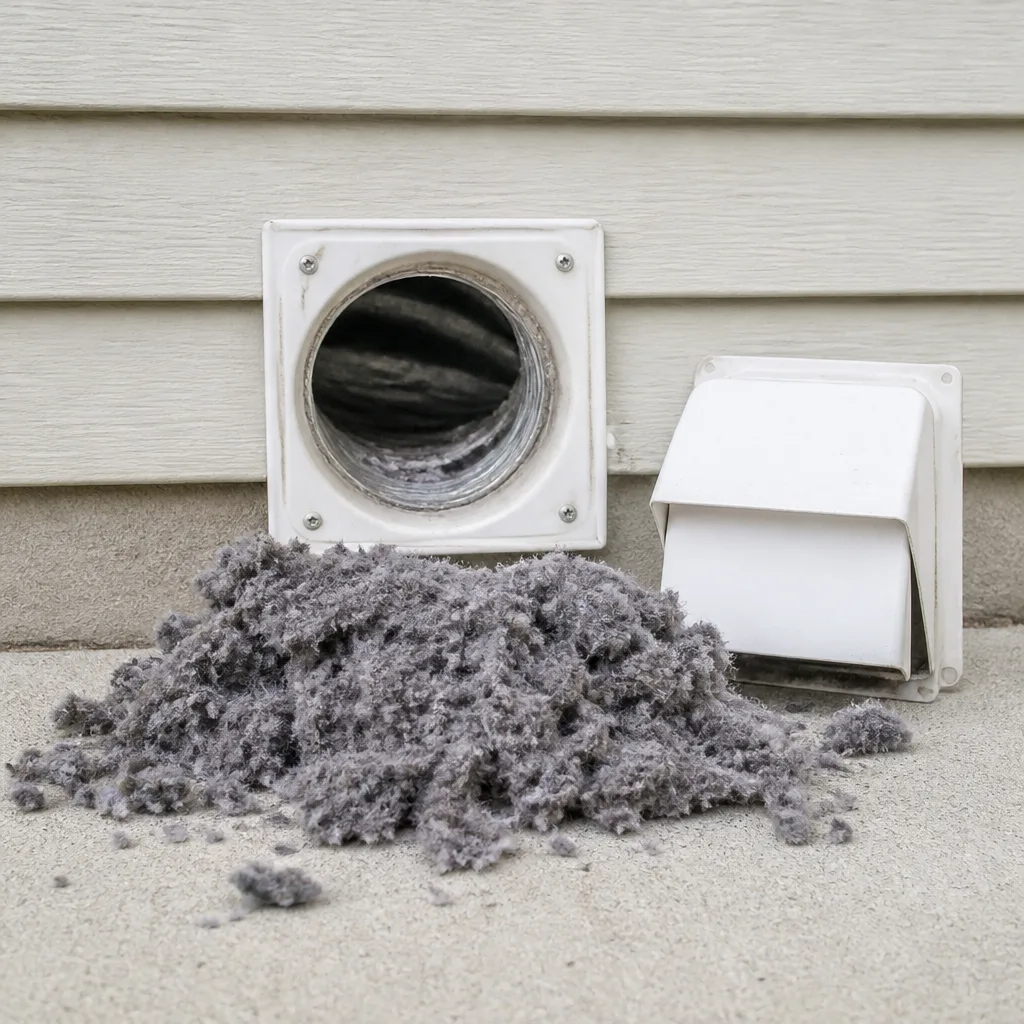 Dryer vent cleaning
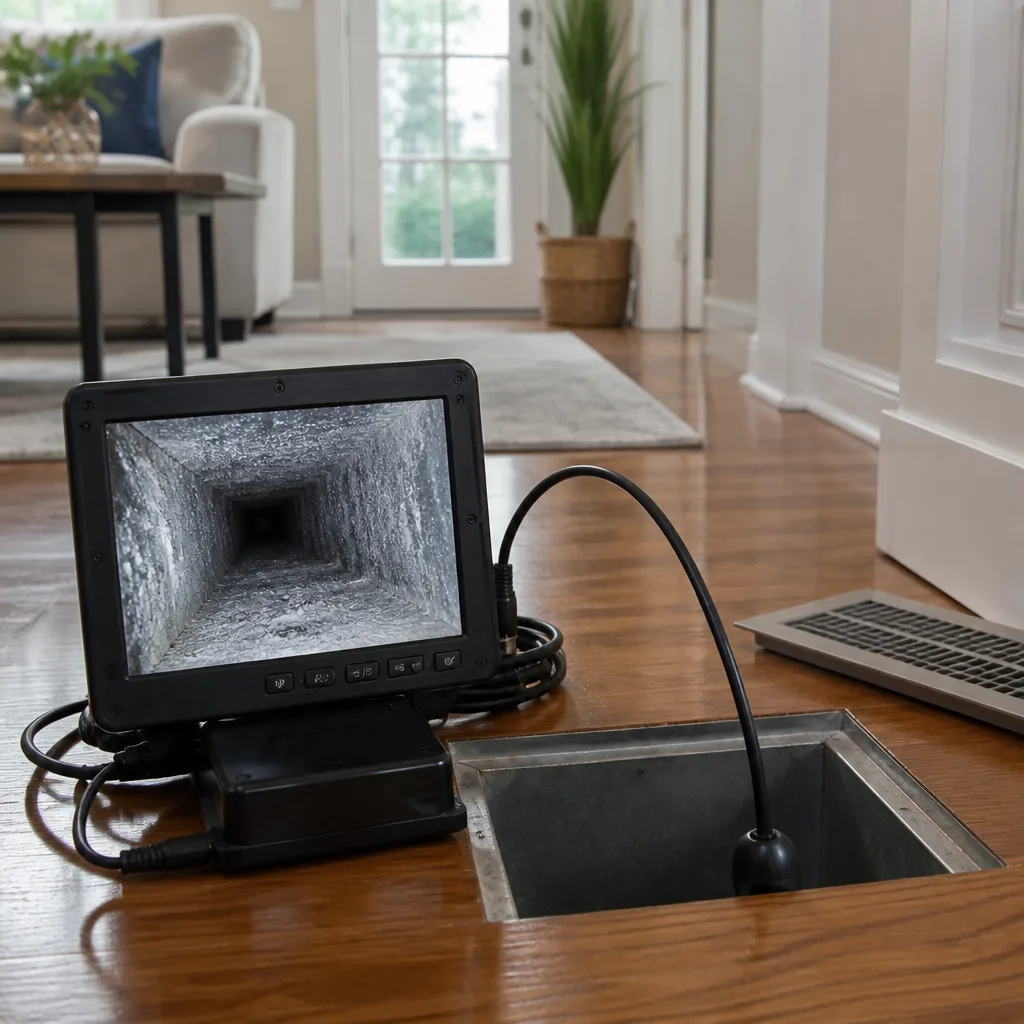 Camera inspection
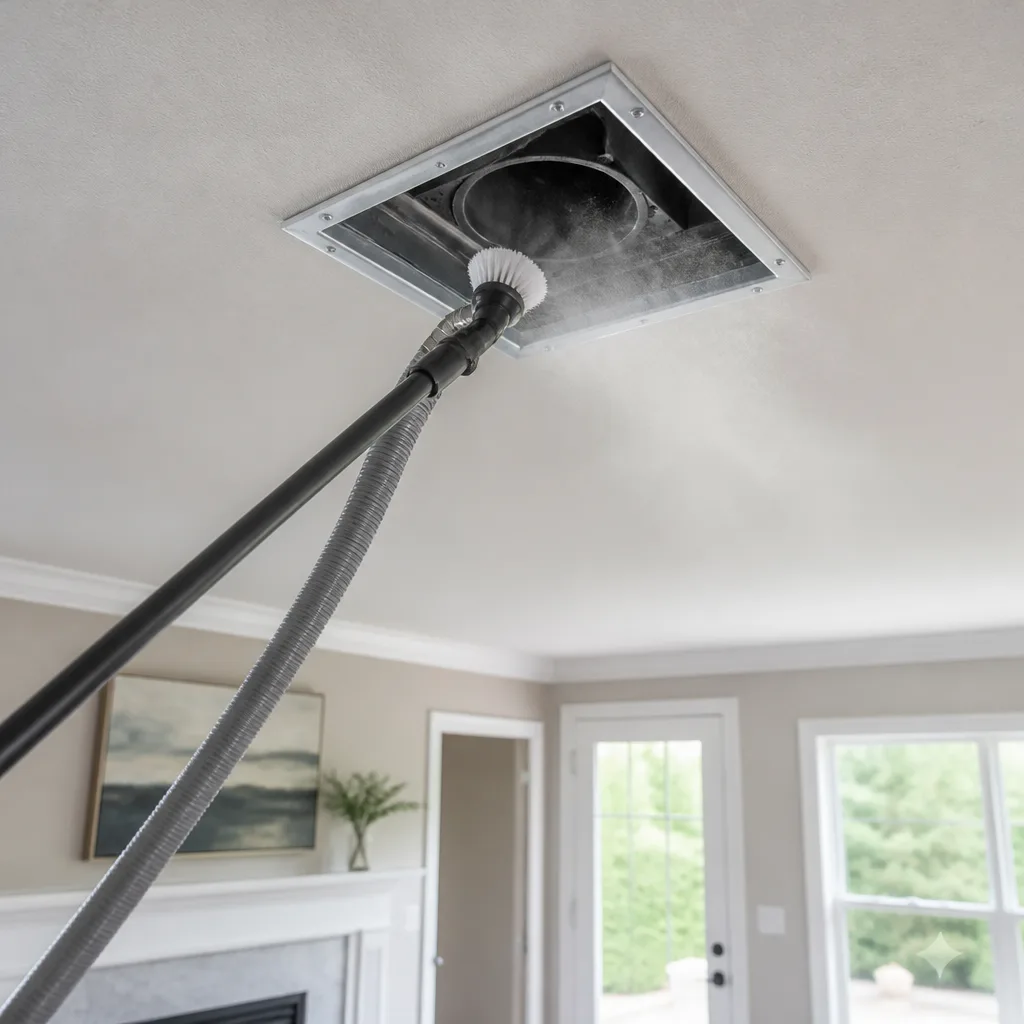 Sanitizing & deodorizing
Whole-system duct and dryer vent check with before-and-after photos - you see exactly what came out of your vents
That "$99 whole-house special" is a bait ad - the real number appears once they are in your hallway, or the "clean" is a shop-vac at the register. We photograph the inside of your ducts before and after instead.
The Complete Air Duct Cleaning Guide for Glendora Homeowners
A duct system has an average of 12 to 20 feet of ductwork per register, and a single suction pass at the register face touches maybe 18 inches of it. That math explains why two companies can quote wildly different prices for what sounds like the same job. This guide walks you through what actually happens during The Complete Guide to Air Duct Cleaning in Glendora, from the first access cut to the final photo documentation, so you can evaluate any contractor before they ring the doorbell. We’ve organized it the way a technician actually works a job, because the sequence of steps tells you more about quality than any brochure ever will.
Styles & brands we work with
- Whole-home duct cleaning
- Dryer vent cleaning
- Camera inspection
- Sanitizing & deodorizing
Quick Answer
Our Air Duct Cleaning services in Glendora cost between $350 and $700 for a typical single-family home, and a legitimate job takes 3 to 5 hours with at least two technicians. The key difference between quotes comes down to method: contact-vacuum cleaning only touches the first 18 inches of each register, while source-removal cleaning uses a rotary brush and negative-air machine to extract debris from the entire duct run. In Glendora’s dry, wildfire-prone climate, that distinction matters more than in most of the country because ash and fine particulate settle deep in the system.
Table of Contents
- How Glendora’s Climate Affects What’s Inside Your Ducts
- Contact-Vacuum vs. Source-Removal: The Method Difference
- Equipment Checklist: What Actually Removes Debris
- How to Read a Duct System Schematic and Identify Access Points
- The Step-by-Step Cleaning Sequence a Real Technician Follows
- What Should Appear on a Legitimate Invoice
- How Often Does Glendora Ductwork Really Need Cleaning?
- Common Mistakes to Avoid
- When to Call a Professional
- Frequently Asked Questions
- The Bottom Line
How Glendora’s Climate Affects What’s Inside Your Ducts
Glendora sits at the base of the San Gabriel Mountains, which means two things for your ductwork: Santa Ana winds and wildfire smoke. The dry, gusty conditions that sweep down the canyons in fall and winter don’t just push tumbleweeds across Foothill Boulevard. They push fine particulate matter into homes through every crack, window seal, and fresh-air intake. Once inside, that grit migrates to the duct system because the return-air side operates under negative pressure. In our experience working in Glendora homes near the foothills, return ducts accumulate a finer, ash-heavy residue than what you’d find in, say, a coastal home in Huntington Beach, where the dominant contaminant is more likely fabric lint and pet dander.
The practical consequence: debris in Glendora ducts tends to be fine and compacted, not fluffy and loose. That matters because a lightweight suction pass at each register will never lift it. The material bonds to the duct walls through static attraction and repeated heating cycles. A proper cleaning requires mechanical agitation, which is why the method matters more than the quoted price. Homes in the north Glendora foothills, especially those within a quarter mile of the Angeles National Forest boundary, see measurably higher ash content after a burn season. Homeowners off Lone Hill Avenue or in the Glendora Country Club area may see less ash but more construction dust from decades of remodeling projects moving through return ducts.
Contact-Vacuum vs. Source-Removal: The Method Difference
The single most important term in this guide is source-removal cleaning. It’s not a marketing phrase. It describes a specific mechanical process: the ducts are placed under negative pressure while a rotating brush travels the full length of each run, dislodging debris and pulling it to a collection point outside the living space. By contrast, contact-vacuum cleaning is what happens when a technician attaches a large vacuum hose to the register face and calls it a day. That hose reaches 18 to 24 inches into the duct. The other 11 to 19 feet remain untouched.
Here’s how to verify which method a Glendora company is actually using when they stand in your living room:
- Ask about negative-air containment. Source removal requires a HEPA-filtered negative-air machine connected to the duct system, not a portable vacuum parked at the register. If the answer is vague, it’s contact-vacuum.
- Count the access points. A technician performing source removal must cut or open access at the trunk line and at strategic branch points. If the plan involves working only through existing register openings, the scope is limited.
- Ask what rotates. If nothing spins inside the duct, nothing is dislodging compacted debris. The brush is the difference.
- Watch the setup time. A real source-removal job takes 45 to 60 minutes just for equipment setup and containment. A 90-minute whole-house job is almost certainly contact-vacuum.
For a deeper look at what a full Air Duct Cleaning in Glendora involves from a service-scope standpoint, we’ve documented the process step by step on our service page. The short version: method determines outcome, and outcome determines whether the job was worth paying for.
Equipment Checklist: What Actually Removes Debris
A shop-vac produces 150 to 200 cubic feet per minute of airflow. A portable commercial negative-air machine, like the Nikro systems we run, produces 2,000 to 4,000 CFM depending on the model. That’s a 10x to 20x gap, and it’s the difference between capturing what a brush knocks loose and letting it resettle deeper in the system. When paired with a Rotobrush rotary brush system, the mechanical agitation and the negative-air capture work together: the brush breaks the debris bond, and the negative-air machine removes the loosened material before it escapes into the room.
Here’s the equipment checklist we recommend homeowners mentally run through when evaluating any duct cleaning contractor in Glendora:
- HEPA-filtered negative-air machine. HEPA filtration captures 99.97% of particles at 0.3 microns. Without HEPA, extracted debris blows back into the room or the attic.
- Rotary brush system with variable-speed control. Fixed-speed brushes can damage fiberglass-lined ducts. Variable speed allows the technician to match agitation force to duct material.
- Air scrubber or HEPA room filtration unit. Abatement Technologies air scrubbers run concurrently to capture any airborne particulate that escapes during access-point cutting or brush insertion. This is remediation-grade equipment applied to a standard cleaning, which is a different standard of care.
- Inspection camera. If a company cannot show you before and after images from inside the ducts, they have no proof of work. Every legitimate job includes photo documentation.
The gap between a shop-vac and a negative-air machine is not a matter of preference. It’s a matter of physics. Airflow and filtration are what determine whether contaminants leave the duct or just move around inside it. When a Glendora homeowner asks us why our process takes four hours, the honest answer is that correctly cleaning a full duct system takes four hours. Anything faster is skipping a step.
How to Read a Duct System Schematic and Identify Access Points
Most homeowners never see their duct system schematic, but understanding the basic layout helps you spot shortcuts. A typical Glendora home has a central trunk line running through the attic or crawlspace, with branch lines feeding each register. The trunk is the highway. The branches are the off-ramps. Any legitimate cleaning must access the trunk at least once per system, and ideally at each end of the trunk run.
Here’s how access points should be selected on a proper job:
- Locate the plenum. This is the box where the furnace or air handler connects to the trunk line. It’s the highest-volume access point in the system and should be the primary connection for the negative-air machine.
- Identify trunk endpoints. The far end of the trunk line is where debris accumulates. A technician should cut an access at the far end to allow brush insertion and visual inspection.
- Map the branches. Each branch line that runs more than 6 feet needs its own access point or must be reachable through the trunk access with appropriate brushing tools.
- Check for transitions and elbows. Sharp 90-degree transitions are debris traps. A competent technician will note these locations and confirm the brush navigates them.
The shortcut we see most often in Glendora homes is simple: the technician cuts a single access at the plenum, runs the negative-air, and brushes the first few feet of trunk line they can reach from that opening. The branch lines, especially those serving rooms at the far end of the house, never get touched. When you ask a contractor which access points they’ll cut and why, a professional will give you a specific answer tied to your home’s actual layout. A vague answer means the plan is to do as little as possible while still calling it a cleaning.
Access points are also the entry point for a related service: Air Duct Repair in Glendora. If a technician finds a disconnected branch, a crushed return, or a rusted trunk section, the access already exists to perform the repair. That’s the practical advantage of a company that handles cleaning and structural work in one visit.
The Step-by-Step Cleaning Sequence a Real Technician Follows
Here is the sequence we follow on a standard Glendora single-family home. It’s the same sequence any reputable source-removal contractor should follow, and it’s the best way to evaluate whether a job is being done correctly.
- System inspection and camera survey. Before any cleaning begins, the technician runs an inspection camera through the trunk and accessible branches. This establishes the baseline: blockages, debris type, damage, and any pre-existing conditions. Photos are taken.
- Setup and containment. The negative-air machine is connected to the plenum access. A HEPA air scrubber is positioned in the living area near the work zone. Furnace and air handler are switched off at the thermostat and at the breaker.
- Access-point cutting. Access points are cut at the plenum, trunk endpoints, and any branch lines requiring direct tool access. Each cut is made with aviation snips or a hole saw sized for a standard access cap.
- Negative air activation. The negative-air machine is turned on before agitation begins. This is critical: the system must be under negative pressure before debris is disturbed, so anything loosened moves toward the capture point rather than into the room.
- Rotary brush agitation. The Rotobrush travels the full length of each duct run, starting at the far end and working back toward the negative-air connection. The brush breaks up compacted debris and dislodges material from duct walls.
- Branch-by-branch cleaning. Each branch line is brushed and air-washed individually. This is the longest phase of the job and the one most likely to be skipped by low-price competitors.
- Post-cleaning camera verification. After all runs are cleaned, the camera goes back in. The technician should show you before and after images from the same locations.
- Access-point sealing. Every access point is sealed with a metal cap and sealed with mastic or foil tape. Registers are reinstalled. The furnace and air handler are switched back on.
- Final system check. Airflow is verified at each register, and the technician confirms the system cycles normally. Documentation is compiled.
This sequence takes 3 to 5 hours on a typical 3-4 bedroom home in Glendora. A two-person crew working faster than that on a system this size is cutting corners. There’s no way around it. The physical distance the brush must travel does not change based on how fast someone wants to finish.
One note for Glendora homeowners with older homes, particularly those built before 1980: your ductwork may contain asbestos-containing tape or insulation at joints. A legitimate contractor will identify this during the initial inspection and recommend testing before proceeding. We flag it when we see it, because the safety risk of agitating asbestos-containing material is not something any cleaning job should ignore.
What Should Appear on a Legitimate Invoice
An invoice is not just a receipt. It’s documentation that the work described was actually performed. Here’s what should appear on a reputable duct cleaning invoice in Glendora:
- Square footage or register count. The invoice should state the scope clearly, typically by square footage of conditioned space or total register count.
- Access points cut and sealed. A line item should note how many access points were created and confirmed sealed. This is proof the technician actually entered the system.
- Before and after photo references. Either printed or available digitally, the invoice should reference camera documentation from at least three locations: plenum, mid-trunk, and far branch.
- Equipment used. The invoice should name the negative-air machine and brush system used. Generic descriptions like “vacuum cleaning” are red flags.
- Any findings or deficiencies. Disconnected branches, crushed ducts, mold growth, or other issues should be documented in writing, not mentioned casually as the technician walks out the door.
- Dryer vent status. If the dryer vent was not part of the scope, the invoice should explicitly state that it was not cleaned. Silence on this point creates ambiguity.
We’ve been in hundreds of Glendora attics and crawlspaces, and we’ve seen the same pattern play out: a homeowner pays $199 for a “whole-house cleaning” and receives an invoice that says nothing about what was actually done. The paper trail is the difference between a service and a story. If a company refuses to document their work, the work almost certainly didn’t happen the way they described it.
For homeowners whose system is connected to a whole-home air quality setup, the invoice should also note whether the cleaning was coordinated with existing filtration systems. We work with Honeywell and Aprilaire filtration systems regularly in Glendora homes, and a thorough technician will confirm that the cleaning did not compromise any integrated filtration components. That level of documentation is what separates a specialist from a generalist.
How Often Does Glendora Ductwork Really Need Cleaning?
The honest answer: most single-family homes in Glendora benefit from a full source-removal cleaning every 3 to 5 years, with the lower end of that range applying to homes in the foothill wildfire-adjacent zones or homes with pets who shed heavily. The 5-year end applies to homes with newer systems, good filtration, and no significant contamination sources. The 3-year end applies to everything else in the San Gabriel Valley.
Here’s what shortens or lengthens that interval in our area specifically:
- Proximity to the foothills. Homes north of Sierra Madre Avenue accumulate wind-blown particulate faster than homes south of Route 66. The closer you are to the mountains, the more frequently you’ll benefit from cleaning.
- Wildfire season frequency. After a significant burn season, even homes with good filtration will see ash accumulation in return ducts. A post-fire-season cleaning is often warranted regardless of the calendar.
- Pets and occupant count. Multiple pets increase dander and fur load. A household of five with two dogs produces more duct debris than a household of two with no pets.
- Renovation history. Glendora has a significant number of homes built in the 1950s-1970s that have seen multiple renovations. Drywall dust from a remodel will persist in the duct system for years unless actively removed.
- Existing filtration quality. A home running a Honeywell or Aprilaire whole-home filtration system with regular filter changes will see slower debris accumulation. A home running a basic 1-inch fiberglass filter will see faster accumulation.
The NADCA (National Air Duct Cleaners Association) guideline of 3 to 5 years is a reasonable baseline, but Glendora-specific factors can push that number in either direction. The easiest way to know is to have an inspection camera look inside. What’s in the duct should drive the decision, not a calendar.
Common Mistakes to Avoid
- Choosing based on price alone. A $99 whole-house cleaning in Glendora is not a deal; it’s a misrepresentation. The method required to actually clean a full duct system cannot be performed for that price. You will pay either way: once for the cheap job that doesn’t clean, and again for the real job later.
- Accepting “register face” cleaning as the whole job. If the technician never cuts an access point and works only through existing registers, the branches and most of the trunk were not cleaned. That’s contact-vacuum, not source removal.
- Skipping the camera inspection. A company that cannot show before and after images from inside the duct has no proof the cleaning did anything. Insist on photo documentation.
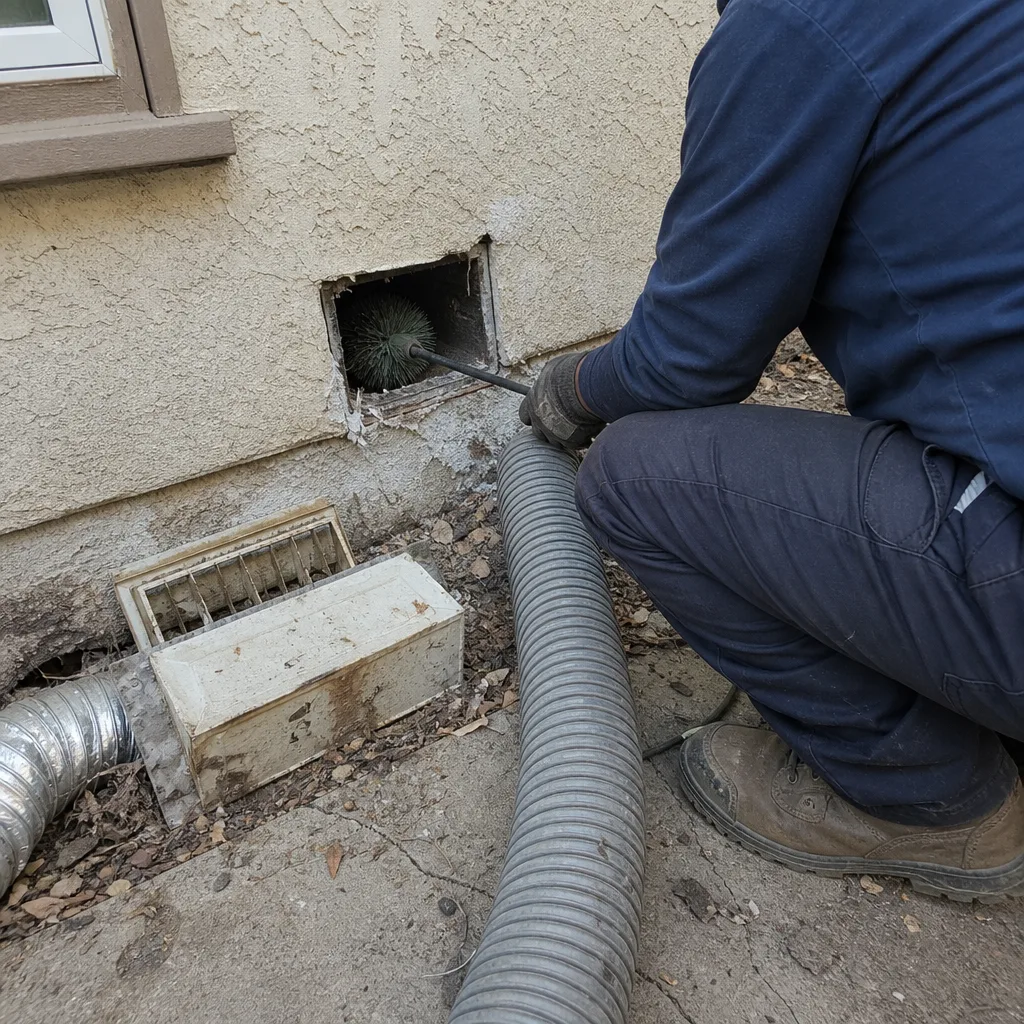
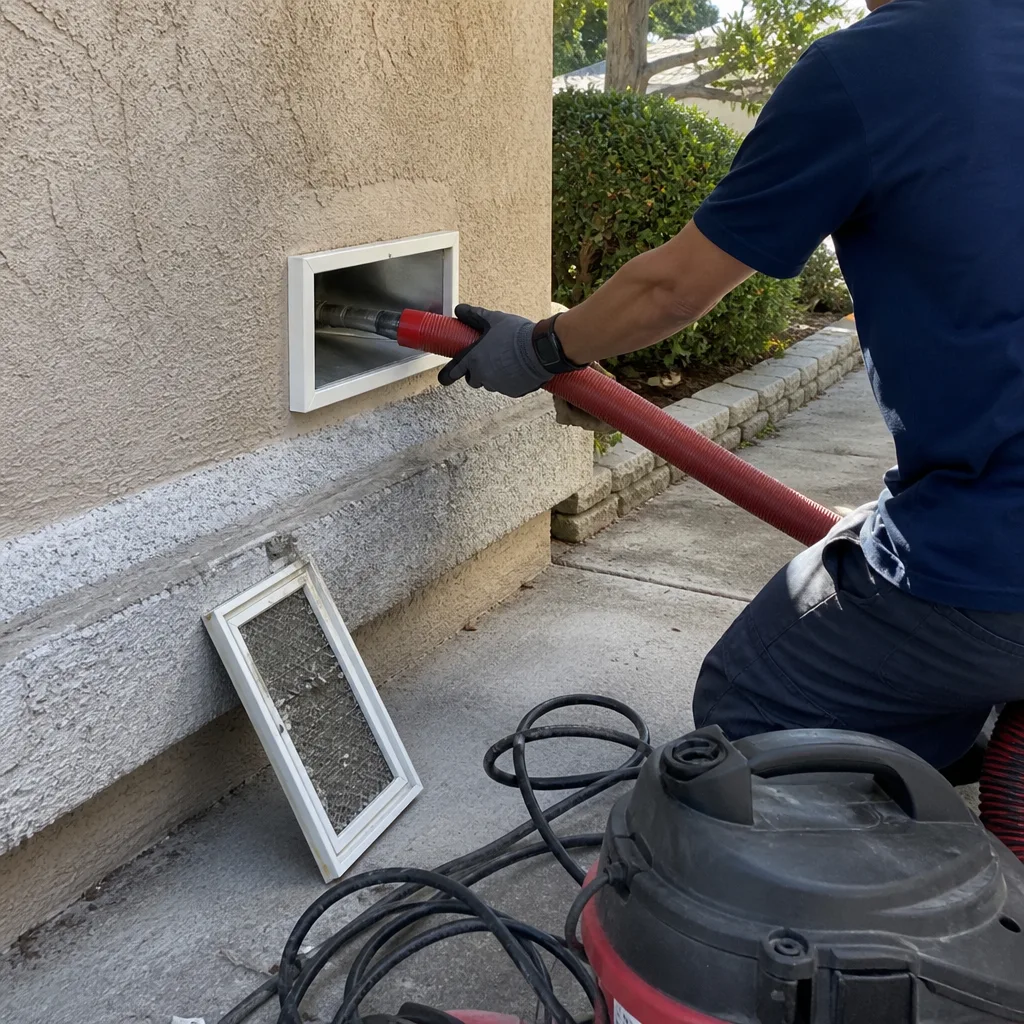
- Ignoring the dryer vent. The dryer vent is the most common household fire risk related to lint accumulation, and it’s a duct that needs dedicated cleaning. A separate Dryer Vent Cleaning in Glendora service exists because it’s a specialized job with its own tools and access needs.
- Not asking about negative air. If the technician cannot explain negative-air containment and which machine produces it, they’re running a contact-vacuum operation. Walk away.
- Delaying repair after discovery. A disconnected branch duct found during cleaning is not something to defer. Every day it stays disconnected, conditioned air is being wasted into the attic. When a technician finds damage, address it in the same visit if the company has repair capability.
- Assuming a new furnace means clean ducts. A furnace replacement does not clean the duct system. In many cases, installation debris from the new unit is added to the existing contamination already in the trunk line.
When to Call a Professional
Some situations are worth a phone call immediately. If you can see debris, dust, or pet fur accumulated on register covers or inside the visible duct at each register, the system needs cleaning. If anyone in the home has persistent allergy symptoms that improve when away from home, contaminated ducts are a possible contributor. If the system has not been cleaned in 5 years or more, or if you’ve recently completed a renovation, or if you’re in the foothill zone after a wildfire season, the duct system needs a professional inspection. Duct Cleaning Glendora offers free estimates in Glendora for Duct Cleaning Glendora home services, and we’ll show you exactly what’s inside your system before you commit to anything. Call (833) 620-4169 to schedule an inspection.
Frequently Asked Questions
A full source-removal cleaning for a typical Glendora single-family home costs between $350 and $700, depending on square footage, register count, and access difficulty. Homes with extensive branch lines or multiple systems will run higher. Any quote below $200 for a “whole-house” cleaning is not performing source removal. Call (833) 620-4169 for a free, specific quote for your home.
Source-removal cleaning places the entire duct system under negative pressure while a rotary brush mechanically agitates the full length of every run, removing debris at its source. Contact-vacuum cleaning only suctions at the register face, leaving 90% or more of the duct system untouched. The terms are not interchangeable, and your quote should specify which method is included.
A legitimate source-removal cleaning on a 3-4 bedroom Glendora home takes 3 to 5 hours with at least two technicians. The time is driven by physical requirements: brush travel time through each branch, access-point setup, and post-cleaning verification. A whole-house cleaning completed in under 2 hours was not a whole-house cleaning.
Yes. After a significant wildfire season, fine ash migrates through return ducts and settles throughout the system. A source-removal cleaning with HEPA-filtered negative air removes this particulate. Homes in the north Glendora foothill zone should consider this cleaning annually after major burn seasons, even if the calendar doesn’t call for it.
Yes, and for a practical reason: the dryer vent is a separate duct run with different accumulation patterns, and it’s the most common preventable fire source in the home. Many Glendora homes have long dryer vent runs through the attic or under the floor, which makes them more prone to lint blockage. We offer dryer vent cleaning as a dedicated service, not an add-on.
You should receive before and after camera images from inside the ducts at multiple access points. The after image should show the same duct locations with visible walls, no remaining debris accumulation, and no dark particulate residue. Without photo documentation, there is no verification. A reputable Glendora duct cleaning company will show you exactly what they found and what they removed.
The Bottom Line
Duct cleaning in Glendora is a method-driven service, not a commodity. The difference between a $99 contact-vacuum pass and a proper source-removal cleaning is the difference between wasting money and solving a real problem. In a climate where Santa Ana winds and wildfire ash actively push fine particulate into homes, the method matters more here than in most places. A legitimate job includes negative-air containment, rotary brush agitation through every branch, access-point documentation, and before-after camera proof. When you call for estimates, ask about method, equipment, and access points. For DIY vs Professional Air Duct Cleaning: The Glendora Homeowner’s Decision Guide and more details, the answers will tell you everything you need to know.
Written by the team at Duct Cleaning Glendora, serving Glendora since 2014.
See the difference
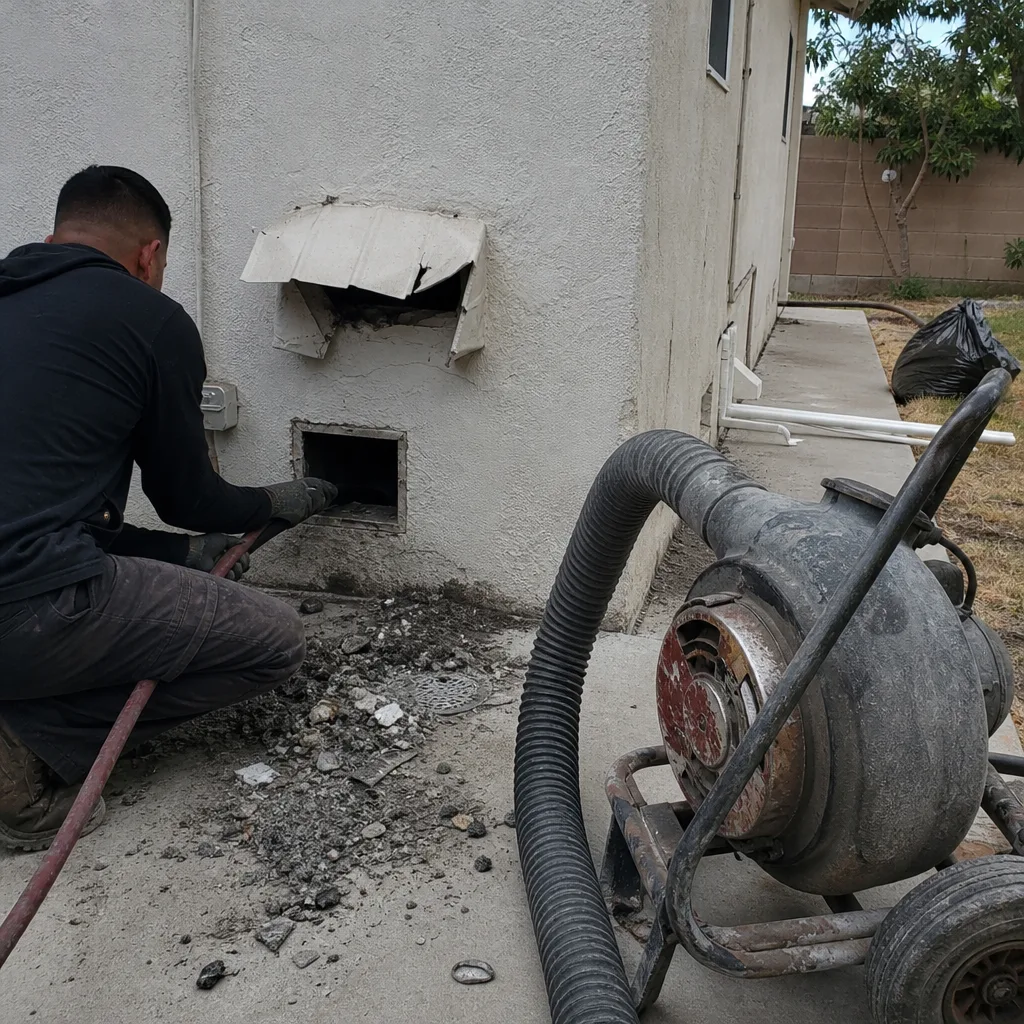 Before
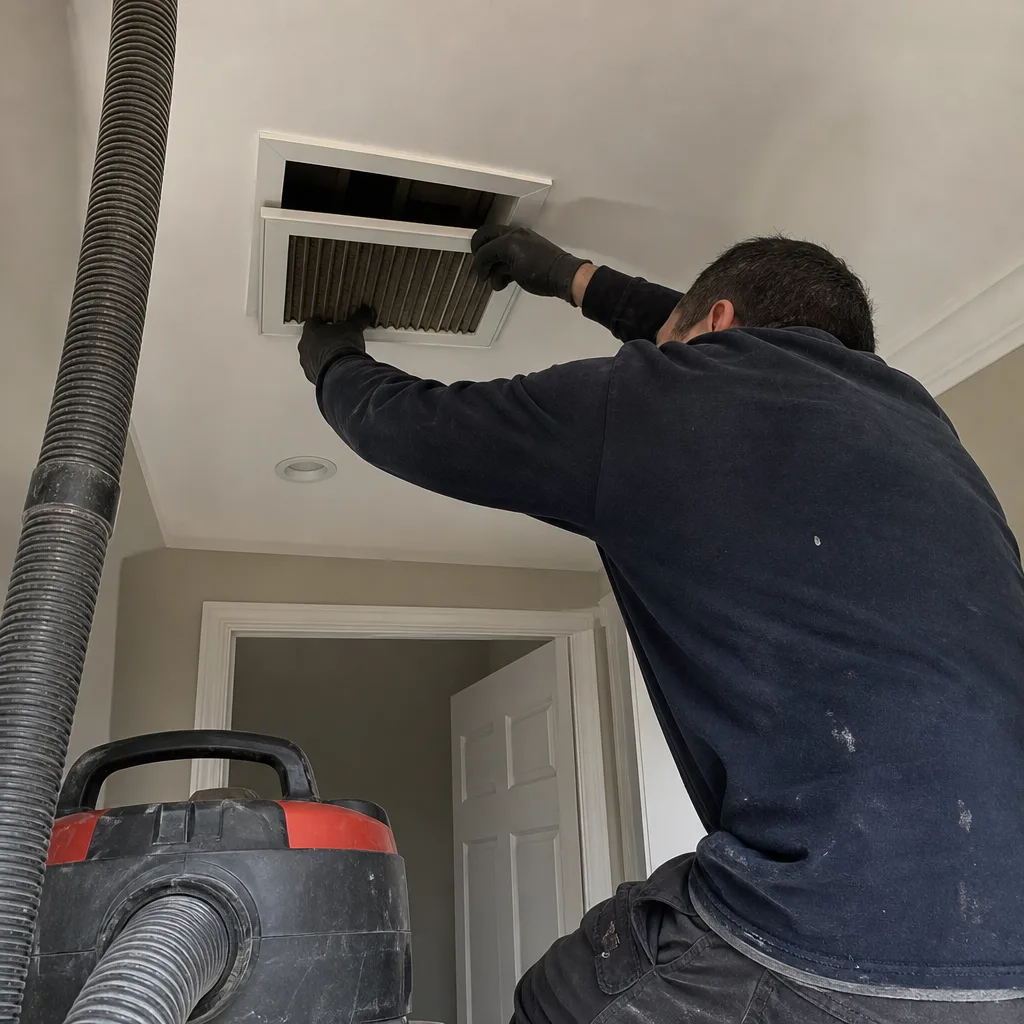 After
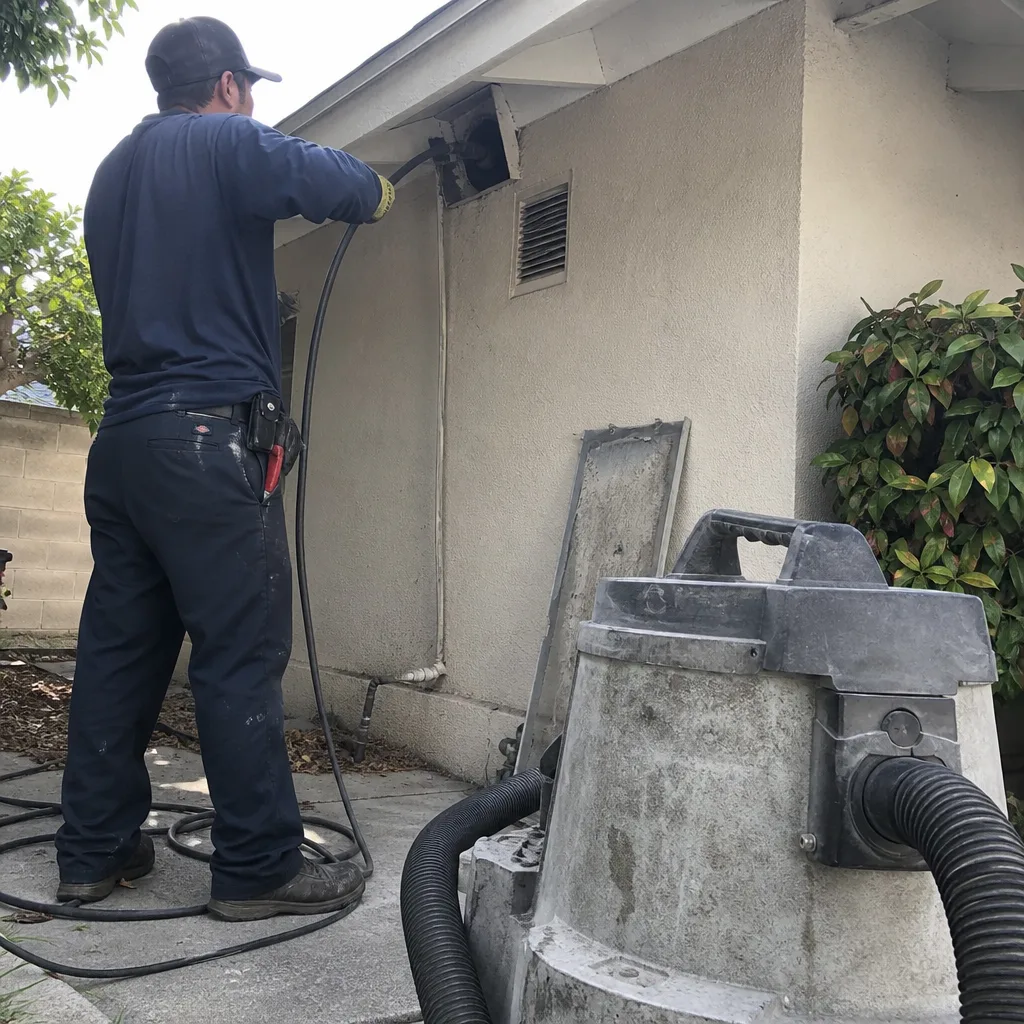 Before
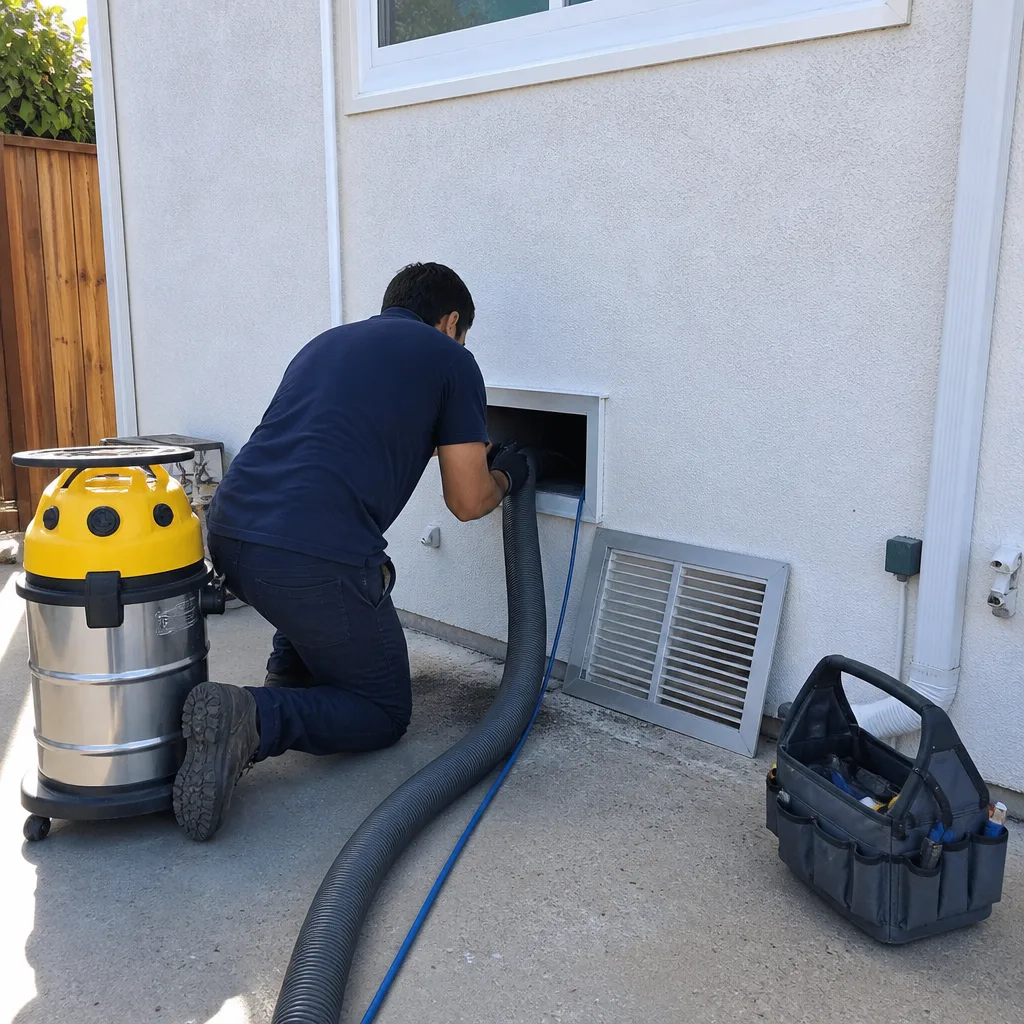 After
 Before
 After