
Last updated November 2, 2026
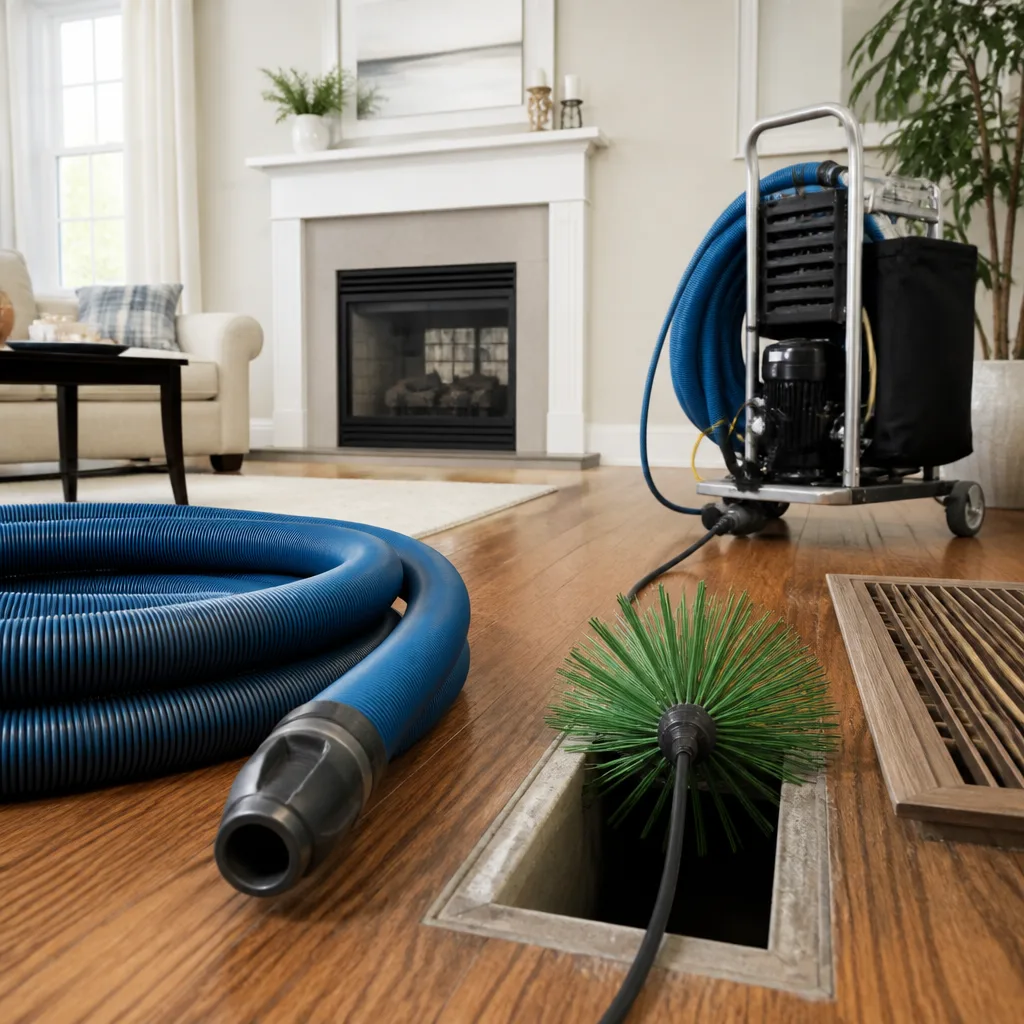 Whole-home duct cleaning
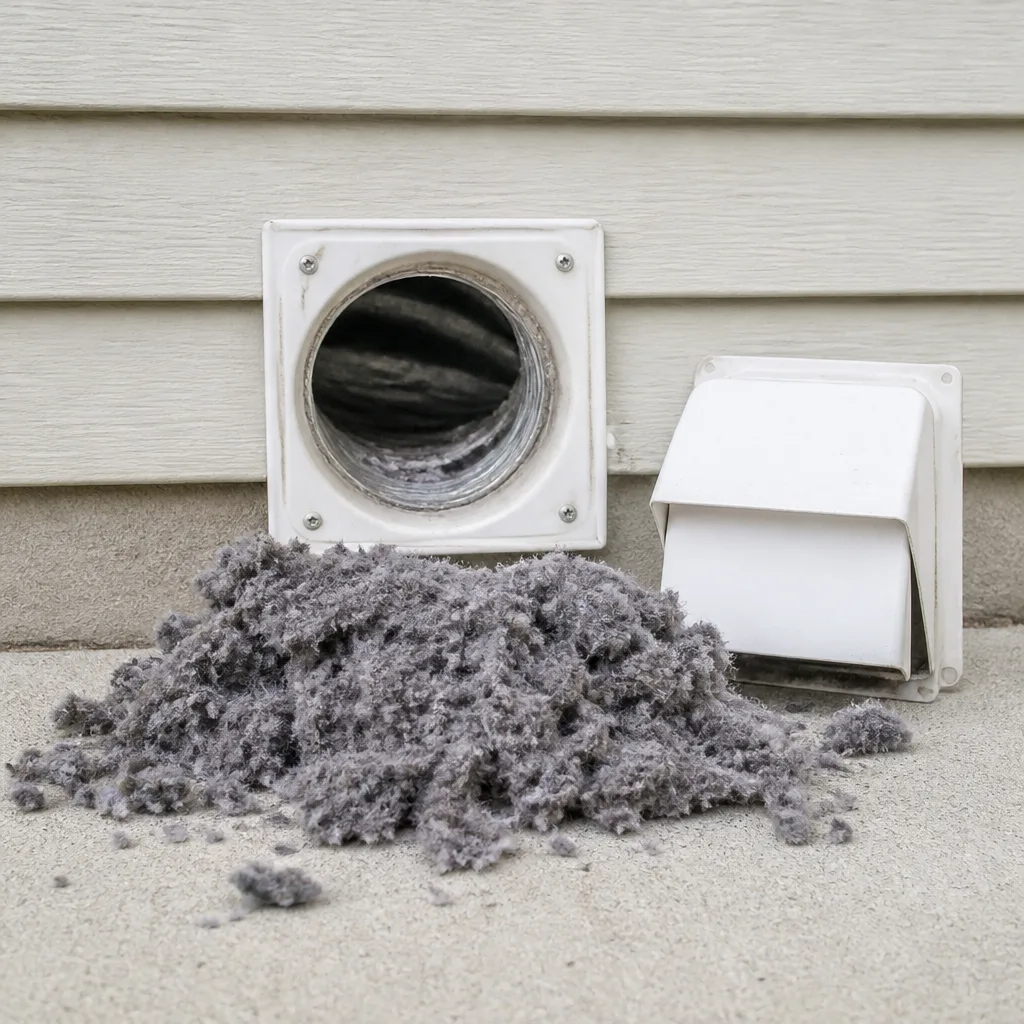 Dryer vent cleaning
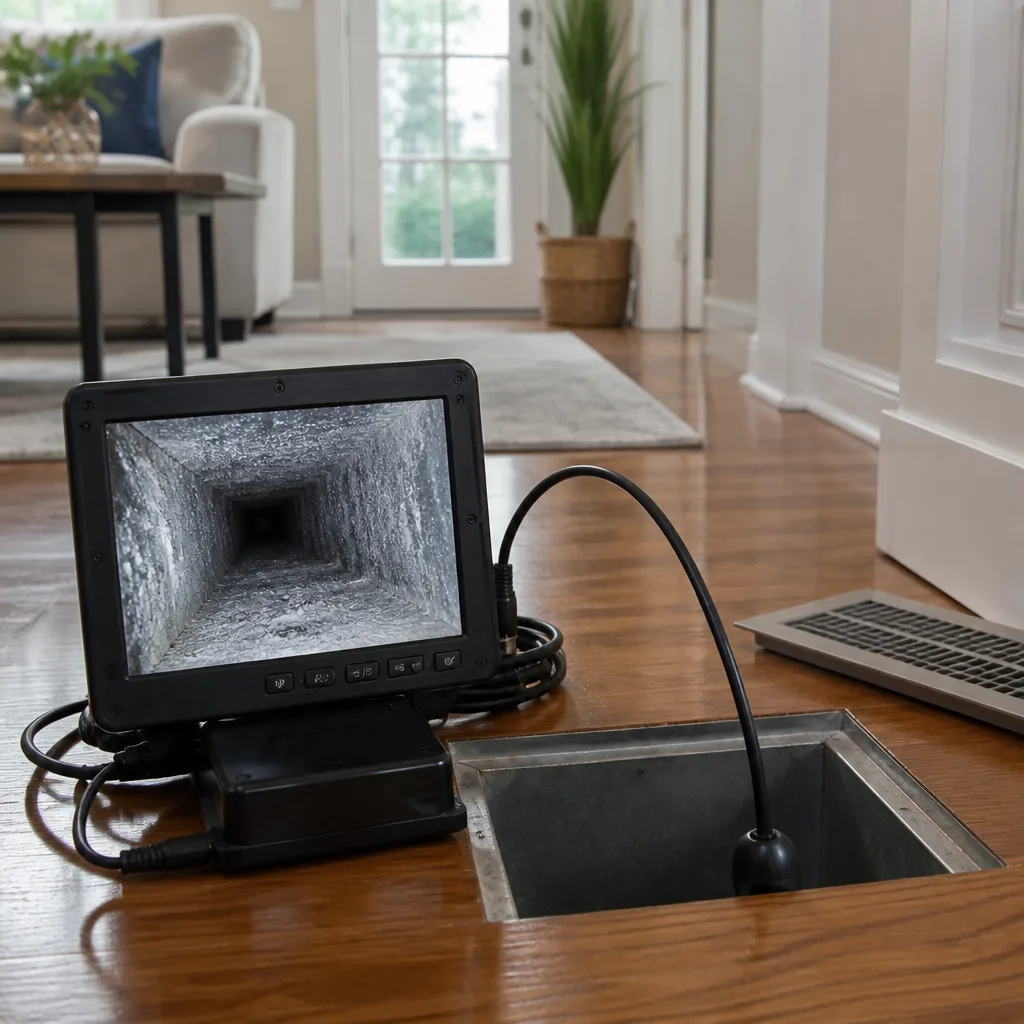 Camera inspection
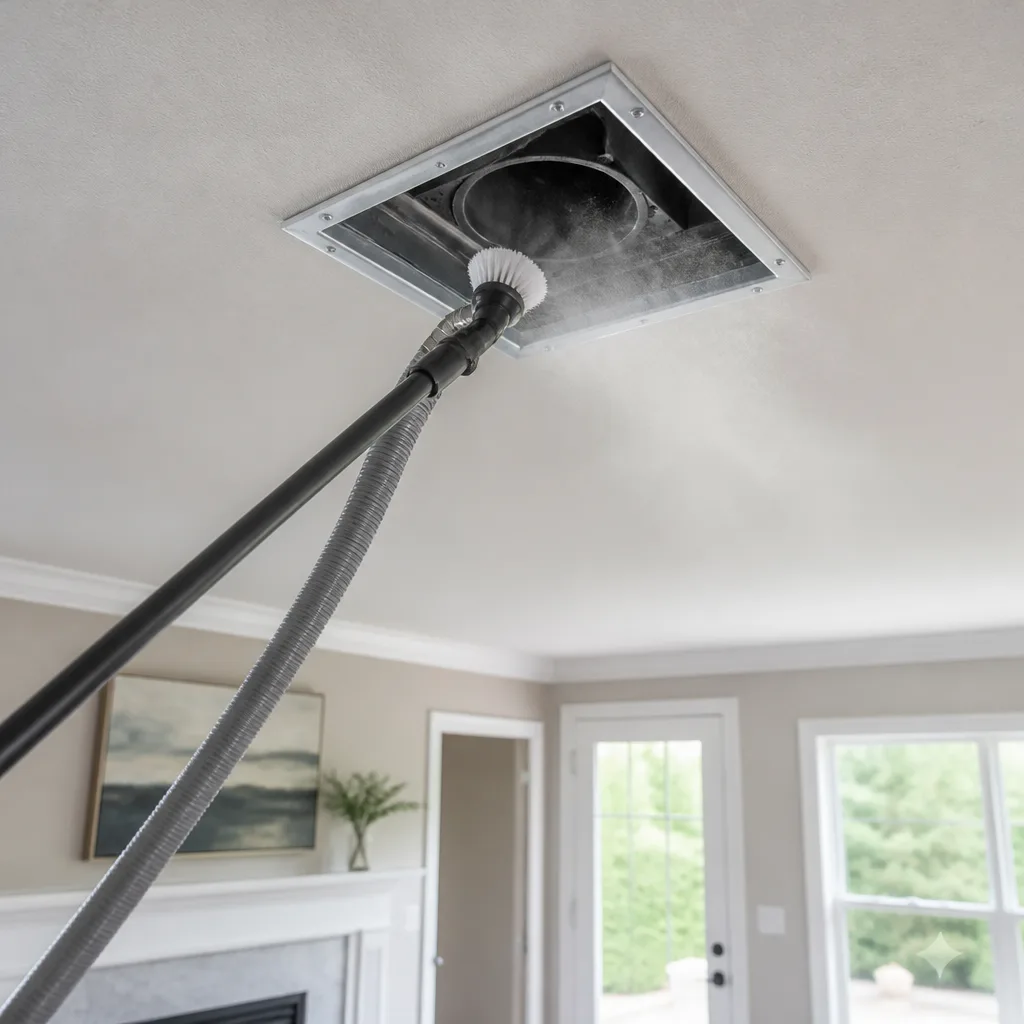 Sanitizing & deodorizing
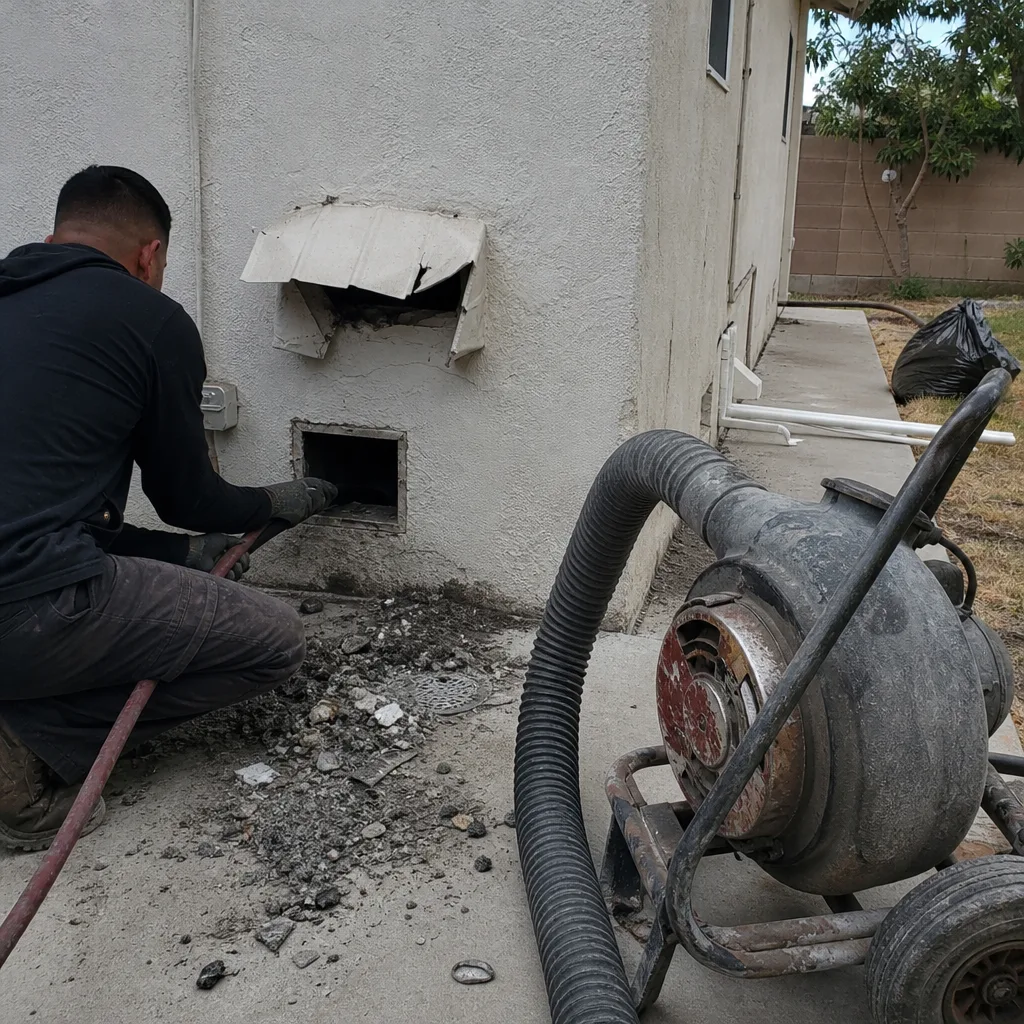
Whole-system duct and dryer vent check with before-and-after photos - you see exactly what came out of your vents
That "$99 whole-house special" is a bait ad - the real number appears once they are in your hallway, or the "clean" is a shop-vac at the register. We photograph the inside of your ducts before and after instead.
Air Duct Cleaning Maintenance Checklist for Glendora Homeowners
Most homeowners replace their air filter every 90 days because that’s what the packaging says. That number is a sales schedule, not an engineering recommendation. The real interval depends on your duct system’s total surface area, how tightly your home seals against outside air, and whether your Glendora house relies on a central return plenum or passive wall returns. This guide replaces generic advice with a maintenance checklist built around Glendora’s actual air quality conditions and the duct failure patterns we see most often in this city’s housing stock. For more on what professional service includes, see our Air Duct Cleaning services.
Styles & brands we work with
- Whole-home duct cleaning
- Dryer vent cleaning
- Camera inspection
- Sanitizing & deodorizing
Quick Answer
Air duct maintenance in Glendora requires quarterly filter checks, annual visual inspection of accessible duct sections, and professional source-removal cleaning every 3 to 5 years under normal conditions. Homes within five miles of wildfire zones or major construction corridors should compress that interval to every 2 to 3 years. The checklist below separates homeowner tasks from technician tasks so you know exactly what to do, what to log, and when to call Air Duct Cleaning in Glendora for evaluation.
Table of Contents
- Maintenance Intervals That Actually Matter in Glendora
- Homeowner Tasks vs. Technician Tasks: Who Does What
- Three Glendora-Specific Triggers That Compress Cleaning Intervals
- How to Visually Inspect Your Duct System
- Logging Performance Metrics: Static Pressure and Temperature Differential
- Post-Cleaning Verification: Did the Contractor Actually Do the Work?
- Glendora Seasonal Duct Maintenance Calendar
- Common Mistakes to Avoid
- When to Call a Professional
- Frequently Asked Questions
- The Bottom Line
Maintenance Intervals That Actually Matter in Glendora
Glendora sits at the base of the San Gabriel Mountains, which means two things for your ductwork: seasonal Santa Ana winds that push fine particulate matter through every exterior gap in your home, and a geography that places us downwind of wildfire zones during late summer and fall. A home in northern Glendora near the foothill communities will accumulate duct debris measurably faster than a home in the flatter southern section, simply because of elevation and wind exposure.
Here’s the interval table we recommend for this area, based on what we find during routine inspections across the city:
| Task | Normal Interval | Compressed Interval (Wildfire Zone / Santa Ana Corridor / Remodeled Home) |
|---|---|---|
| Filter replacement or cleaning | Every 60 – 90 days | Every 30 – 45 days during fire and wind season |
| Visual inspection of accessible duct sections | Annually | Every 6 months |
| Supply register and return grille vacuuming | Every 3 months | Monthly during Santa Ana season |
| Professional source-removal duct cleaning | Every 3 – 5 years | Every 2 – 3 years |
| Dryer vent cleaning | Annually | Every 6 – 9 months |
| Static pressure and temperature differential logging | Twice per year (spring and fall) | Quarterly |
Filter packaging says 90 days because it assumes average dust loading in an average house. Glendora’s air quality index during fire season routinely exceeds 100, and Santa Ana events carry fine dust from the Mojave through the Cajon Pass directly into our airshed. If your filter is visibly gray-brown at 45 days, that dust is also coating the interior of your supply ducts whether you can see it or not.
One more variable: homes built in Glendora’s post-war boom years (roughly 1950 through 1975) often have original duct board plenums. Duct board degrades differently than sheet metal. It absorbs moisture, supports microbial growth when wet, and sheds fiberglass particles into the airstream as the inner lining deteriorates. If your home falls into this age range and you’ve never had a professional duct inspection, you’re likely past due regardless of how clean your registers look.
Homeowner Tasks vs. Technician Tasks: Who Does What
A proper duct maintenance plan separates what you can safely do from what requires training and commercial equipment. Doing the wrong task yourself can damage ductwork, void HVAC warranties, and create conditions that make indoor air worse rather than better. Here’s the division.
Homeowner Tasks
- Replace or clean the filter – you need the correct size filter, your hands, and two minutes. Match the MERV rating to your system’s specifications; higher MERV is not automatically better for older blowers.
- Vacuum supply registers and return grilles – use a brush attachment on a standard household vacuum. Remove the register cover first, vacuum the visible interior throat, then wipe the cover with a damp cloth.
- Clear furniture and obstruction around registers – airflow needs at least 12 inches of clearance around supply and return openings. A couch pushed against a return grille starves the system and pulls air from wall cavities.
- Check for moisture staining around register openings – brown or yellow discoloration on drywall or grille edges indicates condensation or a possible leak. Mark the location and schedule evaluation.
- Log filter replacement dates – write the date on the filter frame with a permanent marker, or keep a note in your phone. Patterns emerge over time.
Technician Tasks
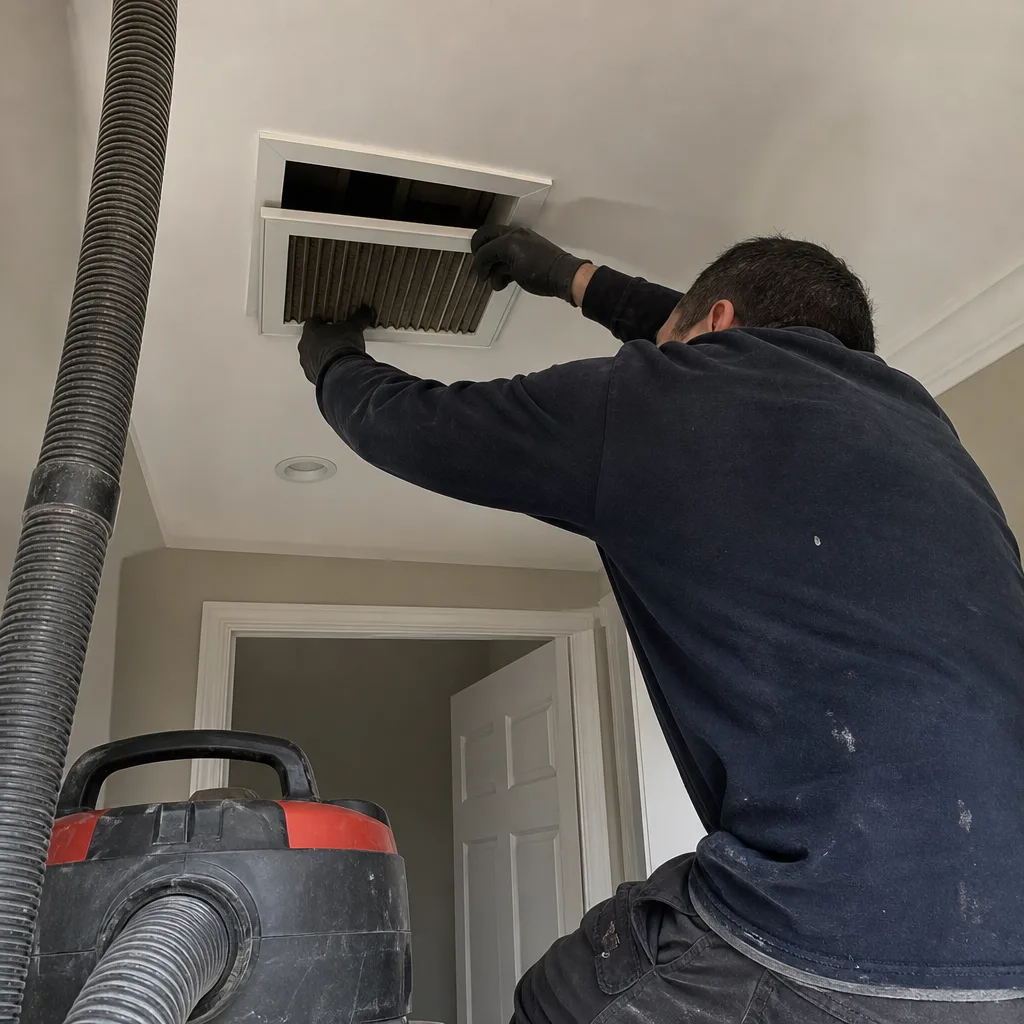
- Source-removal cleaning of the full duct system – this requires mechanical agitation combined with negative-air containment. In our case that’s a Rotobrush rotary brush system paired with a Nikro HEPA vacuum, which captures extracted debris rather than recirculating it through your living space.
- Static pressure testing – a manometer connected to test ports in the supply and return plenums measures the resistance your duct system places on the blower. Elevated static pressure is the earliest warning sign of crushed flex duct, undersized returns, or collapsed duct board.
- Temperature differential verification – measuring the temperature difference between the return plenum and the supply plenum tells you whether the system is moving heat effectively. A narrowing differential often points to duct leakage or blockages.
- Access panel removal and interior inspection – most duct systems have sections that simply cannot be seen without removing access panels or cutting inspection ports. This includes the interior of plenums, transition fittings, and the duct runs behind finished walls.
- Flex duct repair and replacement – crushed, kinked, or disconnected flex duct requires cutting and reconnecting with proper collars and mechanical fasteners. This is not a tape-and-hope repair.
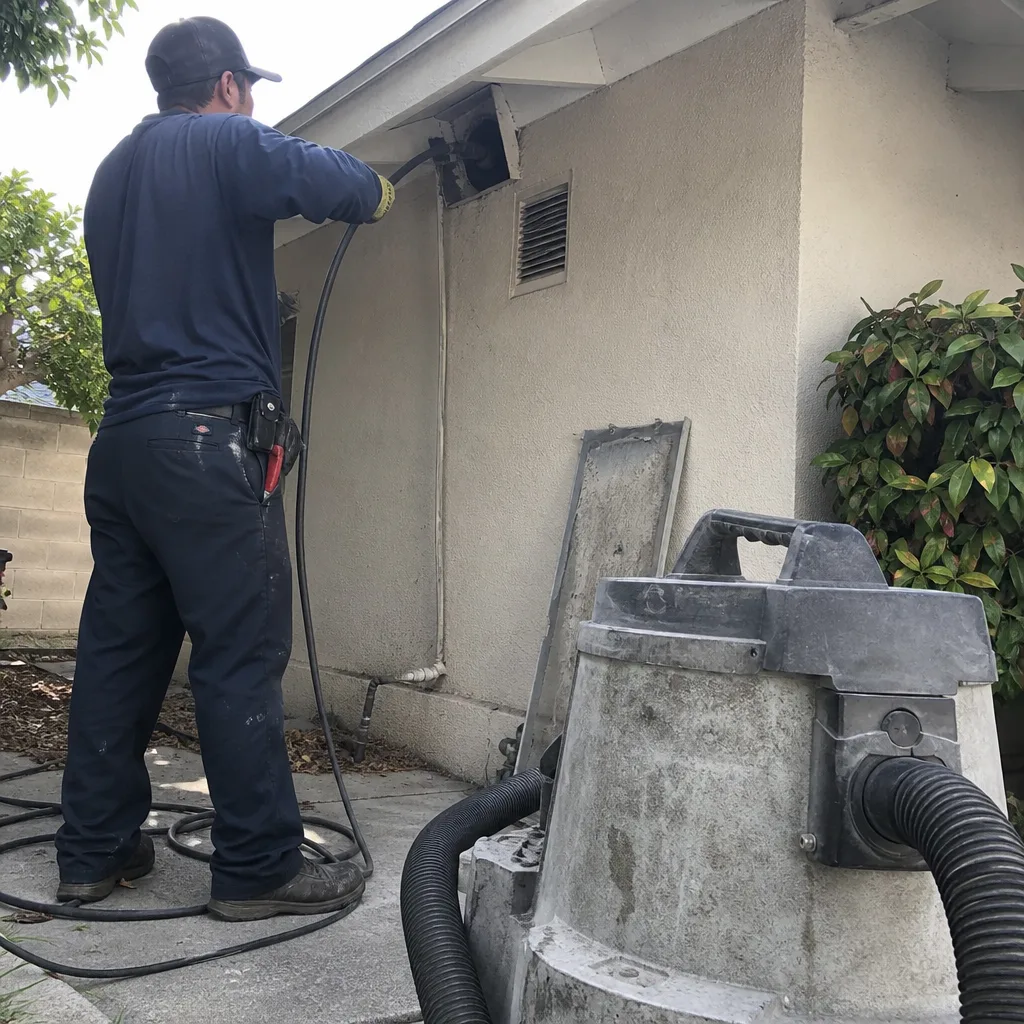
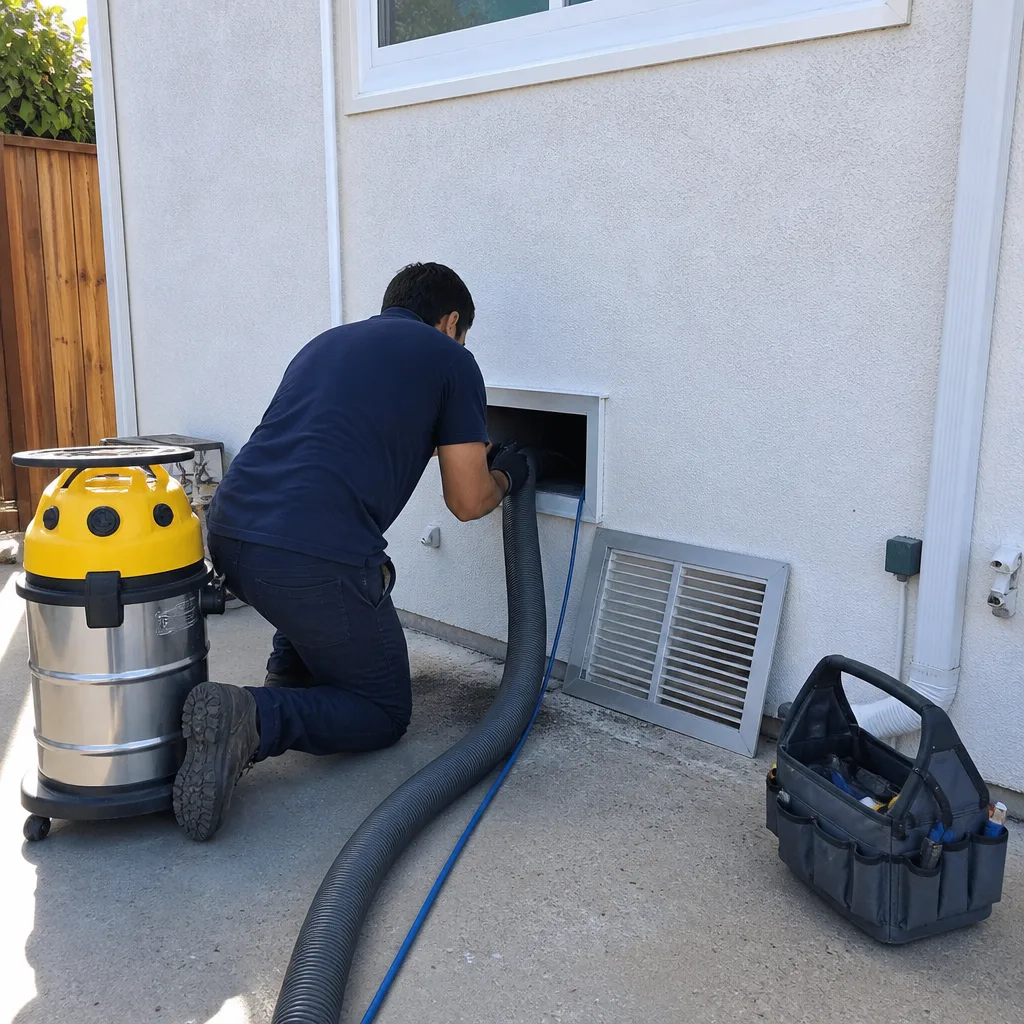
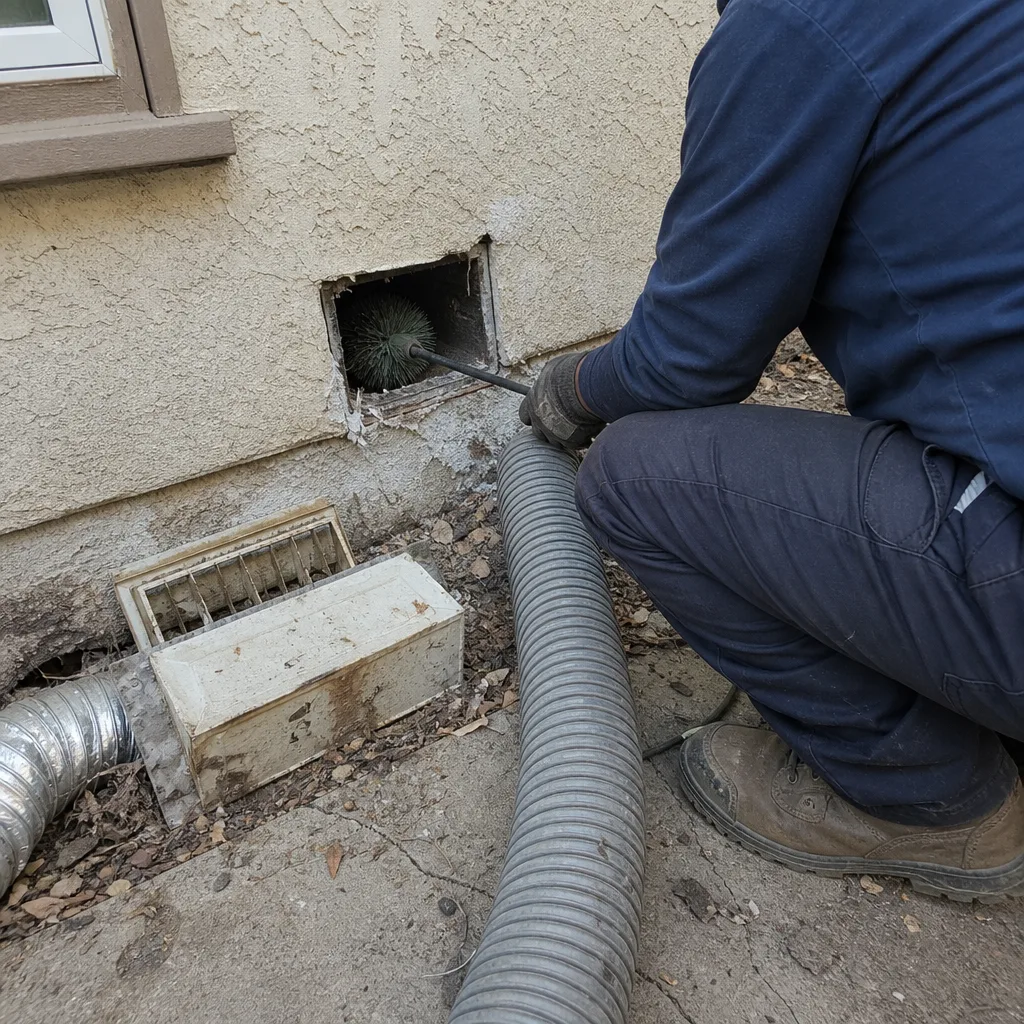
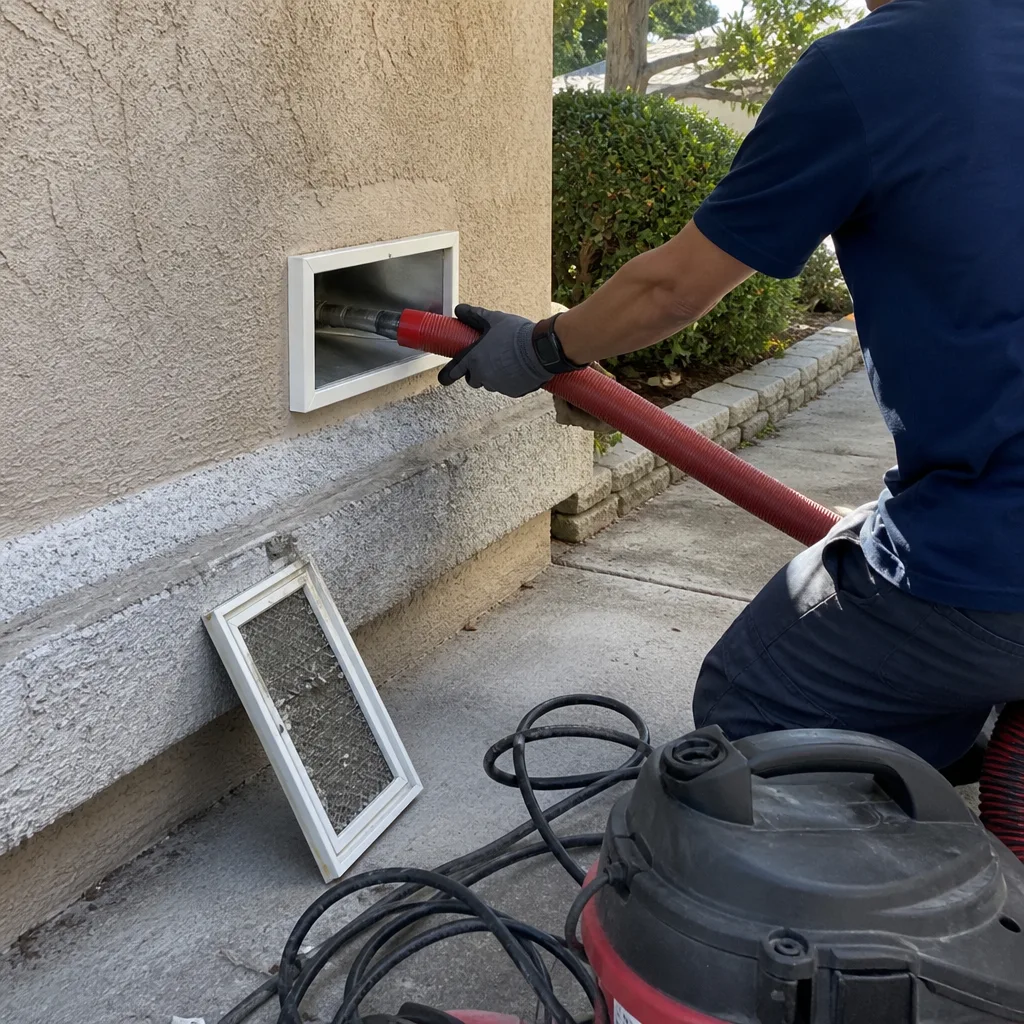
- Dryer vent cleaning – the entire vent run from dryer to exterior termination must be cleaned, not just the first few feet. Lint accumulation in the middle third of the run is one of the most common preventable fire risks in Glendora homes.
We’ll say it plainly: if a task requires a tool you’d have to buy, rent, or watch a video to use correctly, it belongs in the technician column. Your duct system is not where you want to practice your first flex duct splice.
Three Glendora-Specific Triggers That Compress Cleaning Intervals
Most duct cleaning advice published nationally ignores local conditions. Glendora has three specific triggers that accelerate duct system contamination beyond what national guidelines account for. Each one changes your maintenance timeline.
1. Post-Wildfire Weeks
When the Bobcat Fire burned through the Angeles National Forest in 2020, Glendora sat under smoke for weeks. Ash contains not just carbon but also heavy metals, combustion byproducts, and particulate matter small enough to pass through standard furnace filters. After any significant wildfire event within 20 miles of Glendora, your duct system should be inspected within 30 to 60 days once air quality returns to baseline. Ash pulled into return air penetrates duct interiors, settles in low-velocity sections, and re-enters your living space every time the blower cycles for months afterward. A post-fire filter replacement alone is not sufficient; the debris has already passed the filter plane.
2. Santa Ana Wind Events
Santa Anas are not just weather. They’re an air-quality event. Wind speeds regularly exceed 40 mph in the Glendora foothills, and the air carries fine dust from the high desert. Older Glendora homes with original windows, wall penetrations, and less effective door seals see higher infiltration rates during these events. That infiltrated dust enters your house as unfiltered air and a portion of it deposits directly into return duct runs and the blower cabinet. After a multi-day Santa Ana event, you’ll find a visible dust film on registers that face exterior walls. That same dust is inside the duct system. If you experience three or more significant wind events in a season, add a visual duct inspection to your quarterly routine.
3. HVAC System Disturbance After Remodeling
Remodeling in Glendora’s older homes frequently disturbs duct work whether the contractor intends to or not. Drywall dust, insulation fibers, paint overspray, and construction debris migrate into open duct ends during any project that involves ceiling work, wall demolition, or flooring replacement. Even a simple kitchen remodel that never touches the HVAC system will produce dust fine enough to enter return air and deposit throughout the duct network. If you’ve completed any remodeling project involving drywall sanding, schedule a duct inspection and cleaning before your next heating or cooling season. The dust sits in the system until you remove it. It does not decompose, break down, or disappear on its own.
How to Visually Inspect Your Duct System
You can inspect roughly 20 percent of your duct system without cutting holes or removing tape. That 20 percent tells you a lot if you know what you’re looking at. Here’s a step-by-step process we use with Glendora homeowners, adapted for what’s accessible from the living space.
- Remove a supply register in the room farthest from your furnace or air handler. Use a screwdriver or drill to remove the two screws holding the register face. Shine a flashlight into the boot and the first few feet of duct run.
- Look for dust accumulation on the duct floor. A light gray film is within normal range. A visible dust blanket thicker than a dime indicates that the entire duct system likely carries a similar load.
- Check for the register boot seal. Where the duct connects to the register boot, look for gaps, dried caulk, or missing foil tape. Air leaks at this connection point are among the most common losses in Glendora’s older homes.
- Inspect flex duct for kinks and sags. If you can see flex duct through the register opening, look for tight bends, kinks that reduce the interior diameter, or sections that sag between supports. Each kink increases static pressure and reduces airflow to that room.
- Check foil tape condition. On accessible metal duct sections, look for peeling, cracking, or missing foil tape at joints. Failed tape creates air leaks that draw attic or crawlspace air into your supply stream.
- Look for insulation compression. If you can see insulated flex duct through a register or access opening, check whether the insulation jacket appears compressed or torn. Compressed insulation loses R-value and can create condensation on the duct surface.
Specific conditions that warrant a professional call: any flex duct section that appears crushed or kinked tighter than a 90-degree bend, foil tape that has completely separated from a joint, insulation that has pulled back from the duct core, or moisture visible anywhere inside the duct run. These are not conditions that improve with time. Duct failures compound.
Air Duct Repair in Glendora typically addresses the structural issues found during these inspections: collapsed flex sections, disconnected collars, and deteriorating duct board. If your visual inspection turns up any of the conditions above, a repair evaluation should be scheduled before cleaning. Cleaning a system with existing structural failures simply moves air through broken ductwork.
Logging Performance Metrics: Static Pressure and Temperature Differential
Your HVAC system produces two measurable numbers that act as leading indicators of duct degradation before you ever see dust: static pressure and temperature differential. These are measurements, not guesses. Every Glendora homeowner should log them twice per year.
Static pressure measures the resistance air encounters as it moves through your duct system. Think of it as blood pressure for your ducts. Normal static pressure for a residential system with a standard blower runs between 0.3 and 0.5 inches of water column. When static pressure climbs above 0.5, your duct system is restricting airflow. The causes include kinked flex duct, collapsed duct board, undersized returns, or simply a system so heavily loaded with debris that the interior cross-section has shrunk. Static pressure testing requires a manometer, which is a technician’s tool. What you can do is log the readings from your annual or semi-annual service visit. If the reading trends upward across two consecutive visits, the duct system needs evaluation.
Temperature differential is the difference between the temperature of air entering your return grille and the temperature of air leaving your supply registers. In cooling mode, a properly functioning system shows a differential between 15 and 20 degrees Fahrenheit. In heating mode, expect 30 to 60 degrees depending on system type. You can measure this yourself with a simple infrared thermometer or two probe thermometers: one placed at a return grille, one at the supply register in the same central area of the house. A differential that narrows over time suggests that heat exchange is degrading. When filter replacement doesn’t restore the differential, the problem is often in the ducts: leaking return runs pulling attic air, restricted supply runs, or a blower wheel coated in accumulated debris.
Log both numbers on a simple spreadsheet or note. Date, outdoor temperature, static pressure reading if available, temperature differential, and any notes on filter changes. After two years of consistent logging, patterns become clear. Contractors respond differently when you can show them data instead of describing a vague feeling that the house “doesn’t cool like it used to.”
These metrics matter because duct systems fail slowly. A homeowner living in a Glendora home day after day adapts to incremental performance loss without noticing it. The numbers don’t adapt. They tell the truth.
Post-Cleaning Verification: Did the Contractor Actually Do the Work?
The difference between source-removal cleaning and what many companies call “cleaning” is the difference between washing dishes and wiping the counter. One removes the contaminant. The other moves it around. After any professional duct cleaning in Glendora, verify the work with this checklist before signing the invoice.
- Request before-and-after photos of the duct interior. Any source-removal contractor using commercial-grade equipment should be documenting their work. Ask to see the main supply trunk, the return plenum, and at least two branch runs in both before and after states. If the contractor cannot produce interior photos, they may have only cleaned the visible register areas.
- Verify the negative-air setup was used. Source-removal cleaning requires a HEPA-filtered negative-air machine connected to the duct system during the entire agitation process. If you did not see this equipment running, the process used was not source removal. In our work, that’s a Nikro HEPA negative-air vacuum creating continuous suction on the system while a Rotobrush rotary brush mechanically agitates duct walls.
- Inspect the registers you flagged during your pre-cleaning inspection. The dust blanket you identified before the cleaning should be visibly reduced or eliminated afterward. Check the same register with the same flashlight and compare what you see.
- Look for debris containment during the work. Professional crews use floor protection, HEPA air scrubbers in the work area, and debris containment at every access point. Abatement Technologies air scrubbers run during our cleaning jobs to capture particulates that escape the duct system during agitation.
- Confirm access points were sealed. After cleaning, every access panel or inspection port cut into the duct system must be sealed with new foil tape or a fitted panel. Gaps left open become new leaks. Run your hand along the duct sections you can access and check for fresh tape at every seam and port.
- Ask about the dryer vent separately. Dryer Vent Cleaning in Glendora should be treated as a distinct service with its own scope of work and its own results. Confirm the full vent run from dryer to exterior termination was cleaned, not just the first few feet.
A contractor who bristles at any of these verification steps is telling you something about their process. The honest response to “can I see what you did?” is “yes, and we were going to show you anyway.” We show our Glendora customers the before-and-after documentation on every job because the proof of work is the product itself.
Glendora Seasonal Duct Maintenance Calendar
Glendora experiences a Mediterranean climate with hot, dry summers and mild, wet winters. That means your duct maintenance schedule follows two distinct seasons: the fire-and-wind season (roughly August through November) and the heating season (December through February). Here’s how the year maps out.
August through November: Santa Ana and Fire Season
- Replace or clean the filter before the first Santa Ana event of the season. A clean filter captures more fine particulate than a partially loaded one. If winds are forecast, change the filter first.
- Vacuum supply registers every two weeks during active wind events. Exterior-wall registers accumulate visible dust during Santa Anas. Keep them clear so dust doesn’t re-enter the airstream.
- Check outdoor air intakes and vent terminations for ash accumulation. After any wildfire smoke event, inspect the exterior termination of your fresh air intake if your home has one. Ash deposits on intake screens restrict system airflow.
- Log temperature differential in September. This gives you a baseline before the heating season begins. A cooling-season differential of 15 to 20 degrees is the target.
- Schedule dryer vent cleaning if it’s been more than 12 months. Dryer usage typically increases in fall, which means vent loading increases too. Clean it before holiday laundry volume climbs.
December through February: Heating Season
- Change the filter at the start of the heating season regardless of the previous change date. A clean filter protects the heat exchanger from dust loading during the first weeks of continuous heating operation.
- Log temperature differential in January. Compare against the September reading. A narrowing gap during heating season signals duct leaks in the return runs, which pull cold attic or crawlspace air into the return stream.
- Inspect visible duct sections in the attic or crawlspace once during the winter. Cold weather reveals condensation problems that don’t appear in warmer months. Look for moisture staining on the exterior of duct insulation and any dripping around duct joints.
- Vacuum return grilles before the mid-winter closed-house period. Glendora homes seal up tight during December and January. Air recirculates heavily, which means any dust on the return grille or in the return duct re-enters living space repeatedly.
March through July: Standard Maintenance Period
- Replace the filter every 60 to 90 days on a consistent schedule. Write the date on the filter frame. Consistency matters more than precision in this period.
- Schedule professional duct inspection if your logs show static pressure above 0.5 inches of water column or a narrowing differential. Spring is the most convenient time in Glendora for duct work; the system runs less, and scheduling is flexible.
- Complete any Duct Cleaning Glendora home evaluations before the summer cooling load begins. A clean, sealed duct system runs more efficiently when outside temperatures climb above 90 degrees, which they will.
Common Mistakes to Avoid
- Replacing the filter on a sales schedule instead of an engineering schedule. The 90-day figure on filter packaging assumes average conditions that rarely match Glendora’s airshed. Check the filter at 60 days. If it looks like a used coffee filter, change it regardless of the calendar.
- Assuming that a clean filter means clean ducts. The filter only catches particles that pass through the return air stream before the blower. Anything that has already deposited inside the duct system stays there. Filter replacement and duct cleaning are separate maintenance tasks that happen on separate schedules.
- Using duct tape on duct joints. Standard cloth duct tape fails within a few years of exposure to temperature cycling and airflow. Only foil tape rated for HVAC applications (UL 181) belongs on duct work. If you find cloth duct tape on your ducts, it’s a sign a previous repair was done without proper materials.
- Sealing off registers in unused rooms to “save energy.” Your duct system was designed with a specific total airflow volume in mind. Sealing registers reduces airflow and increases static pressure, which can cause the blower to work harder and the system to run less efficiently. It can also push more air through the remaining open registers, making those rooms noisy and uncomfortable.
- Waiting for visible dust to schedule a duct inspection. By the time dust is visible at the registers, the system has been circulating contaminated air for months. The metrics you should be watching are static pressure and temperature differential, not dust accumulation at the supply grille.
- Hiring based on the lowest quote without verifying the process. A company that cleans only the visible sections of your ducts for $99 is not performing the same service as a company that runs a full source-removal cleaning with negative-air containment. You’re not comparing prices; you’re comparing different jobs wearing the same name.
- Ignoring the dryer vent because it’s “not part of the HVAC.” The dryer vent is a duct system connected to your home. Lint accumulation in that duct is a fire hazard that air duct cleaning alone does not address. Schedule both services independently and track both on the same maintenance calendar.
When to Call a Professional
Call a professional duct contractor in Glendora when your visual inspection reveals kinked or collapsed flex duct, failed foil tape at accessible joints, visible moisture inside any duct run, or fiberglass shedding from deteriorating duct board. Call when your logged temperature differential narrows by more than 5 degrees across two consecutive seasons. Call after any wildfire event that left ash visible on outdoor surfaces near your home. Call after any remodeling project that involved drywall sanding, insulation work, or demolition near duct runs. And call when a previous cleaning did not include negative-air containment or before-and-after documentation. Duct Cleaning Glendora offers free estimates in Glendora – call (833) 620-4169.
Frequently Asked Questions
Under normal conditions in Glendora, professional source-removal duct cleaning is warranted every 3 to 5 years. Homes in the foothills, homes within five miles of wildfire burn areas, and homes that have undergone remodeling should compress that interval to every 2 to 3 years. If you’ve never had your ducts cleaned and your home was built before 1990, schedule an inspection now regardless of how long it’s been. Call (833) 620-4169 for an exact assessment of your system.
Source-removal cleaning uses mechanical agitation combined with continuous negative-air vacuuming to remove contaminants from the full interior surface of the duct system, including the main trunk and branch runs. Basic cleaning typically addresses only the visible portions of the system near the registers. Our process pairs a Rotobrush rotary brush system with a Nikro HEPA negative-air vacuum, which captures extracted debris rather than allowing it to re-enter your living space.
Lower-priced quotes typically reflect a reduced scope of work: fewer access points opened, no negative-air containment, shorter agitation time, and no interior inspection of branch runs. The work may clean the visible register areas while leaving the majority of the duct interior untouched. When comparing quotes in Glendora, ask each contractor to specify their process in writing: what equipment they use, how many access points they open, whether negative air is deployed, and whether they provide before-and-after interior photos. Call (833) 620-4169 and we’ll walk you through exactly what our quote includes so you can make an apples-to-apples comparison.
Three specific conditions indicate duct damage in Glendora homes: kinked or collapsed flex duct, disconnected or separated collars, and deteriorating duct board plenums. You can spot flex duct kinks through register openings with a flashlight. Disconnected collars often produce rooms that never reach the set temperature regardless of how long the system runs. Deteriorating duct board may appear as fiberglass particles on supply registers or a musty odor during blower operation. Any of these conditions warrants a repair evaluation before cleaning, because cleaning damaged ductwork pushes air through structural failures.
Yes. Glendora’s position at the base of the San Gabriel Mountains places it directly in the path of Santa Ana winds that channel particulate through the Cajon Pass. The city also sits within the smoke dispersion zone of multiple historical wildfire events. These local conditions produce dust loads and ash deposition inside duct systems that coastal cities and basin cities farther from the mountains simply don’t experience. Your maintenance schedule should reflect Glendora conditions, not generic Southern California averages.
Yes, and you should treat them as separate services with separate scopes. Dryer vent cleaning addresses the full run from your dryer’s exhaust port to the exterior termination, removing lint accumulation that poses a fire risk. Air duct cleaning addresses the HVAC distribution network. We offer both as dedicated services under one roof, which means a single call can address both systems. If your dryer vent hasn’t been cleaned in more than 12 months, schedule it now even if your air ducts were recently serviced.
The Bottom Line
A proper air duct maintenance plan for a Glendora home is built on documented intervals, logged performance metrics, and verification after any professional service. Filter replacement is the starting point, not the whole program. Visual inspection of accessible duct sections catches structural failures before they become systemic. Static pressure and temperature differential logging reveal degradation that dust alone can’t show you. And after any professional cleaning, verification through before-and-after documentation ensures the work performed was the work you paid for. Maintain the checklist, trust the measurements, and call (833) 620-4169 when conditions warrant a professional evaluation. For ongoing maintenance tips, explore our more guides & resources.
Written by the team at Duct Cleaning Glendora, serving Glendora since 2014.
See the difference
 Before
 After
 Before
 After
 Before
 After