Nikro Air Duct Cleaning in Glendora: A Homeowner’s Guide
The name Nikro doesn’t mean much to most homeowners, but walk onto any NADCA-certified technician’s job site and you’ll likely find a Nikro machine parked in the driveway. That gap, between what professionals know and what homeowners never hear about, is where vague claims like “professional equipment” live. Here’s what a Nikro system actually does during air duct cleaning in Glendora, and why it matters when you’re comparing contractors.
If you’d rather skip the equipment deep-dive and just get your ducts inspected, call (833) 620-4169 for a free estimate.
What Is Nikro Equipment and Why Does It Show Up on Professional Job Sites?
Nikro Industries has been manufacturing air duct cleaning equipment for decades, and their portable negative-air machines are a staple of the NADCA-certified contracting world. When you see an Air Duct Cleaning in Glendora crew arrive with a Nikro unit, you’re looking at a HEPA-filtered vacuum system designed to pull thousands of cubic feet of air per minute through your ductwork while trapping the debris it extracts.
The key distinction is in the machine’s design intent. A shop-vac moves air and catches large debris. A Nikro negative-air unit creates sustained negative pressure inside the duct system, pulls air through a multi-stage filtration setup that includes a HEPA filter, and exhausts clean air while containing what it collected. For a Glendora homeowner, that difference matters because the machine isn’t just cleaning, it’s preventing the fine dust it disturbs from recirculating through your living room while the work is happening.
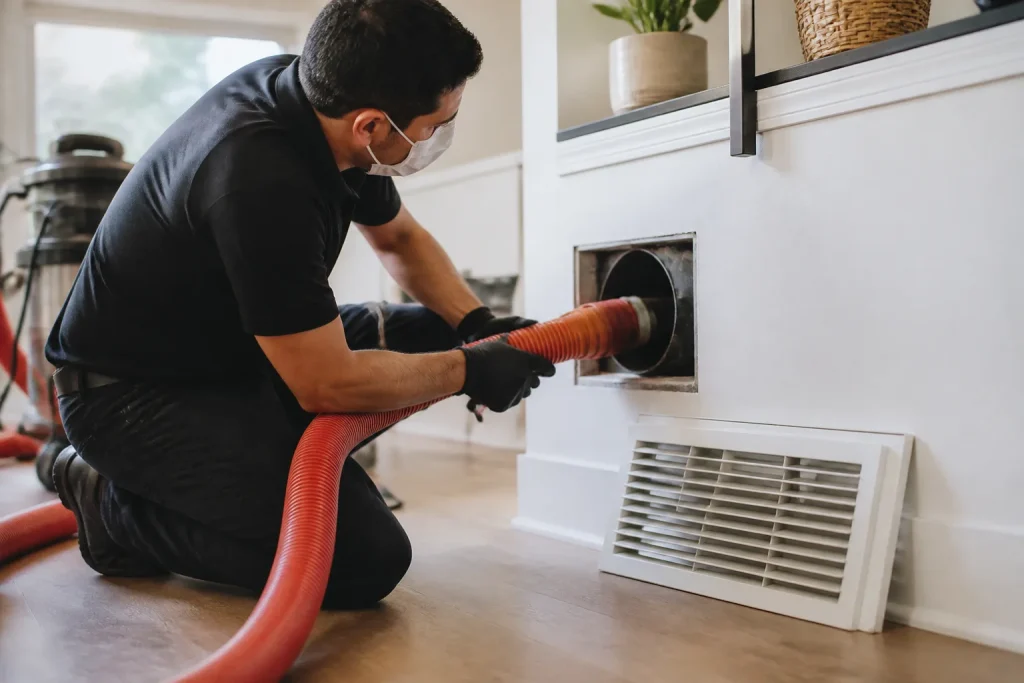
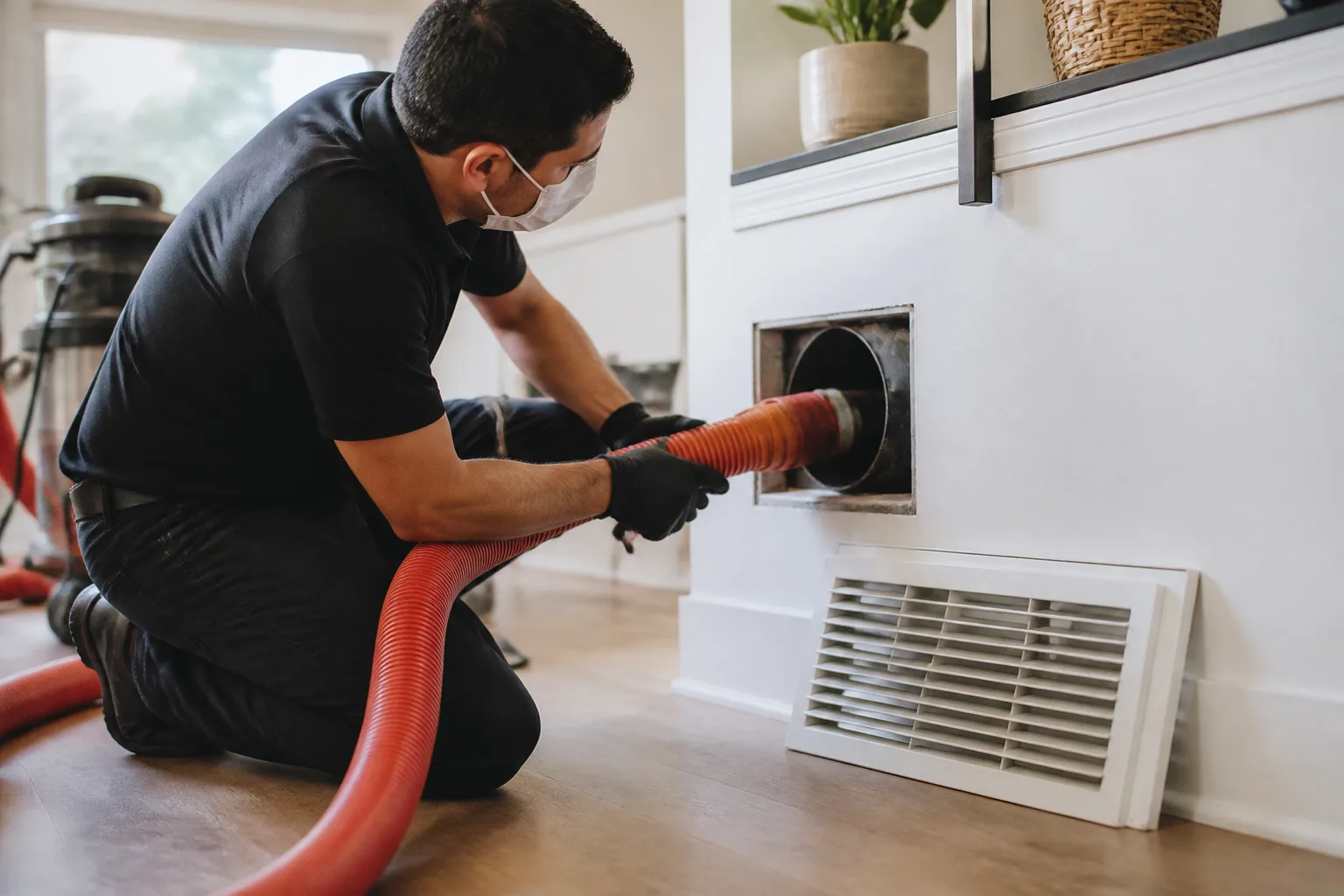
The usual setup we run and recommend pairs this negative-air extraction with mechanical agitation. Suction alone, even at high CFM, won’t dislodge the film of dust that bonds to duct walls over years of heating and cooling cycles. That’s where rotary brush systems or pneumatic whips come in, and the combination of agitation plus Nikro-grade extraction is the actual definition of source-removal cleaning.
What Kind of Airflow Numbers Should a Glendora Homeowner Actually Care About?
Here’s where the vague claims collapse into something you can check. Nikro’s portable negative-air machines, like the DP series, deliver roughly 2,000 to 4,000 CFM depending on the model, with enough static pressure to maintain that airflow across long duct runs. A typical shop-vac moves between 100 and 200 CFM. The practical difference isn’t subtle: the Nikro unit is moving a volume of air through your ducts that’s an order of magnitude greater.
For a two-story home in northeast Glendora, where supply runs can stretch 40 or 50 feet from the plenum to a far bedroom register, that airflow capacity is the difference between extracting debris and just stirring it up. Long runs, multiple bends, and distant access points all create resistance. A machine with strong static pressure overcomes that resistance and keeps pulling debris back toward the collection point.
When you’re comparing contractors in Glendora, ask two specific questions:
- What brand and model negative-air machine do you use?
- What’s its rated CFM at the static pressure your duct system requires?
If the answer is vague, if they describe their machine as “industrial strength” without naming it, that’s a red flag. An honest contractor can tell you the brand, the model, and the filtration rating because they think about these numbers every day. The name “Nikro” on a machine isn’t a magic spell, but it’s a verifiable indicator that the contractor invested in equipment built to professional air duct cleaning standards rather than whatever was on sale at the hardware store.
Why HEPA Filtration Matters for Glendora Specifically
Glendora sits against the foothills, and anyone who’s lived here through fire season knows what fine ash and particulate matter look like. That dust doesn’t just settle on patio furniture. It gets pulled into your return registers, moves through the duct system, and can accumulate in significant quantities after a bad wildfire year.
During air duct cleaning, the process of agitating duct walls releases that accumulated material into the air stream. If the extraction equipment doesn’t filter properly, you’ve turned a cleaning project into a redistribution project, sending years of accumulated dust back into the rooms you’re trying to improve. A Nikro unit’s HEPA filtration captures that material at the source, and the exhausted air meets a standard that’s meaningfully clean.
For a Glendora home within a few miles of the foothills, this isn’t an abstract concern. The angular hills and prevailing wind patterns mean some neighborhoods see more particulate deposition than others. If your home sits in a canyon-adjacent area or you’ve noticed a fine gray film on surfaces after fire season, the filtration quality of your cleaning equipment is directly relevant to the outcome you’re paying for.
Agitation: Why Suction Alone Doesn’t Cut It
One of the most common misconceptions we encounter is that a powerful vacuum is sufficient to clean ductwork. It isn’t. Duct surfaces accumulate a bonded layer of dust, skin cells, pet dander, and fine particulate that adheres through static charge and moisture cycling. Think of it as a film that’s been baked on through hundreds of heating and cooling cycles over years.
Source-removal cleaning, the standard that matters, uses mechanical agitation to break that bond. Nikro’s pneumatic whips and compatible rotary brush systems, like Rotobrush heads, work by physically contacting the duct walls and dislodging the debris while the negative-air machine simultaneously removes it. The agitation and extraction happen together, which prevents the loosened material from simply resettling downstream.
A contractor who arrives with only a vacuum, no matter how large, is performing surface-level work. They’ll get some loose debris. They won’t get the bonded layer that represents the bulk of what’s actually in your ducts. In a home where the HVAC system has run for a decade or more, that bonded layer can be substantial, and leaving it behind means the cleaning results won’t last nearly as long.
How Duct System Size Changes the Equipment Equation in Glendora
Glendora’s housing stock ranges from post-war bungalows to larger two-story homes in the foothill neighborhoods, and the equipment requirement changes with the house. A 3,000-square-foot two-story home with a complex duct layout presents a fundamentally different cleaning challenge than a 1,200-square-foot single-story.
Longer duct runs mean more surface area, more bends, and more resistance. Multiple returns and far-flung supply registers mean the negative-air machine has to maintain adequate airflow while connected to access points that may be 60 feet apart. The machine’s static pressure rating, not just its CFM, determines whether it can do that effectively.
Smaller homes can be adequately cleaned with properly sized professional equipment. But as duct systems grow, the margin for error shrinks, and the difference between a real negative-air system and an undersized machine becomes more apparent. If you’re in a larger Glendora home and a contractor shows up with equipment that looks modest, ask about their CFM rating and how they plan to maintain negative pressure across your longest run. A professional answer should reference their machine’s actual specifications.
The Bottom Line
Nikro equipment is a useful benchmark because it’s a verifiable, industry-standard brand built to meet the demands of source-removal cleaning. But the equipment is only one part of the equation. The agitation method, the filtration setup, and the technician’s understanding of how to apply them to your specific duct system all determine the outcome.
When you’re evaluating air duct cleaning in Glendora, ask about the negative-air machine brand and CFM, ask about the agitation method, and ask whether the system uses HEPA filtration. A legitimate contractor will answer those questions directly and without hesitation.
If you’re in Glendora and want a duct system evaluation, Duct Cleaning Glendora home offers free estimates. We use Rotobrush rotary brush systems paired with Nikro HEPA negative-air vacuums, the combination that professional source-removal standards are built around. Call (833) 620-4169 to schedule yours.
Related services: Dryer Vent Cleaning in Glendora and Air Duct Repair in Glendora.
Frequently Asked Questions
Whole-system air duct cleaning in Glendora typically ranges from $400 to $900 depending on home size, number of returns and registers, and the condition of the ductwork. Homes with longer runs, multiple HVAC systems, or heavily soiled ducts fall at the higher end. Be wary of sub-$200 quotes, which typically mean thin equipment and surface-only cleaning. Call (833) 620-4169 for an exact quote, estimates are free.
Ask for before-and-after photos of the interior of your ducts, not just the registers. A professional cleaning should show visible difference on the duct walls themselves. We show every customer what we find during the job, including photos from inside the duct system before and after source-removal cleaning. If a contractor won’t provide this, consider it a red flag.
Cheap quotes usually reflect cheaper equipment and a shorter cleaning scope. A contractor running a single shop-vac can’t achieve true source-removal results, and their operating costs are lower because their machine didn’t cost $5,000 to $15,000. The result is surface-level cleaning that leaves the bonded debris layer in place and recirculates fine dust through your home during the job. A real negative-air system costs more to operate, and honest pricing reflects that.
In a typical Glendora home without unusual circumstances, every 3 to 5 years is a reasonable interval. Homes with pets, high seasonal pollen loads, recent construction or renovation, or significant wildfire-ash exposure may warrant more frequent cleaning. If you’ve never had your ducts cleaned and the home is more than 10 years old, a first-time cleaning will likely deliver the most dramatic visible results. Call (833) 620-4169 to discuss your specific situation.
Written by the team at Duct Cleaning Glendora, serving Glendora since 2014.
Need Air Duct Cleaning Help?
Call Duct Cleaning Glendora - licensed & insured, here with fast help in Glendora.
(833) 620-4169